8 Stunning DIY Wedding Decor Ideas That Will Wow Your Guests (You Won't Believe #8!)
DIY wedding decor can feel personal and polished, but only when it is designed for the venue, setup window, transportation plan, and skill level you actually have. The goal is not to hand-make every surface. It is to choose a few high-visibility projects that repeat a clear color and material story. These eight ideas favor reusable structures, manageable components, and guest-facing impact. Every project should be tested at full scale, approved by the venue, and assigned to someone other than the couple for installation and removal.

Key Takeaways
- Make high-impact decisions in the correct order.
- Confirm costs, permissions, deadlines, and responsibilities in writing.
- Test the real experience: movement, setup, weather, light, and guest comfort.
- Choose a few strong ideas instead of multiplying details.
- Keep a practical backup for every weather- or timing-dependent element.
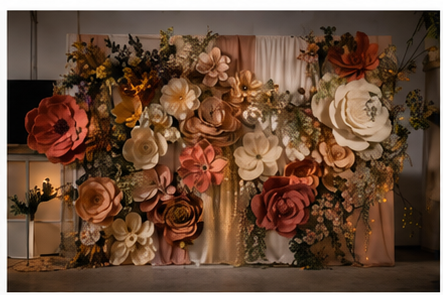
1. Layered Paper-Flower Welcome Backdrop
Why It Matters
Create depth with large paper blooms, leaves, and a few sculptural shapes rather than hundreds of tiny flowers. Mount components to removable panels so the backdrop can travel flat and assemble quickly.
How to Execute It
Test the full width against a person and camera frame. Use flame-retardant materials when required, keep paper away from candles and heaters, and confirm how panels may be secured.
Budget, Comfort, and Safety Check
Write the responsible person, deadline, full cost, setup method, removal plan, and backup beside this decision. Confirm venue rules and vendor responsibilities in writing. If the idea affects structure, flame, electricity, food, transportation, accessibility, legal rights, or a large nonrefundable payment, use an appropriately qualified professional.
Personalize the Idea
Choose one detail that connects the concept to your real story: a family material, meaningful place, shared color, favorite meal, cultural practice, or piece of music. Remove any decorative element that does not support that connection or improve the guest experience.
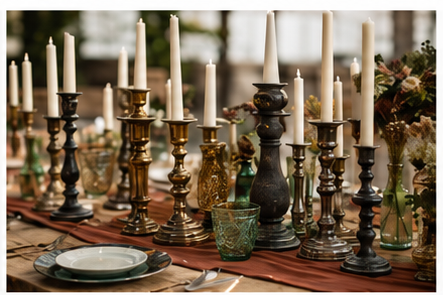
2. Thrifted Candleholder Tablescape
Why It Matters
Collect candleholders in one metal or glass family, then vary height intentionally. A narrow runner and repeated holders can make mismatched thrifted pieces feel curated.
How to Execute It
Use venue-approved candles or flameless alternatives. Check stability, heat, wax protection, aisle clearance, and local fire rules; never leave flames unattended.
Budget, Comfort, and Safety Check
Write the responsible person, deadline, full cost, setup method, removal plan, and backup beside this decision. Confirm venue rules and vendor responsibilities in writing. If the idea affects structure, flame, electricity, food, transportation, accessibility, legal rights, or a large nonrefundable payment, use an appropriately qualified professional.
Personalize the Idea
Choose one detail that connects the concept to your real story: a family material, meaningful place, shared color, favorite meal, cultural practice, or piece of music. Remove any decorative element that does not support that connection or improve the guest experience.
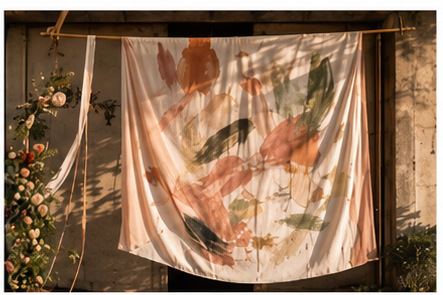
3. Hand-Painted Fabric Welcome Sign
Why It Matters
A hemmed canvas or linen panel painted with simple lettering becomes softer and easier to transport than a rigid board. Project or chalk the layout before painting, and leave generous margins around the words.
How to Execute It
Use fabric paint compatible with the textile, test bleeding, and hang from a stable approved support. Keep essential accessibility or directional information high-contrast and easy to read.
Budget, Comfort, and Safety Check
Write the responsible person, deadline, full cost, setup method, removal plan, and backup beside this decision. Confirm venue rules and vendor responsibilities in writing. If the idea affects structure, flame, electricity, food, transportation, accessibility, legal rights, or a large nonrefundable payment, use an appropriately qualified professional.
Personalize the Idea
Choose one detail that connects the concept to your real story: a family material, meaningful place, shared color, favorite meal, cultural practice, or piece of music. Remove any decorative element that does not support that connection or improve the guest experience.
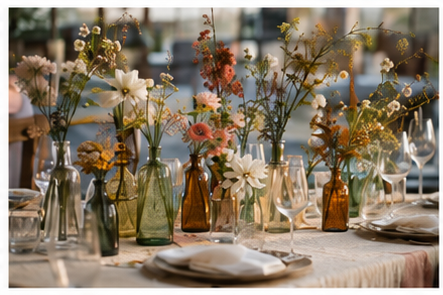
4. Bud-Vase Centerpieces With Seasonal Stems
Why It Matters
Small bud vases spread color without blocking conversation. Choose one vase family, two or three stem types, and a repeatable rhythm down each table. Seasonal local stems can reduce fragility and make the arrangement feel connected to place.
How to Execute It
Count vessels, water them late, protect linens, and assign transport crates. Verify plant toxicity around food, children, and pets, and never forage without permission.
Budget, Comfort, and Safety Check
Write the responsible person, deadline, full cost, setup method, removal plan, and backup beside this decision. Confirm venue rules and vendor responsibilities in writing. If the idea affects structure, flame, electricity, food, transportation, accessibility, legal rights, or a large nonrefundable payment, use an appropriately qualified professional.
Personalize the Idea
Choose one detail that connects the concept to your real story: a family material, meaningful place, shared color, favorite meal, cultural practice, or piece of music. Remove any decorative element that does not support that connection or improve the guest experience.
5. Ribbon Canopy for a Focused Celebration Zone
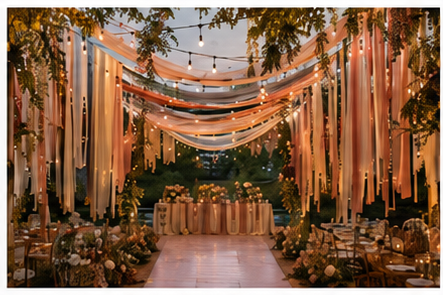
Why It Matters
A concentrated ribbon canopy above a dance floor, sweetheart table, or photo zone delivers more impact than scattering ribbon everywhere. Cut lengths in advance and group tonal colors for movement.
How to Execute It
Use only venue-approved rigging installed by qualified staff. Keep material clear of sprinklers, exits, lights, fans, and flame; account for airflow and removal time.
Budget, Comfort, and Safety Check
Write the responsible person, deadline, full cost, setup method, removal plan, and backup beside this decision. Confirm venue rules and vendor responsibilities in writing. If the idea affects structure, flame, electricity, food, transportation, accessibility, legal rights, or a large nonrefundable payment, use an appropriately qualified professional.
Personalize the Idea
Choose one detail that connects the concept to your real story: a family material, meaningful place, shared color, favorite meal, cultural practice, or piece of music. Remove any decorative element that does not support that connection or improve the guest experience.
6. Pressed-Flower Place Cards
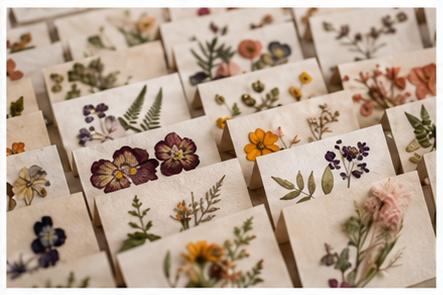
Why It Matters
Press small flowers well ahead of time, then attach them to heavyweight place cards with archival-style adhesive or transparent corners. Pair each card with clean typography so the botanical detail remains readable.
How to Execute It
Make extras for late seating changes and protect finished cards from humidity. Avoid endangered, protected, or irritating plants and use commercially obtained material.
Budget, Comfort, and Safety Check
Write the responsible person, deadline, full cost, setup method, removal plan, and backup beside this decision. Confirm venue rules and vendor responsibilities in writing. If the idea affects structure, flame, electricity, food, transportation, accessibility, legal rights, or a large nonrefundable payment, use an appropriately qualified professional.
Personalize the Idea
Choose one detail that connects the concept to your real story: a family material, meaningful place, shared color, favorite meal, cultural practice, or piece of music. Remove any decorative element that does not support that connection or improve the guest experience.
7. Reusable Ceremony Frame With Fabric Draping
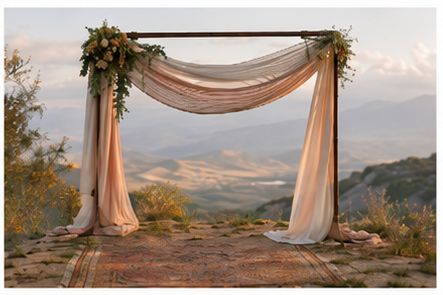
Why It Matters
Build or rent a freestanding frame that can serve first as the ceremony focal point and later behind the cake or sweetheart table. Fabric draping, removable floral clusters, or paper elements change its role without rebuilding.
How to Execute It
Any structure must be stable, weighted correctly, and approved for the surface and weather. Hire a professional for overhead, load-bearing, electrical, or wind-exposed installations.
Budget, Comfort, and Safety Check
Write the responsible person, deadline, full cost, setup method, removal plan, and backup beside this decision. Confirm venue rules and vendor responsibilities in writing. If the idea affects structure, flame, electricity, food, transportation, accessibility, legal rights, or a large nonrefundable payment, use an appropriately qualified professional.
Personalize the Idea
Choose one detail that connects the concept to your real story: a family material, meaningful place, shared color, favorite meal, cultural practice, or piece of music. Remove any decorative element that does not support that connection or improve the guest experience.
8. Walk-Through Memory Gallery That Becomes the Photo Booth
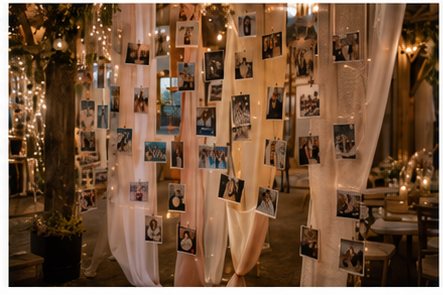
Why It Matters
Turn the route to the reception into a chronological memory gallery with family photos, notes, and a final open frame where guests can pose. The installation becomes both storytelling and an activity, reducing the need for a separate decorative photo booth.
How to Execute It
Use copies rather than irreplaceable originals, obtain permission for sensitive images, and design wide clear circulation. Add lighting that is bright enough to read without glare.
Budget, Comfort, and Safety Check
Write the responsible person, deadline, full cost, setup method, removal plan, and backup beside this decision. Confirm venue rules and vendor responsibilities in writing. If the idea affects structure, flame, electricity, food, transportation, accessibility, legal rights, or a large nonrefundable payment, use an appropriately qualified professional.
Personalize the Idea
Choose one detail that connects the concept to your real story: a family material, meaningful place, shared color, favorite meal, cultural practice, or piece of music. Remove any decorative element that does not support that connection or improve the guest experience.
A Decision Guide Before You Commit
| Question | Green light | Pause and revise |
|---|---|---|
| Does it support one of our priorities? | Keep it in the working plan. | Remove it or treat it as optional. |
| Is the full cost documented? | Add the payment dates to the calendar. | Request an itemized total and assumptions. |
| Who owns setup and execution? | Confirm the person and backup. | Do not leave it to the couple by default. |
| Is it permitted and safe? | Save the written approval. | Ask the venue or qualified professional. |
| Does it survive the backup plan? | Prepare both versions. | Simplify until the alternative still works. |
Build a Calm Wedding Week
Freeze nonessential decisions before wedding week. Put vendor contacts, final layouts, contracts, payment status, emergency information, transport, and the timeline in one controlled packet. Label decor and attire by destination and sequence rather than by appearance. Give each helper a narrow role with a clear handoff. Protect meals, medication, rest, travel time, and accessibility needs as firmly as photographs or speeches. A calm plan is not one without surprises; it is one where a surprise has somewhere to go.
Conclusion
A memorable wedding does not require every possible detail. It requires a few decisions that feel honest, work in the real venue, and allow the couple and guests to participate comfortably. Begin with the idea in this list that solves the clearest problem or expresses the strongest part of your story. Test it, price it fully, assign ownership, and protect a backup. Then stop adding. Restraint gives meaningful choices enough space to be noticed.
Frequently Asked Questions
How many DIY projects should we attempt?
Choose a few high-visibility projects that match your skills, storage, transport, and setup time.
When should DIY decor be finished?
Aim to finish well before wedding week so there is time for repairs, packing, and a full installation test.
Who should set up DIY decor?
Assign a coordinator, professional installer, or trusted team with written layouts; the couple should not manage setup on the wedding day.
Can DIY decor be used at any venue?
No. Ask about adhesives, rigging, candles, power, cleanup, insurance, protected surfaces, and fire rules first.
Is DIY always cheaper?
No. Tools, failed tests, transport, storage, labor, and disposal can exceed rental or professional costs.
Confirm the Experience, Not Just the Look
Before approving the final plan, walk through the celebration in the order a guest will experience it. Begin with arrival, parking, transportation, signage, coat storage, restrooms, seating, sound, temperature, food information, and the route between spaces. Consider wheelchairs, mobility aids, older guests, children, sensory needs, and anyone who may need a quiet place or additional time. A beautiful concept is successful only when people can enter it, understand it, and enjoy it comfortably.
Next, map every dependency between vendors. A floral installation may need venue access, a loading zone, approved rigging, power, ladders, cleanup time, and a photographer who knows when the room will be ready. A wardrobe change may require private space, assistance, garment storage, and a timeline adjustment. Put each dependency beside an owner and deadline. When two vendors assume the other is responsible, the couple usually inherits the problem.
Translate inspiration into a measurable specification. Instead of asking for “romantic lighting,” record the candle policy, fixture type, color temperature, dimming plan, power source, placement, and backup. Instead of requesting “lush flowers,” confirm the dimensions, stem density, approved substitutions, vessel ownership, delivery window, and removal. Clear specifications make quotes easier to compare and reduce the chance that two people imagine different results.
Agree on substitutions before they are needed. Weather, supply, venue rules, shipping, and seasonal availability can change a plan. Decide which qualities are essential—perhaps color, silhouette, guest comfort, or meaning—and which materials can change. Require approval for substitutions that affect the visual direction, price, safety, or experience. Save the final choice in the same place as the contract and timeline.
Finally, decide how delays will be handled. Identify which moments can move, which can shorten, and which must remain protected. Name one person who can approve small operational changes without interrupting the couple. Give that person the priorities, contact list, and spending limit. This simple chain of authority keeps a late delivery or weather shift from turning into a series of rushed decisions.
The Final Verification Call
Schedule one structured confirmation with each key vendor before the celebration. Read back the date, arrival time, exact entrance, loading instructions, parking, onsite contact, scope, quantities, final balance, and departure plan. Confirm permits, insurance, power, flame rules, accessibility, weather triggers, meals, storage, and who removes rented or personal items. Verbal reassurance is useful, but send a written recap and ask for corrections.
Use the call to test the timeline, not merely repeat it. Ask what the vendor needs immediately before and after their work, how long setup truly takes, and what happens if the prior event runs late. Confirm final deliverables and delivery dates for anything received after the wedding. If a detail is still described with words such as “probably,” “usually,” or “we will figure it out,” assign an owner and deadline. The goal is not to eliminate uncertainty; it is to make remaining uncertainty visible and manageable.
Related Topics
- Wedding style and celebration ideas
- Bridal fashion inspiration
- Wedding accessories and finishing details
- Creative celebration guides
A Rehearsal That Tests the Plan
Use the rehearsal or final walkthrough to test movement and communication, not just ceremony order. Time the longest route, check where doors narrow, locate steps and uneven ground, confirm seating access, and stand where instructions must be heard. Review rain and heat alternatives in the actual spaces. Ask the venue to identify restricted areas, emergency exits, first-aid resources, and the person authorized to make operational decisions.
Bring a small set of real objects that can expose problems: the shoes intended for the aisle surface, a sample place setting, the largest sign, a representative candle or light, a garment layer, and any mobility equipment that requires clearance. Photograph approved layouts and label where packed items belong. If setup relies on memory, convert it into a one-page diagram with dimensions, quantities, and the order of installation.
End by practicing the handoffs that create the most confusion. Who has the rings, personal flowers, marriage documents, tips, emergency kit, spare clothing, and transportation contact? Who releases each group, collects personal items, and confirms that rentals are ready for pickup? Give every responsibility a primary person and a backup. A short rehearsal of ownership protects the emotional parts of the day because the couple no longer has to answer every operational question.