Finding a signature scent can feel overwhelming because fragrance counters are designed to present dozens of beautiful options at once. Your nose, however, makes better decisions with fewer choices, more time and a clear testing method.
This guide helps you narrow the field without chasing hype. You will learn what to smell for, how long to wait, and how to tell whether a perfume belongs in your real wardrobe—not just on a paper strip in a store.
Identify the Scent Families You Already Enjoy
Do not begin with brand names. Begin with the types of smells you naturally move toward in candles, body care, food, gardens and your home.
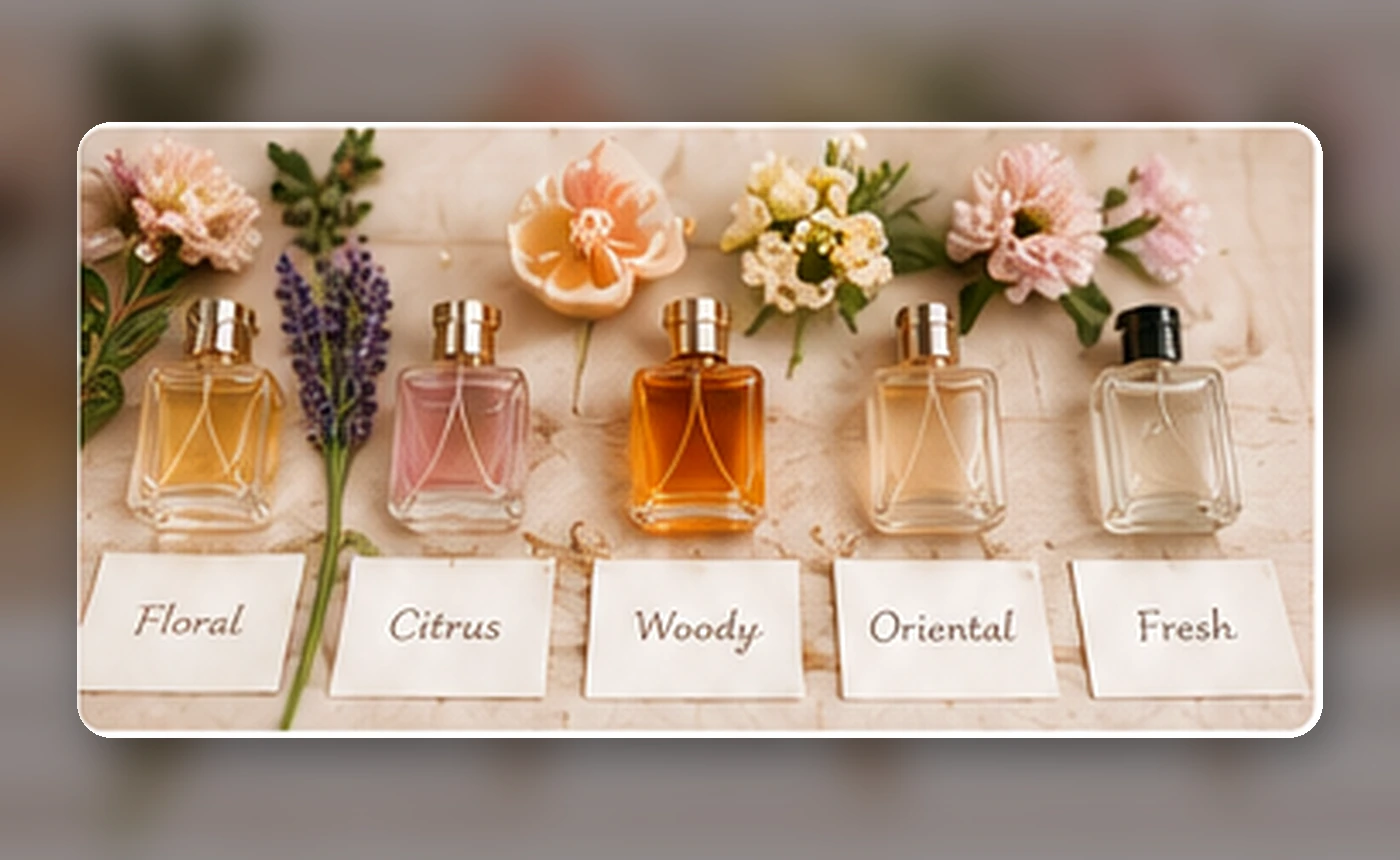
Useful family clues
- Fresh: citrus, herbs, clean musk, watery notes
- Floral: rose, jasmine, peony, orange blossom
- Woody: cedar, sandalwood, vetiver, patchouli
- Gourmand: vanilla, caramel, cocoa, coffee
- Amber/spicy: resin, incense, cinnamon, warm spice
Try this
- Write down five smells you reliably enjoy.
- Circle repeated qualities: crisp, creamy, smoky, sweet or earthy.
- Choose two fragrance families to explore first.
- Ignore categories that sound glamorous but do not match your actual preferences.
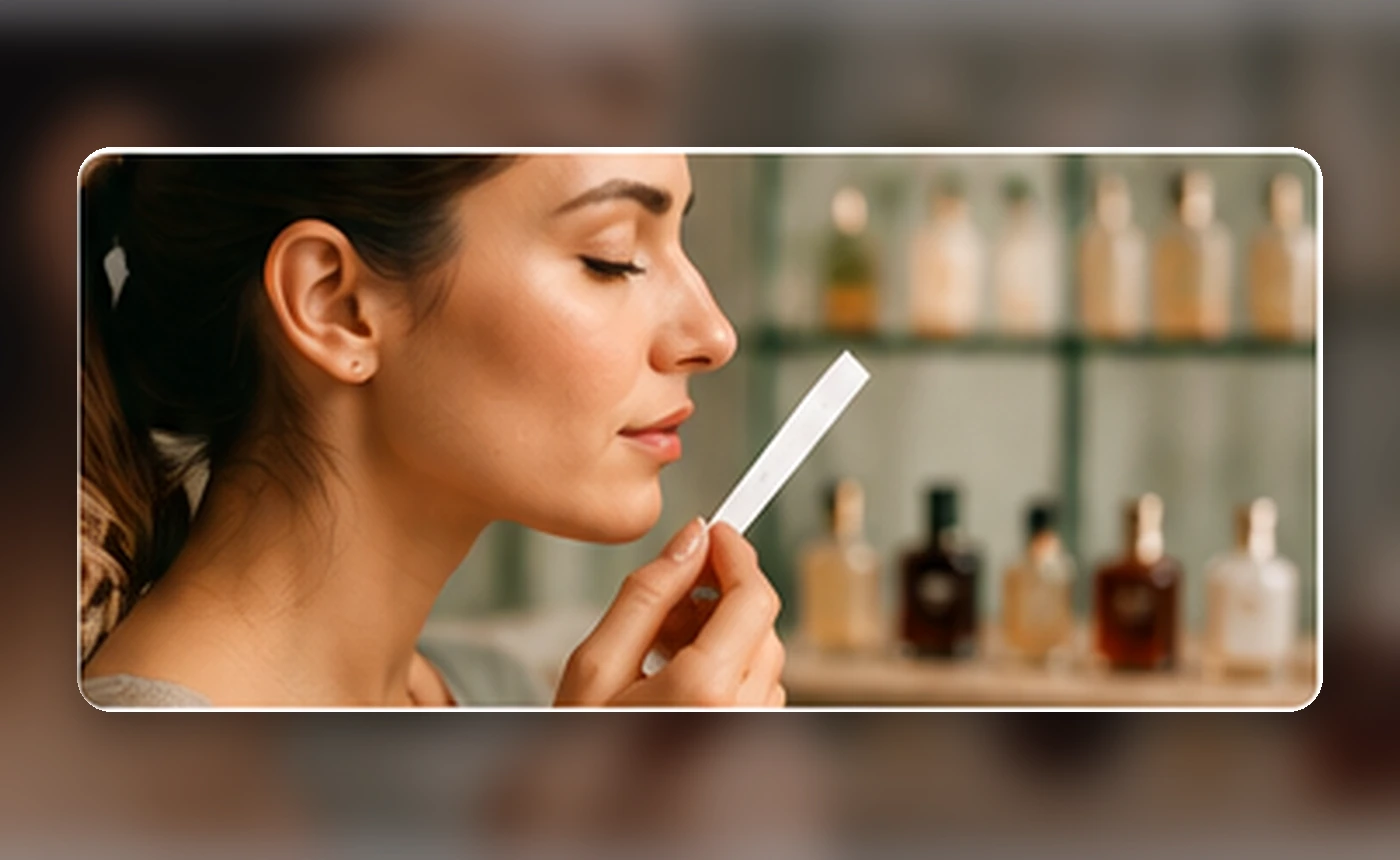
Test Finalists on Your Skin—Never Only on a Blotter
Paper shows the perfume’s structure. Skin shows how it behaves on you. Warmth, moisture and natural oils can change sweetness, projection and longevity.
Where to spray
- Inner forearm or wrist
- One fragrance per arm
- Clean, unscented skin
- No rubbing after spraying
Try this
- Use blotters to eliminate obvious dislikes.
- Spray no more than two finalists on skin.
- Leave the fragrance untouched for 20 minutes.
- Recheck after two, four and eight hours.
Understand the Note Pyramid and Wait for the Dry-Down
Many perfumes open brightly and change dramatically. Your signature is usually decided by the heart and base notes—the part that stays close to you for hours.
What to notice
- Does the opening disappear too quickly?
- Does the heart become sweeter or sharper?
- Would you enjoy the base on clothing the next morning?
Try this
- Record your first impression after five minutes.
- Smell again after one hour without reading the note list.
- Judge the perfume mainly at the four-hour point.
- Do not buy a full bottle because of the first ten minutes alone.
Match the Fragrance to Your Real Lifestyle
Your signature scent should work on ordinary days—not only in an imagined version of your life. Think about climate, workplace, commute, social settings and how close you sit to other people.
Ask yourself
- Can I wear this three days a week?
- Is it comfortable in my usual weather?
- Will it overwhelm shared spaces?
Try this
- Wear the sample on a normal workday.
- Test it during your usual commute and activities.
- Notice whether you keep wanting to smell your sleeve.
- Ask one trusted person only after forming your own opinion.
Keep a Scent Journal and Test One Mood at a Time
After several perfumes, names and impressions blur together. A small record prevents impulse buys and helps you see which qualities repeatedly earn high marks.
First impression
Full workday test
Weather & clothing check
Record
- Opening, heart and base
- Projection after one hour
- Longevity on skin and fabric
- Mood, weather and occasion
- Whether you would miss it
Try this
- Sample one main fragrance per day.
- Wear each serious contender at least three times.
- Score enjoyment and wearability separately.
- Wait 24 hours before ordering a bottle.
Evaluate Projection, Longevity and the Scent Bubble
A signature scent should last long enough for your needs while staying comfortable for you and the people nearby. The ideal performance level depends on where you wear it.
0–20 minOpening
1–2 hrProjection
4–6 hrWearability
8+ hrTrace & fabric
Judge the right things
- Can you smell it without pressing nose to skin?
- Does it remain pleasant as it fades?
- Does the strength fit your environment?
Try this
- Use the same number of sprays during each test.
- Check from normal conversational distance.
- Notice whether you become nose-blind before assuming it vanished.
- Compare value by how often you will wear it, not bottle size alone.
Make the Scent Yours Through Repetition, Restraint and Optional Layering
A fragrance becomes “your scent” because people associate it with you over time. You do not need a complicated layering routine; consistent wear creates the strongest signature.
Moisturized skin
Your recognizable core
One compatible note
Keep layering simple
- Pair related notes such as vanilla + woods
- Use an unscented lotion for longevity
- Avoid stacking several complex perfumes
Try this
- Wear your finalist consistently for two weeks.
- Adjust the number of sprays before changing the scent.
- Keep one lighter alternative for hot days or close spaces.
- Buy the full bottle only when the sample feels missed.
What Should You Sample First?
Choose the atmosphere you want your scent to create.
Quick Testing Schedule
| Stage | What to do | What to decide |
|---|---|---|
| First 5 minutes | Smell on paper | Immediate dislike or curiosity |
| 20–60 minutes | Wear on clean skin | Heart notes and comfort |
| 4 hours | Check normally, not nose-to-skin | True wearability |
| 8 hours | Check skin and clothing | Longevity and dry-down |
| Three separate wears | Use in normal life | Whether it deserves a bottle |
Your Signature Scent Should Feel Easy
The right perfume does not require you to talk yourself into it. You enjoy the opening, still like the dry-down, feel comfortable wearing it in your real life and notice that the empty sample leaves a gap in your routine.
That is the moment to buy—not when a trend, salesperson or beautiful bottle tells you to.
Frequently Asked Questions
How long should I test a perfume before deciding?
Wear it for at least four to eight hours on several different days. One quick store test cannot show how it develops in different weather, moods and activities.
Should I test perfume on paper or skin?
Use paper for the first elimination round, then test finalists on clean skin. Skin warmth and natural oils affect the fragrance’s development and performance.
How many perfumes should I sample at once?
Limit a serious skin test to one or two fragrances per day. Too many scents can overlap and cause olfactory fatigue.
How many sprays should a signature scent need?
There is no universal number. Begin conservatively and adjust based on concentration, environment and projection. Shared spaces usually call for lighter application.
Do I need one scent for every season?
No. Many people wear one fragrance year-round and adjust the number of sprays. A lighter alternative can be useful for hot weather or close indoor settings.