10 Pet Grooming Hacks That Will Make Bath Time a Breeze! (Groomers Approve!)
Practical pet care works best when it is kind, observable, and easy to repeat. This guide turns pet grooming hacks into clear actions while separating everyday care from problems that require a veterinarian or qualified behavior professional. Results vary with species, age, history, health, environment, and temperament; “in no time” means building useful momentum, not promising an instant transformation.
Key Takeaways
- Use humane, low-stress methods and reward the behavior you want.
- Change one variable at a time so you can see what helps.
- Keep written notes on appetite, weight, elimination, skin, behavior, and progress.
- Stop when the animal shows fear, pain, overheating, or escalating distress.
- Contact a veterinarian for sudden changes, persistent symptoms, ingestion hazards, or medical questions.
1. Do a Coat and Skin Check Before Water
Why It Matters
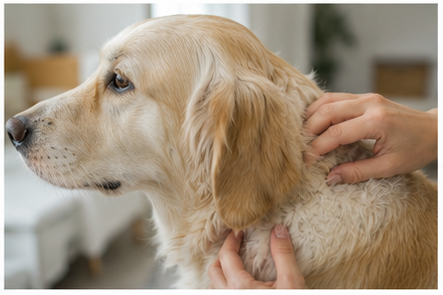
Bathing over wounds, painful mats, parasites, or inflamed skin can worsen discomfort and hide a problem. A quick hands-and-eyes check changes the plan before water starts.
Put It Into Practice
Part the coat in several areas and check paws, ears, skin, lumps, odor, tenderness, and foreign material. Stop and seek professional or veterinary help for pain, bleeding, severe matting, or infection signs.
Observe and Adjust
Write down the starting point, the situation, what you changed, and the animal’s response. Look for relaxed body language, voluntary participation, normal breathing, and the ability to eat or disengage. If comfort falls, reduce intensity, shorten the session, increase distance, or stop. Repeated fear, pain, aggression, appetite change, vomiting, diarrhea, urinary difficulty, breathing trouble, collapse, or suspected toxin exposure requires professional guidance rather than another household hack.
Make It Sustainable
Choose a version that fits the household every day. Prepare supplies in advance, keep sessions brief, and assign one consistent cue or routine. Family members should use the same plan so the pet is not asked to solve conflicting rules. Progress is rarely linear; return to an easier version after illness, travel, adolescence, environmental change, or a difficult experience.
2. Brush Out Loose Hair and Tangles First
Why It Matters
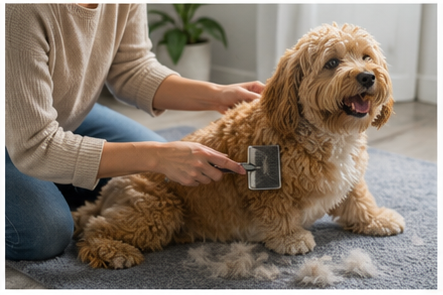
Water tightens many tangles and makes drying harder. Gentle pre-brushing removes loose coat and shows where professional clipping may be safer than pulling.
Put It Into Practice
Use tools appropriate to coat type, work in small sections, and support the skin. Never cut close mats with scissors because folded skin can be hidden inside.
Observe and Adjust
Write down the starting point, the situation, what you changed, and the animal’s response. Look for relaxed body language, voluntary participation, normal breathing, and the ability to eat or disengage. If comfort falls, reduce intensity, shorten the session, increase distance, or stop. Repeated fear, pain, aggression, appetite change, vomiting, diarrhea, urinary difficulty, breathing trouble, collapse, or suspected toxin exposure requires professional guidance rather than another household hack.
Make It Sustainable
Choose a version that fits the household every day. Prepare supplies in advance, keep sessions brief, and assign one consistent cue or routine. Family members should use the same plan so the pet is not asked to solve conflicting rules. Progress is rarely linear; return to an easier version after illness, travel, adolescence, environmental change, or a difficult experience.
3. Stage Every Tool Before the Pet Enters

Why It Matters
Leaving a wet pet to find towels or shampoo creates escape opportunities. A staged station reduces time, noise, and handling.
Put It Into Practice
Set out pet shampoo, several towels, cup or gentle sprayer, brush, treats, leash if appropriate, and a clean drying zone. Keep electrical tools away from water.
Observe and Adjust
Write down the starting point, the situation, what you changed, and the animal’s response. Look for relaxed body language, voluntary participation, normal breathing, and the ability to eat or disengage. If comfort falls, reduce intensity, shorten the session, increase distance, or stop. Repeated fear, pain, aggression, appetite change, vomiting, diarrhea, urinary difficulty, breathing trouble, collapse, or suspected toxin exposure requires professional guidance rather than another household hack.
Make It Sustainable
Choose a version that fits the household every day. Prepare supplies in advance, keep sessions brief, and assign one consistent cue or routine. Family members should use the same plan so the pet is not asked to solve conflicting rules. Progress is rarely linear; return to an easier version after illness, travel, adolescence, environmental change, or a difficult experience.
4. Use a Non-Slip Surface for Confident Footing
Why It Matters
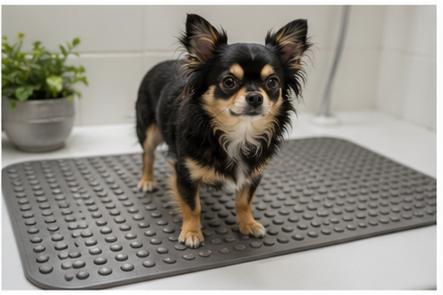
A slippery tub can turn a calm bath into a balance struggle. Stable footing helps the animal stand naturally and reduces frantic scrambling.
Put It Into Practice
Use a secure rubber mat or towel that will not bunch. Support rather than restrain harshly, and choose a sink, tub, or walk-in area suited to the animal’s size and mobility.
Observe and Adjust
Write down the starting point, the situation, what you changed, and the animal’s response. Look for relaxed body language, voluntary participation, normal breathing, and the ability to eat or disengage. If comfort falls, reduce intensity, shorten the session, increase distance, or stop. Repeated fear, pain, aggression, appetite change, vomiting, diarrhea, urinary difficulty, breathing trouble, collapse, or suspected toxin exposure requires professional guidance rather than another household hack.
Make It Sustainable
Choose a version that fits the household every day. Prepare supplies in advance, keep sessions brief, and assign one consistent cue or routine. Family members should use the same plan so the pet is not asked to solve conflicting rules. Progress is rarely linear; return to an easier version after illness, travel, adolescence, environmental change, or a difficult experience.
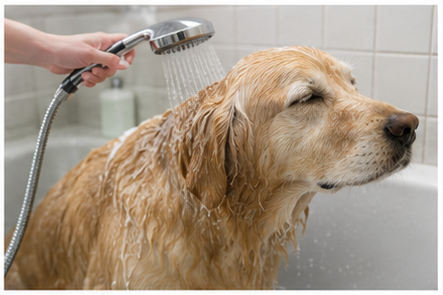
5. Keep Water Lukewarm and Pressure Gentle
Why It Matters
Hot water can irritate skin and strong spray can frighten or hurt. Lukewarm water and low pressure are easier to tolerate.
Put It Into Practice
Test water on the inside of your wrist, begin away from the face, and keep the nozzle close to the coat to reduce noise and splash.
Observe and Adjust
Write down the starting point, the situation, what you changed, and the animal’s response. Look for relaxed body language, voluntary participation, normal breathing, and the ability to eat or disengage. If comfort falls, reduce intensity, shorten the session, increase distance, or stop. Repeated fear, pain, aggression, appetite change, vomiting, diarrhea, urinary difficulty, breathing trouble, collapse, or suspected toxin exposure requires professional guidance rather than another household hack.
Make It Sustainable
Choose a version that fits the household every day. Prepare supplies in advance, keep sessions brief, and assign one consistent cue or routine. Family members should use the same plan so the pet is not asked to solve conflicting rules. Progress is rarely linear; return to an easier version after illness, travel, adolescence, environmental change, or a difficult experience.
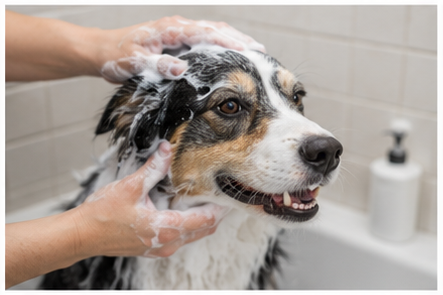
6. Dilute and Apply Pet Shampoo as Directed
Why It Matters
Human shampoos and improvised mixtures may not suit pet skin. Medicated products require the correct species, contact time, and veterinary direction.
Put It Into Practice
Read the label, confirm species and age, dilute only when directed, and patch concerns with a veterinarian. Never use dog parasite products on cats unless specifically labeled and prescribed.
Observe and Adjust
Write down the starting point, the situation, what you changed, and the animal’s response. Look for relaxed body language, voluntary participation, normal breathing, and the ability to eat or disengage. If comfort falls, reduce intensity, shorten the session, increase distance, or stop. Repeated fear, pain, aggression, appetite change, vomiting, diarrhea, urinary difficulty, breathing trouble, collapse, or suspected toxin exposure requires professional guidance rather than another household hack.
Make It Sustainable
Choose a version that fits the household every day. Prepare supplies in advance, keep sessions brief, and assign one consistent cue or routine. Family members should use the same plan so the pet is not asked to solve conflicting rules. Progress is rarely linear; return to an easier version after illness, travel, adolescence, environmental change, or a difficult experience.
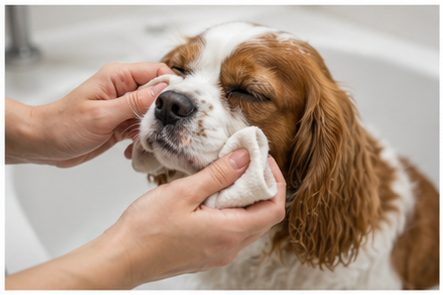
7. Protect Eyes and Ears Without Plugging Them
Why It Matters
The face usually needs less water than the body. Direct flow into eyes or ears adds fear and may cause problems.
Put It Into Practice
Use a damp cloth around the face, keep water directed backward, and wipe the outer ear only. Do not insert cotton swabs or pack material into the ear canal.
Observe and Adjust
Write down the starting point, the situation, what you changed, and the animal’s response. Look for relaxed body language, voluntary participation, normal breathing, and the ability to eat or disengage. If comfort falls, reduce intensity, shorten the session, increase distance, or stop. Repeated fear, pain, aggression, appetite change, vomiting, diarrhea, urinary difficulty, breathing trouble, collapse, or suspected toxin exposure requires professional guidance rather than another household hack.
Make It Sustainable
Choose a version that fits the household every day. Prepare supplies in advance, keep sessions brief, and assign one consistent cue or routine. Family members should use the same plan so the pet is not asked to solve conflicting rules. Progress is rarely linear; return to an easier version after illness, travel, adolescence, environmental change, or a difficult experience.
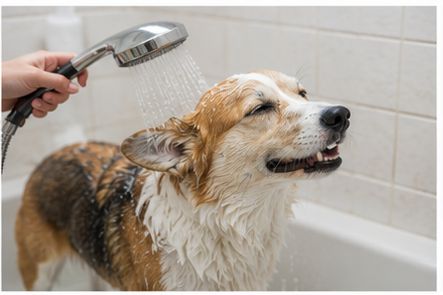
8. Rinse Longer Than You Think You Need To
Why It Matters
Residue can contribute to itching and a dull coat. Thick or double coats require deliberate section-by-section rinsing.
Put It Into Practice
Rinse until water runs clear, then part the coat and check slippery areas such as armpits, belly, chest, and under the tail.
Observe and Adjust
Write down the starting point, the situation, what you changed, and the animal’s response. Look for relaxed body language, voluntary participation, normal breathing, and the ability to eat or disengage. If comfort falls, reduce intensity, shorten the session, increase distance, or stop. Repeated fear, pain, aggression, appetite change, vomiting, diarrhea, urinary difficulty, breathing trouble, collapse, or suspected toxin exposure requires professional guidance rather than another household hack.
Make It Sustainable
Choose a version that fits the household every day. Prepare supplies in advance, keep sessions brief, and assign one consistent cue or routine. Family members should use the same plan so the pet is not asked to solve conflicting rules. Progress is rarely linear; return to an easier version after illness, travel, adolescence, environmental change, or a difficult experience.
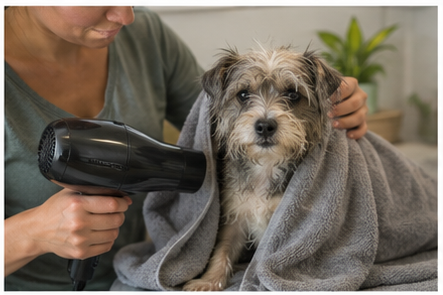
9. Dry in Layers With Low Stress
Why It Matters
Rubbing can tangle long coats, while hot forced air can overheat or frighten. Drying should match coat, weather, health, and tolerance.
Put It Into Practice
Press with towels, change them as they become wet, and use cool or low airflow at a safe distance if the pet is comfortable. Never leave a drying animal unattended.
Observe and Adjust
Write down the starting point, the situation, what you changed, and the animal’s response. Look for relaxed body language, voluntary participation, normal breathing, and the ability to eat or disengage. If comfort falls, reduce intensity, shorten the session, increase distance, or stop. Repeated fear, pain, aggression, appetite change, vomiting, diarrhea, urinary difficulty, breathing trouble, collapse, or suspected toxin exposure requires professional guidance rather than another household hack.
Make It Sustainable
Choose a version that fits the household every day. Prepare supplies in advance, keep sessions brief, and assign one consistent cue or routine. Family members should use the same plan so the pet is not asked to solve conflicting rules. Progress is rarely linear; return to an easier version after illness, travel, adolescence, environmental change, or a difficult experience.
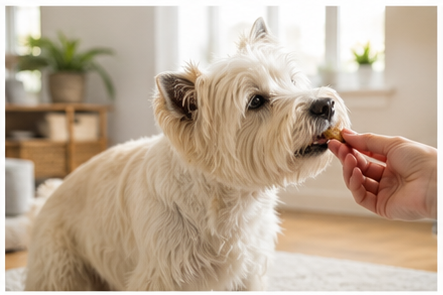
10. End With a Calm Reward and Equipment Reset
Why It Matters
A calm ending changes the memory of the session and keeps equipment hygienic. Post-bath observation also catches irritation early.
Put It Into Practice
Reward, offer a warm resting area, wash textiles, disinfect tools appropriately, and dry the station. Monitor for shivering, redness, scratching, coughing, or distress.
Observe and Adjust
Write down the starting point, the situation, what you changed, and the animal’s response. Look for relaxed body language, voluntary participation, normal breathing, and the ability to eat or disengage. If comfort falls, reduce intensity, shorten the session, increase distance, or stop. Repeated fear, pain, aggression, appetite change, vomiting, diarrhea, urinary difficulty, breathing trouble, collapse, or suspected toxin exposure requires professional guidance rather than another household hack.
Make It Sustainable
Choose a version that fits the household every day. Prepare supplies in advance, keep sessions brief, and assign one consistent cue or routine. Family members should use the same plan so the pet is not asked to solve conflicting rules. Progress is rarely linear; return to an easier version after illness, travel, adolescence, environmental change, or a difficult experience.
A Quick Decision Guide
Build a Reliable Home Routine
Keep the plan simple enough to survive busy days. Store supplies where the activity happens, put reminders beside established routines, and decide who records observations. Use the same reward marker, grooming sequence, feeding measurement, or health log across caregivers. Consistency does not mean rigidity: the pet’s comfort and medical needs decide when the plan changes.
Review progress weekly instead of judging one difficult session. Ask whether the animal is recovering faster, volunteering more, maintaining normal appetite and elimination, and showing fewer stress signals. One good metric is more useful than a vague impression. If progress stalls, check pain, environment, reward value, session length, and task difficulty before assuming stubbornness.
Safety Boundaries That Matter
Internet advice cannot diagnose an individual animal. Never give human medication, use essential oils or parasite products without species-specific veterinary direction, force water or food into an unwilling pet, or continue handling through pain or panic. Cats are not small dogs, puppies are not adult dogs, and medical diets should not be modified casually.
Prepare emergency information before it is needed: the regular veterinary clinic, nearest emergency hospital, poison-control resource for your country, current medications, allergies, weight, and a secure carrier or transport plan. For recipes, confirm every ingredient, portion, and storage period; treats and toppers should remain a small part of an otherwise appropriate diet unless a board-certified veterinary nutritionist has formulated the complete diet.
Conclusion

The best pet-care improvement is usually the one that increases clarity without sacrificing welfare. Start with one idea from this list, make the first version easy, and watch the animal’s response. Reward comfort and success, keep notes, and adjust gradually. A calm routine may look less dramatic than a viral shortcut, but it creates information you can trust and habits the pet can live with.
Frequently Asked Questions
How quickly should I expect results?
Some pets show a useful first response in one session, while reliable habits require repetition across time and environments. Health changes follow their own course and need veterinary assessment.
What if my pet refuses treats?
The animal may be full, worried, nauseated, painful, or uninterested in that reward. Lower the difficulty and check context; persistent appetite change should be discussed with a veterinarian.
Can I use punishment to stop a behavior immediately?
Aversive methods can add fear and do not teach the desired alternative. Manage the environment, reward an incompatible response, and seek qualified help for dangerous behavior.
When is professional help appropriate?
Seek veterinary help for health signs or sudden behavior change, and a credentialed reward-based trainer or veterinary behavior professional for fear, aggression, separation distress, or complex training problems.
How do I know whether online pet advice is trustworthy?
Look for named qualified authors, current veterinary or scientific sources, clear limits, species-specific guidance, and instructions to involve your veterinarian when individual health matters.
Related Topics
- Pet wellness and preventive care
- Reward-based animal training
- Low-stress grooming routines
- Veterinary nutrition and safe treats
Your Seven-Day Check-In
After one week, compare notes rather than relying on memory. Look for changes in comfort, participation, appetite, elimination, sleep, recovery time, and the frequency of the behavior you are addressing. Keep what is helping, simplify what is difficult to repeat, and stop anything associated with fear, pain, gastrointestinal signs, skin irritation, or escalating conflict. Share the record with the veterinarian or qualified professional when individual guidance is needed.