19 Small Space Organization Secrets that Interior Designers Swear By!
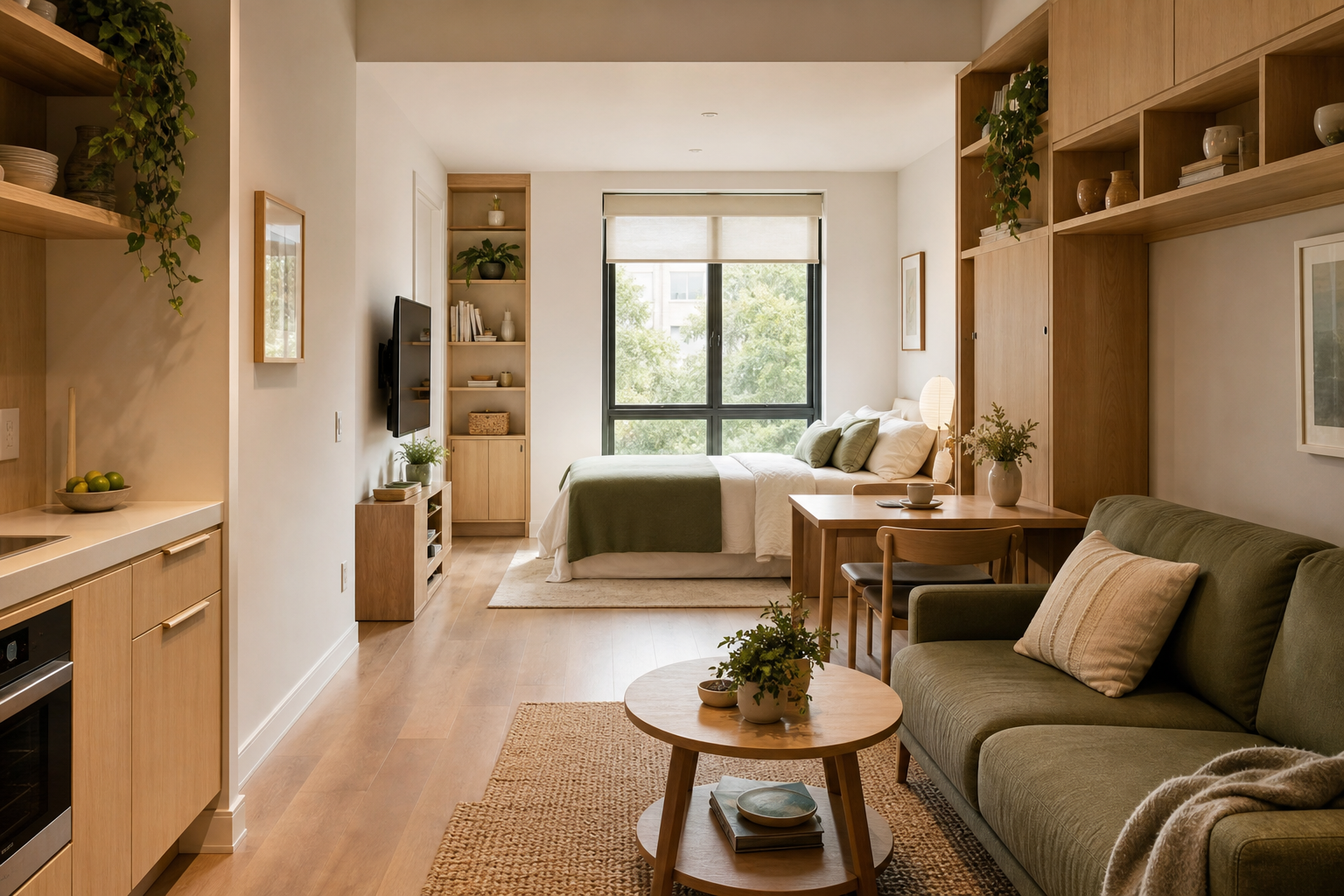
A small home does not need to feel like a storage puzzle. The most convincing compact rooms use proportion, access, and visual calm together: frequently used belongings stay easy to reach, occasional items move higher or farther back, and every storage choice protects the room's ability to breathe. These 19 ideas translate designer-style planning into renter-friendly and homeowner-friendly actions.
Key Takeaways
- Plan around real movement, maintenance, and comfort.
- Test a reversible version before making a permanent change.
- Let one clear material or color story lead the room.
- Protect safety, sightlines, and accessibility.
- Prefer durable choices that can evolve with the home.
1. Measure Before You Buy
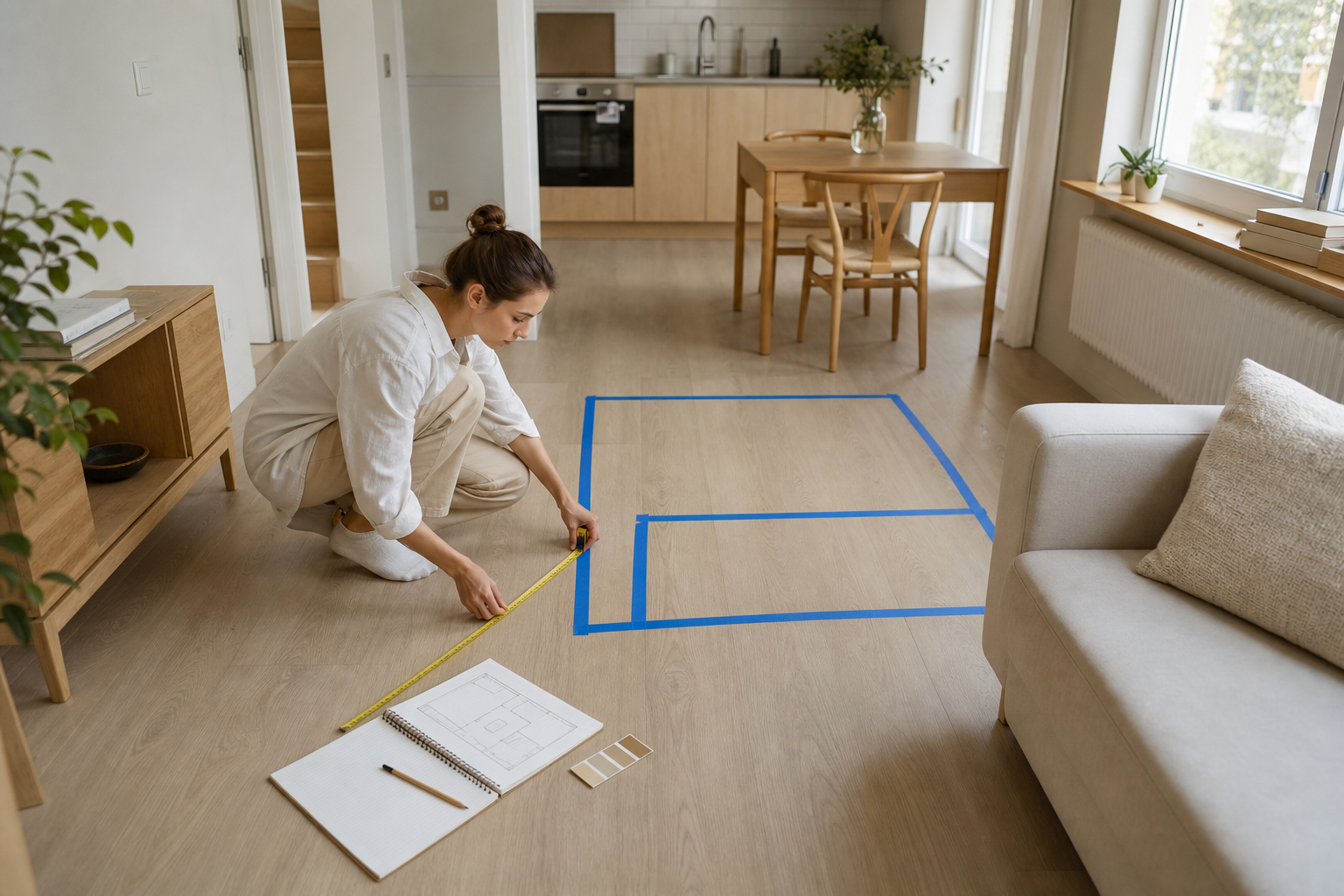
Outcome. Measure Before You Buy reduces decision friction and keeps a compact room visually calmer.
Materials and placement. Use dimensions, removable fittings, and containers sized to the actual contents rather than to an idealized photo.
How to do it. Record wall lengths, door swings, outlets, and the narrowest walking path; tape the proposed footprint on the floor before ordering.
Pro tip or warning. Protect door swings and walking paths first; storage that obstructs movement is not an improvement.
Why it works. The idea works because it shortens the distance between using an item and putting it away while limiting visual noise.
2. Use the Full Wall Height
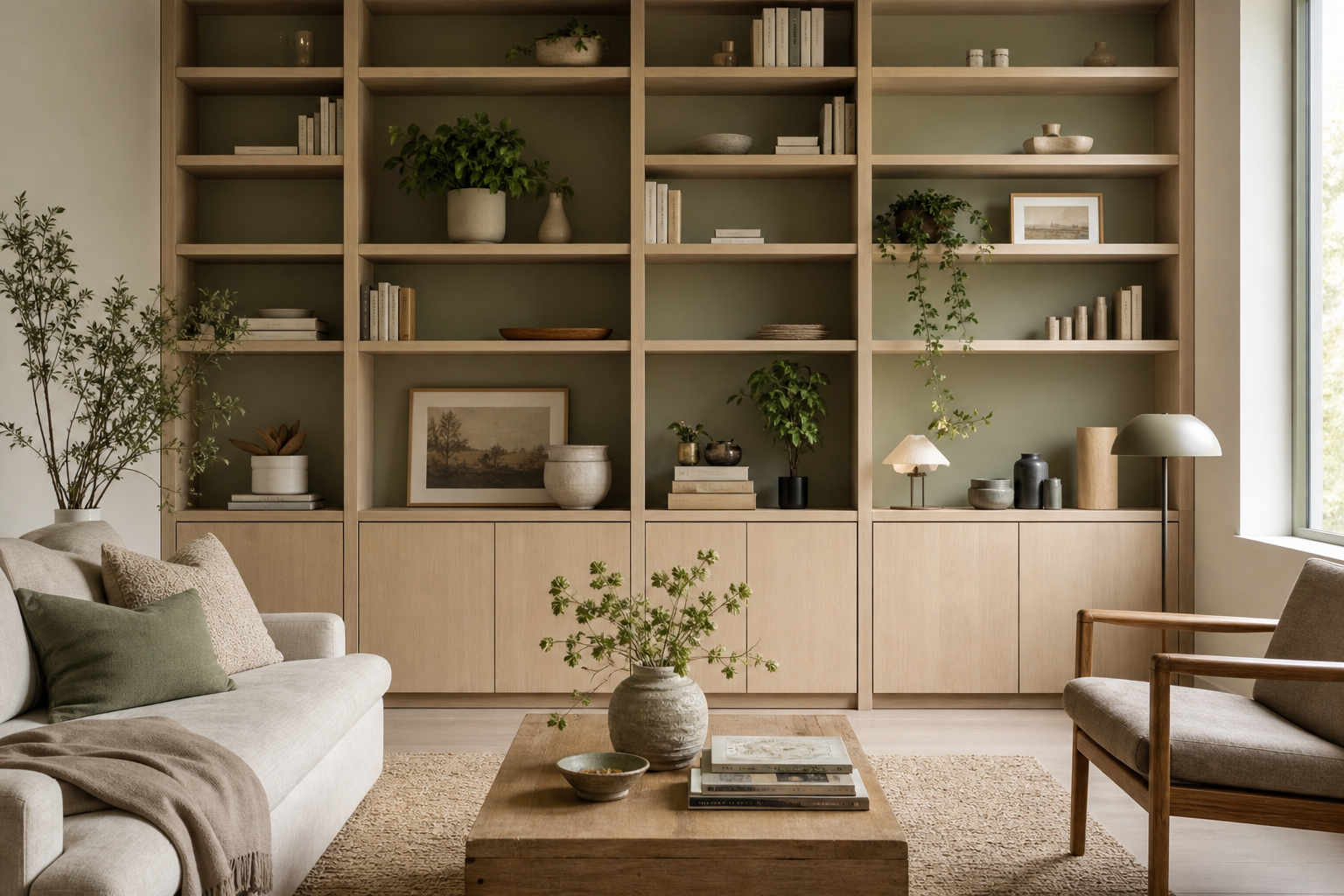
Outcome. Use the Full Wall Height reduces decision friction and keeps a compact room visually calmer.
Materials and placement. Use dimensions, removable fittings, and containers sized to the actual contents rather than to an idealized photo.
How to do it. Keep closed storage below eye level, place attractive or light items above, and anchor tall units according to the manufacturer’s instructions.
Pro tip or warning. Protect door swings and walking paths first; storage that obstructs movement is not an improvement.
Why it works. The idea works because it shortens the distance between using an item and putting it away while limiting visual noise.
3. Create a Landing Strip
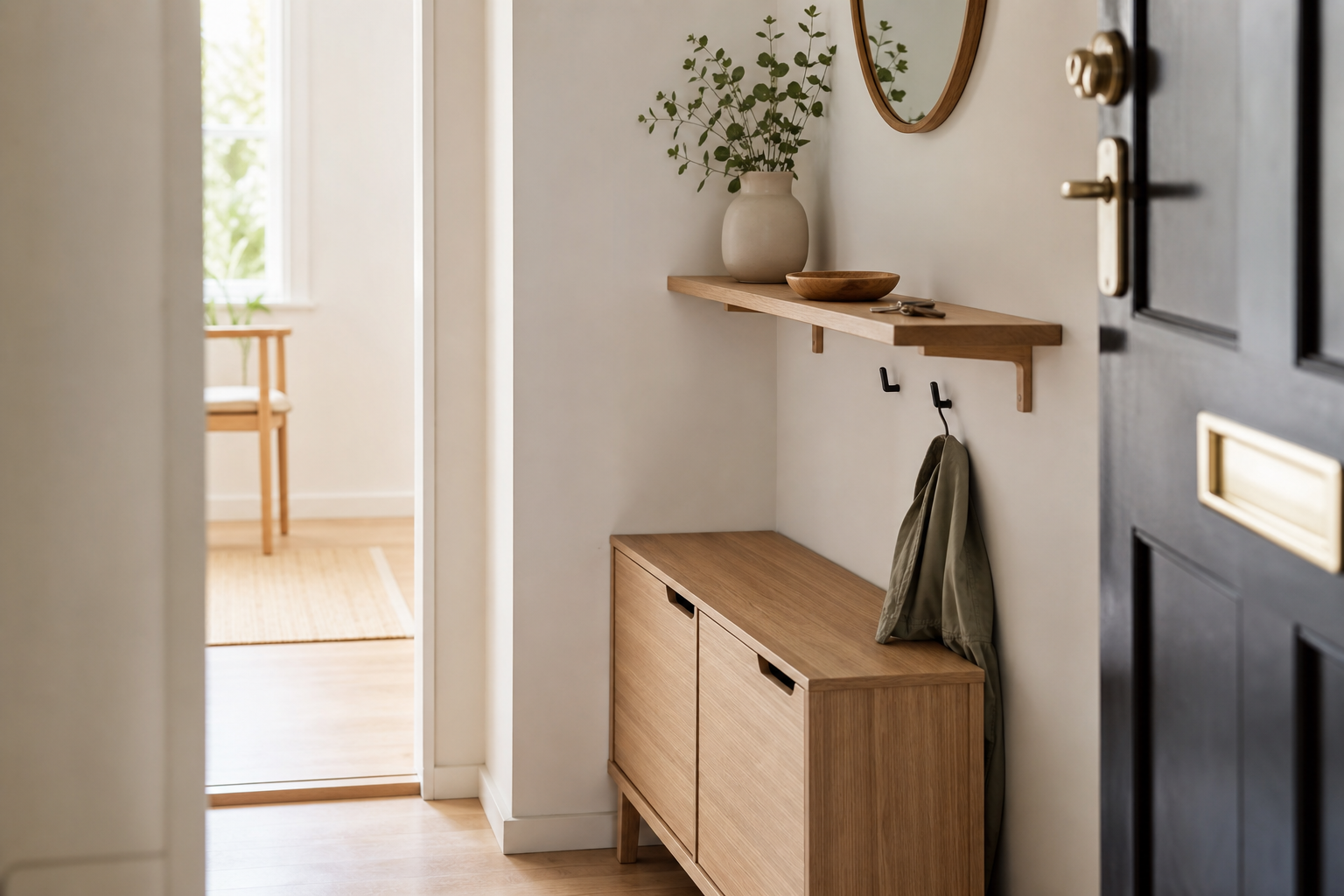
Outcome. Create a Landing Strip reduces decision friction and keeps a compact room visually calmer.
Materials and placement. Use dimensions, removable fittings, and containers sized to the actual contents rather than to an idealized photo.
How to do it. Combine a shallow shelf, one bowl, a few hooks, and enclosed shoe space beside the entrance so arrivals have an immediate destination.
Pro tip or warning. Protect door swings and walking paths first; storage that obstructs movement is not an improvement.
Why it works. The idea works because it shortens the distance between using an item and putting it away while limiting visual noise.
4. Choose Furniture With Closed Storage
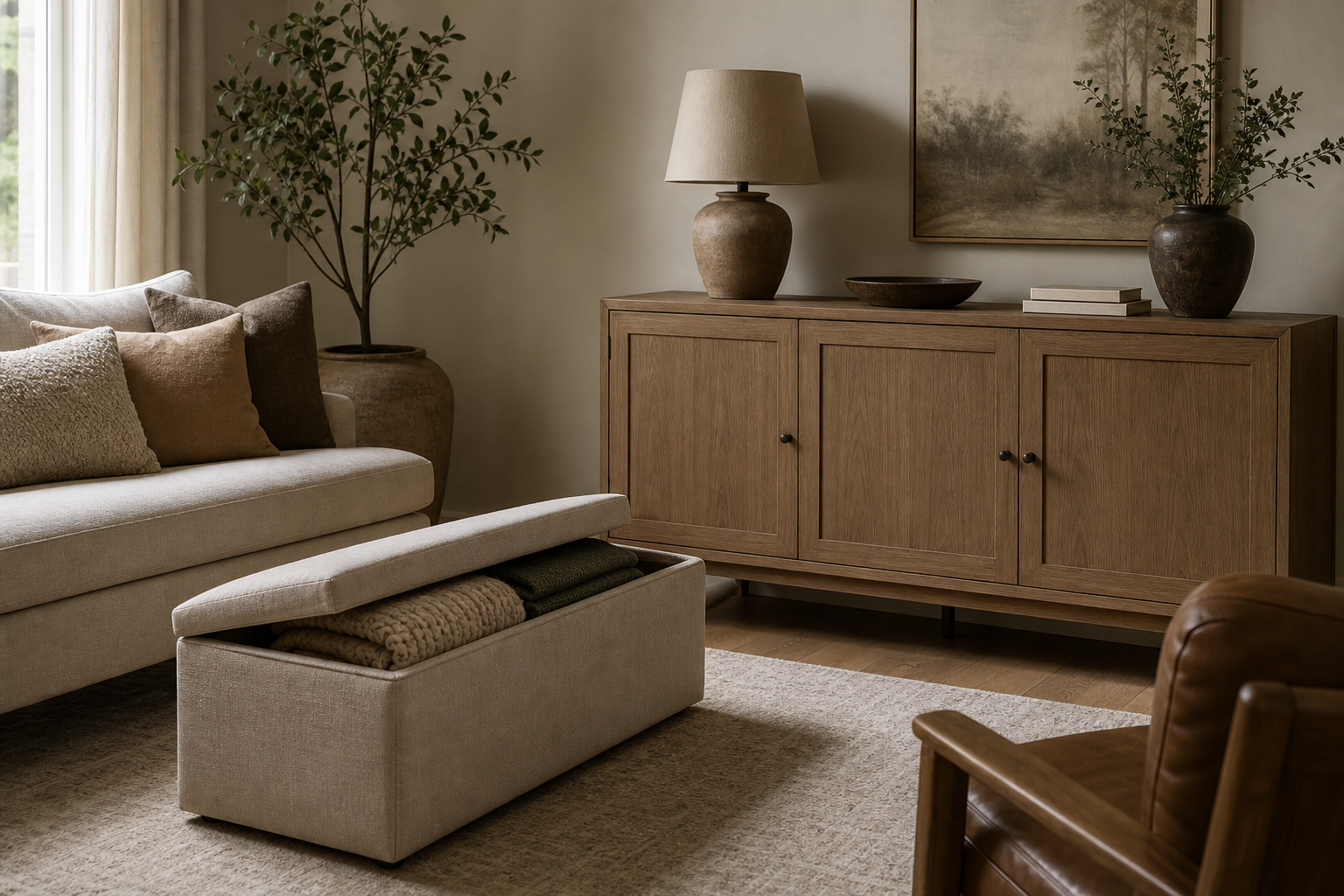
Outcome. Choose Furniture With Closed Storage reduces decision friction and keeps a compact room visually calmer.
Materials and placement. Use dimensions, removable fittings, and containers sized to the actual contents rather than to an idealized photo.
How to do it. Give choose furniture with closed storage one defined zone, test it through a normal week, and adjust the location before purchasing permanent organizers.
Pro tip or warning. Protect door swings and walking paths first; storage that obstructs movement is not an improvement.
Why it works. The idea works because it shortens the distance between using an item and putting it away while limiting visual noise.
5. Add a Second Shelf Inside Cabinets
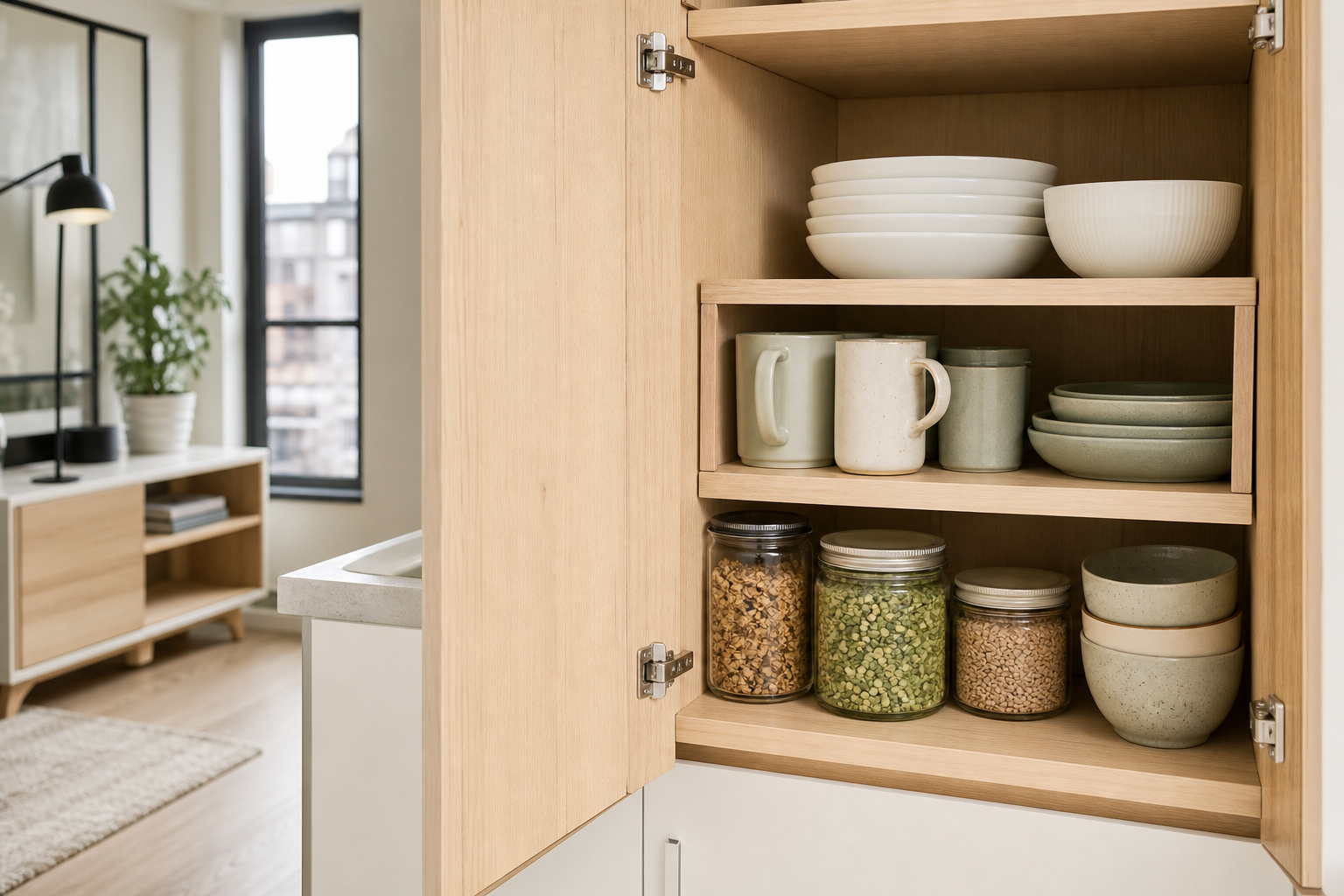
Outcome. Add a Second Shelf Inside Cabinets reduces decision friction and keeps a compact room visually calmer.
Materials and placement. Use dimensions, removable fittings, and containers sized to the actual contents rather than to an idealized photo.
How to do it. Use a removable riser to split tall shelf cavities, checking that plates and containers can still be lifted out comfortably.
Pro tip or warning. Protect door swings and walking paths first; storage that obstructs movement is not an improvement.
Why it works. The idea works because it shortens the distance between using an item and putting it away while limiting visual noise.
6. Corral Categories in Removable Bins
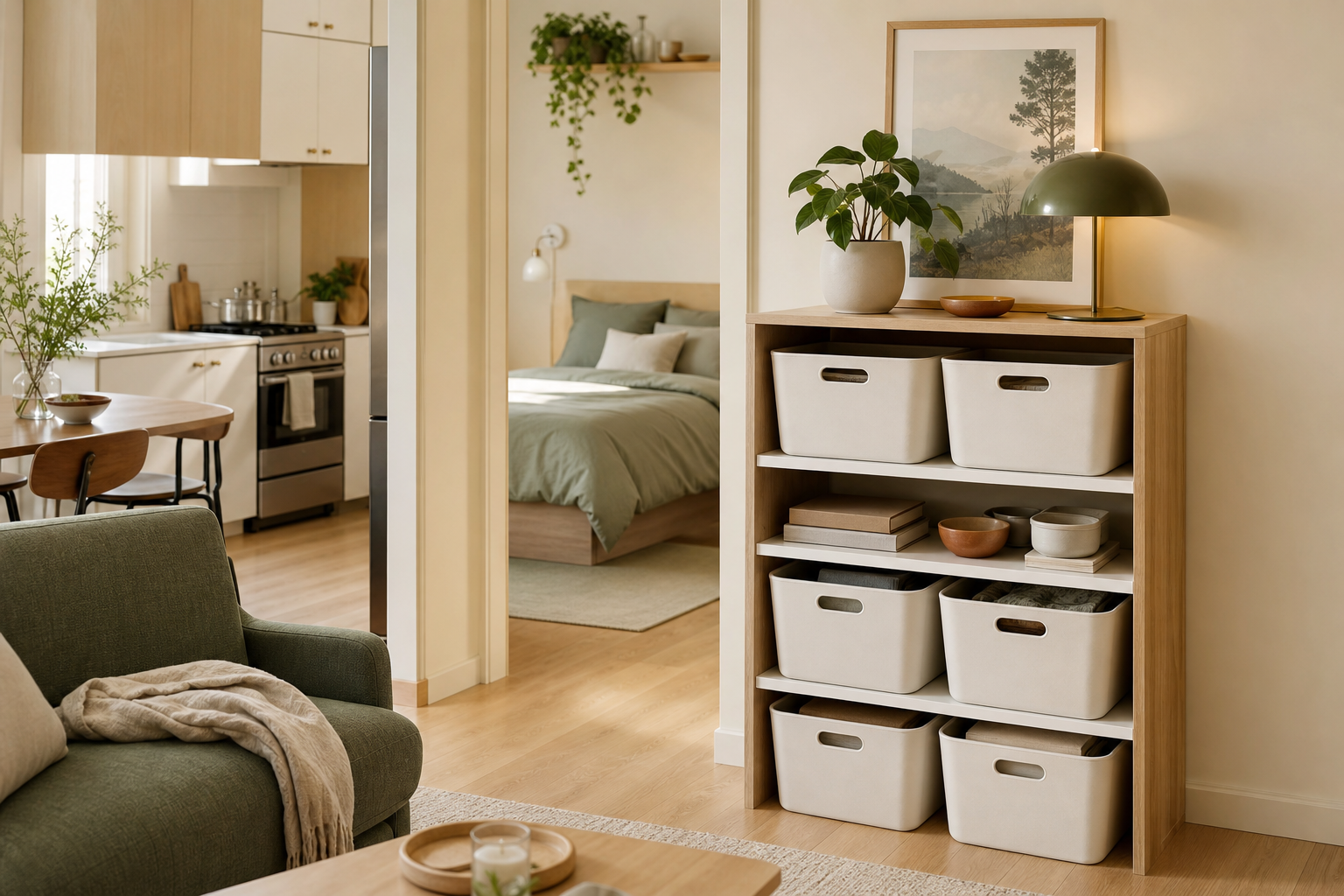
Outcome. Corral Categories in Removable Bins reduces decision friction and keeps a compact room visually calmer.
Materials and placement. Use dimensions, removable fittings, and containers sized to the actual contents rather than to an idealized photo.
How to do it. Give corral categories in removable bins one defined zone, test it through a normal week, and adjust the location before purchasing permanent organizers.
Pro tip or warning. Protect door swings and walking paths first; storage that obstructs movement is not an improvement.
Why it works. The idea works because it shortens the distance between using an item and putting it away while limiting visual noise.
7. Turn Doors Into Storage Zones
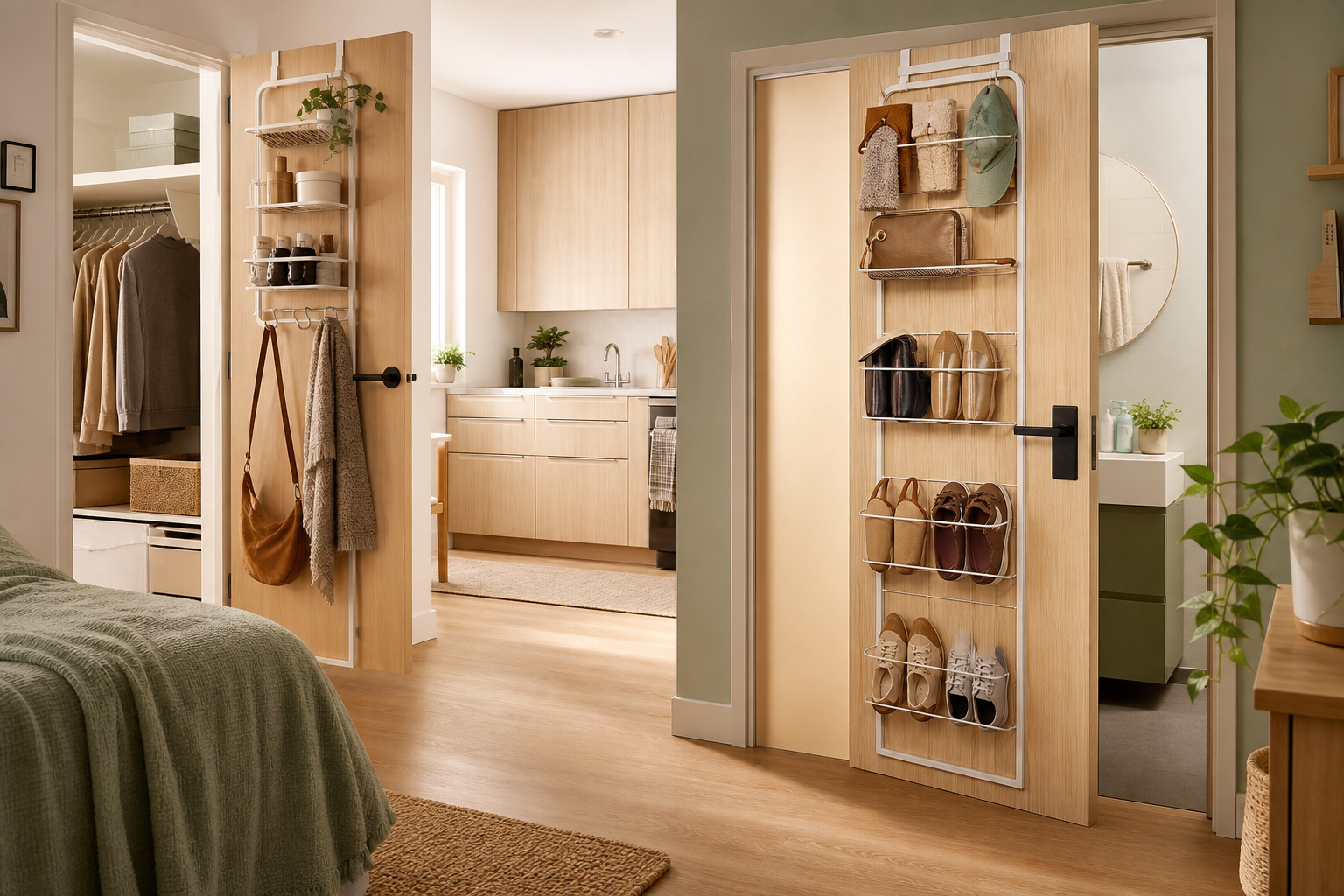
Outcome. Turn Doors Into Storage Zones reduces decision friction and keeps a compact room visually calmer.
Materials and placement. Use dimensions, removable fittings, and containers sized to the actual contents rather than to an idealized photo.
How to do it. Choose shallow organizers that do not interfere with hinges, handles, ventilation, or the door’s full swing.
Pro tip or warning. Protect door swings and walking paths first; storage that obstructs movement is not an improvement.
Why it works. The idea works because it shortens the distance between using an item and putting it away while limiting visual noise.
8. Use Drawer Dividers
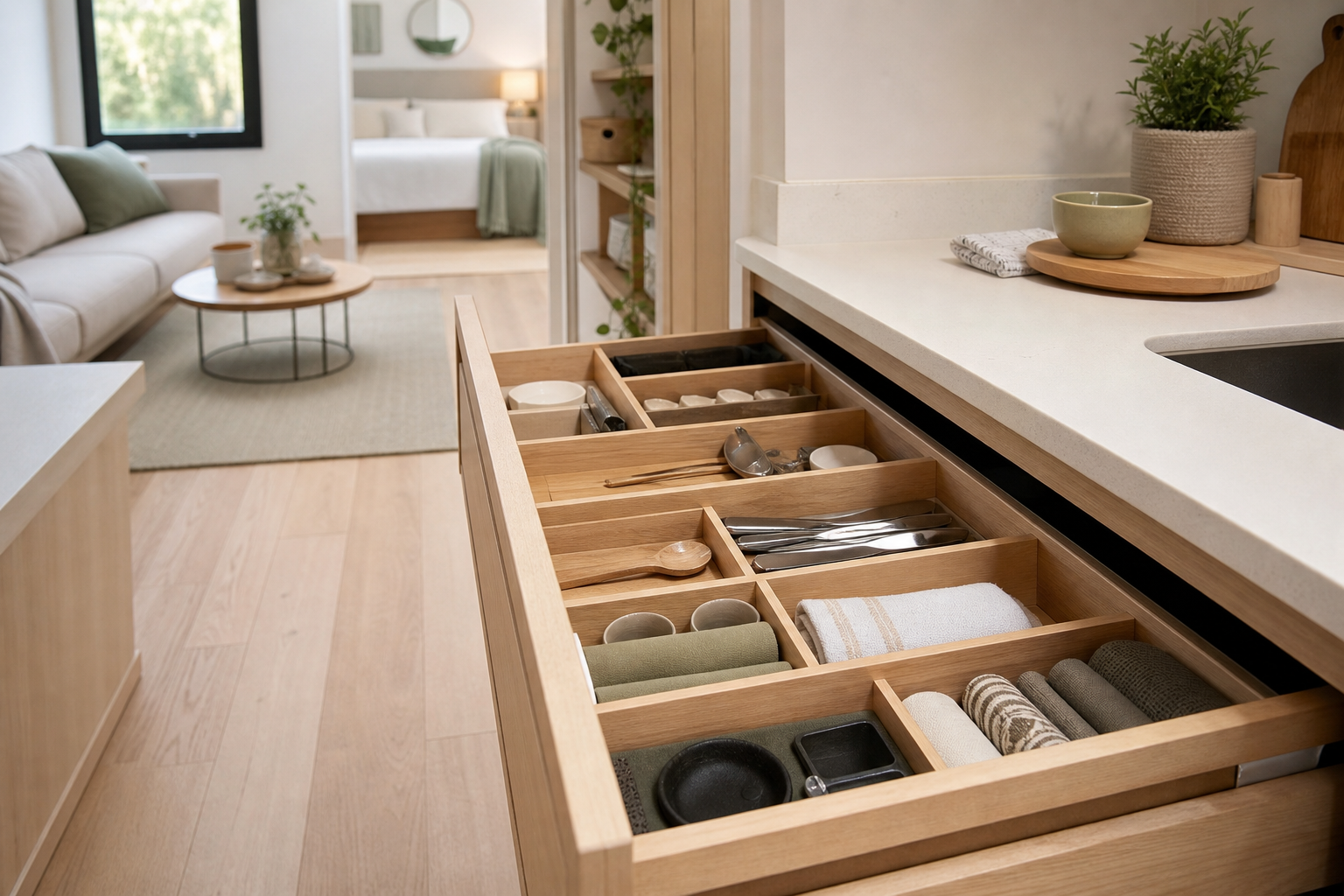
Outcome. Use Drawer Dividers reduces decision friction and keeps a compact room visually calmer.
Materials and placement. Use dimensions, removable fittings, and containers sized to the actual contents rather than to an idealized photo.
How to do it. Measure the interior—not the drawer front—and assign each compartment one category before buying dividers.
Pro tip or warning. Protect door swings and walking paths first; storage that obstructs movement is not an improvement.
Why it works. The idea works because it shortens the distance between using an item and putting it away while limiting visual noise.
9. Keep Everyday Items in the Prime Zone
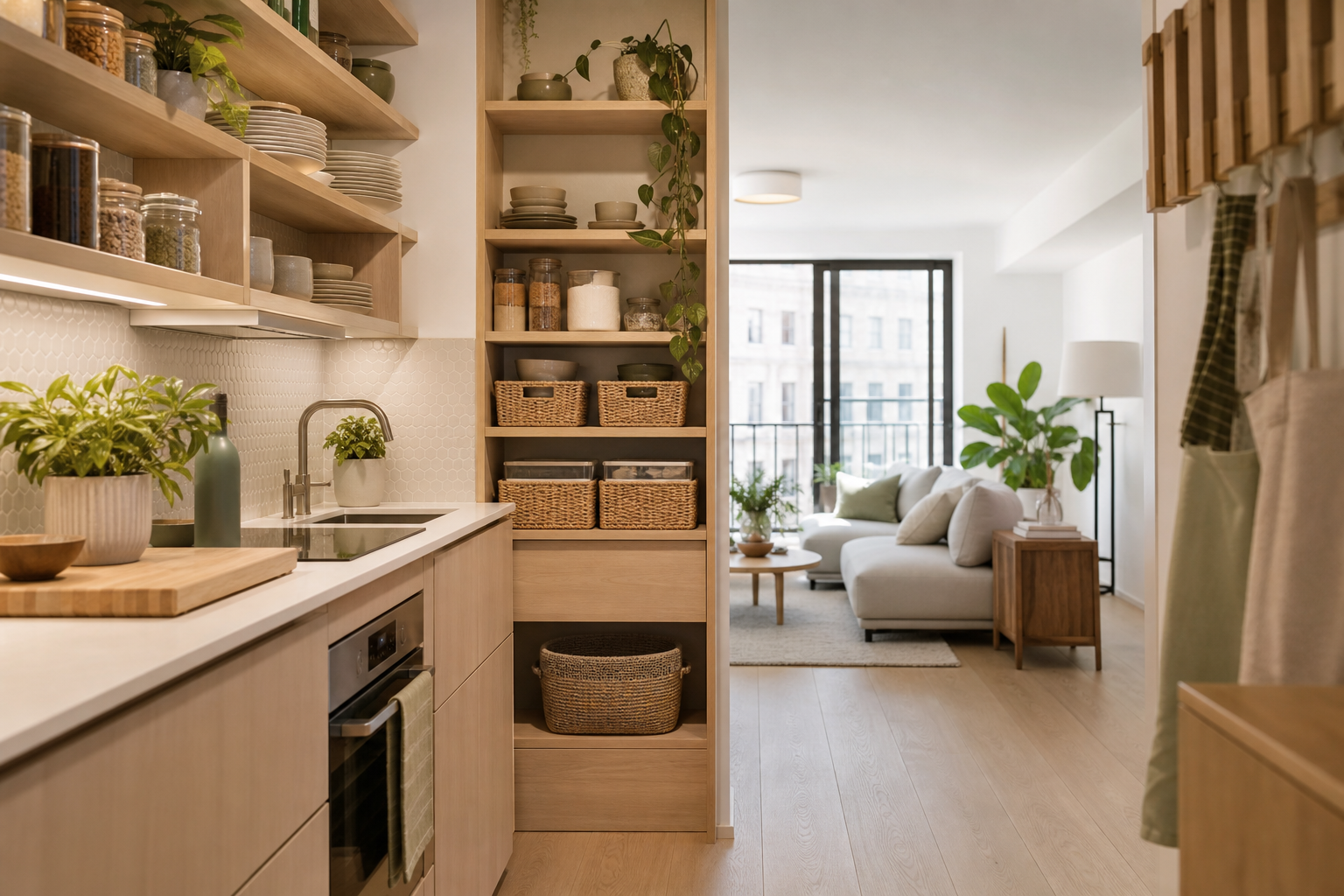
Outcome. Keep Everyday Items in the Prime Zone reduces decision friction and keeps a compact room visually calmer.
Materials and placement. Use dimensions, removable fittings, and containers sized to the actual contents rather than to an idealized photo.
How to do it. Give keep everyday items in the prime zone one defined zone, test it through a normal week, and adjust the location before purchasing permanent organizers.
Pro tip or warning. Protect door swings and walking paths first; storage that obstructs movement is not an improvement.
Why it works. The idea works because it shortens the distance between using an item and putting it away while limiting visual noise.
10. Store by Frequency Not by Room
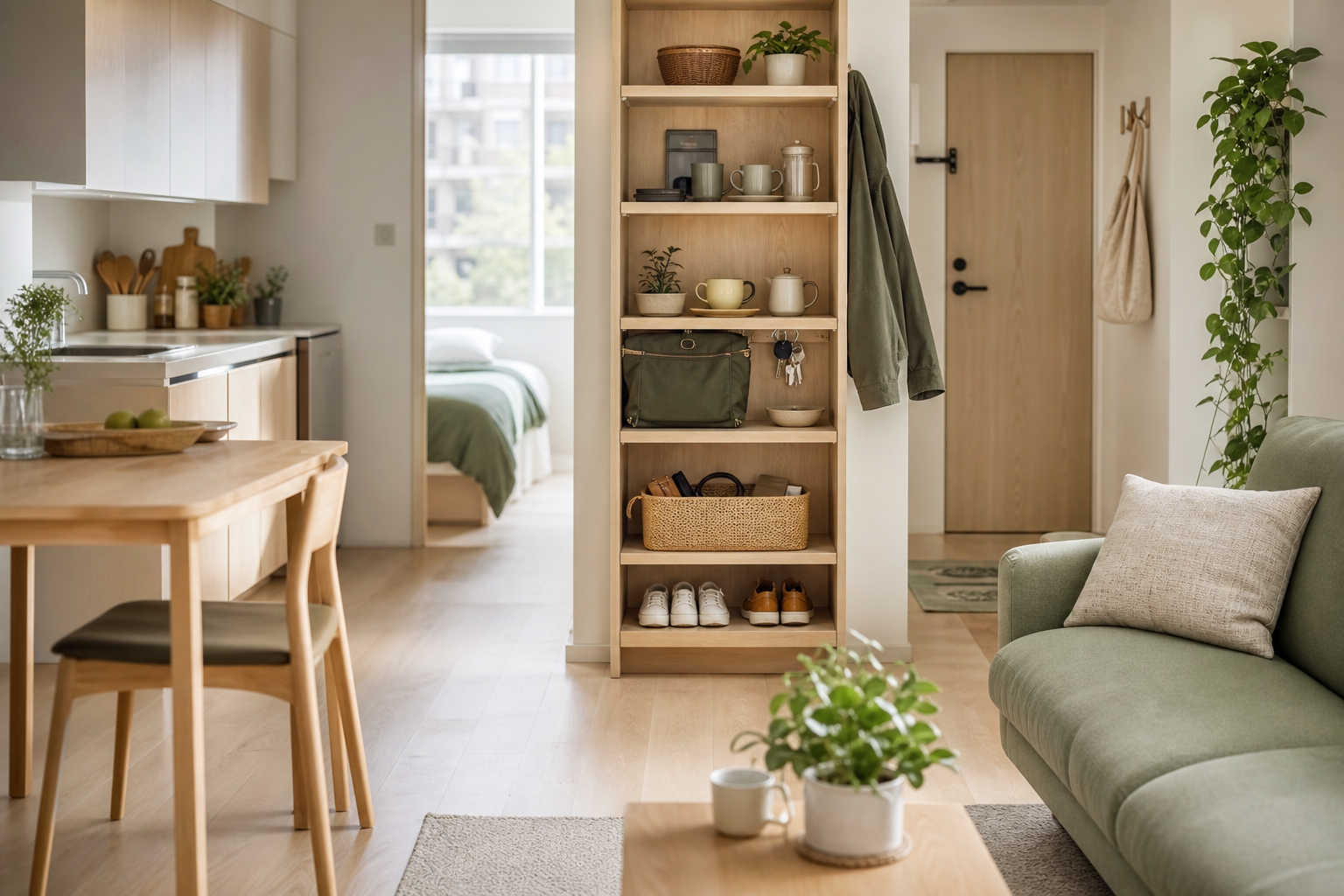
Outcome. Store by Frequency Not by Room reduces decision friction and keeps a compact room visually calmer.
Materials and placement. Use dimensions, removable fittings, and containers sized to the actual contents rather than to an idealized photo.
How to do it. Give store by frequency not by room one defined zone, test it through a normal week, and adjust the location before purchasing permanent organizers.
Pro tip or warning. Protect door swings and walking paths first; storage that obstructs movement is not an improvement.
Why it works. The idea works because it shortens the distance between using an item and putting it away while limiting visual noise.
11. Build a One-In One-Out Habit
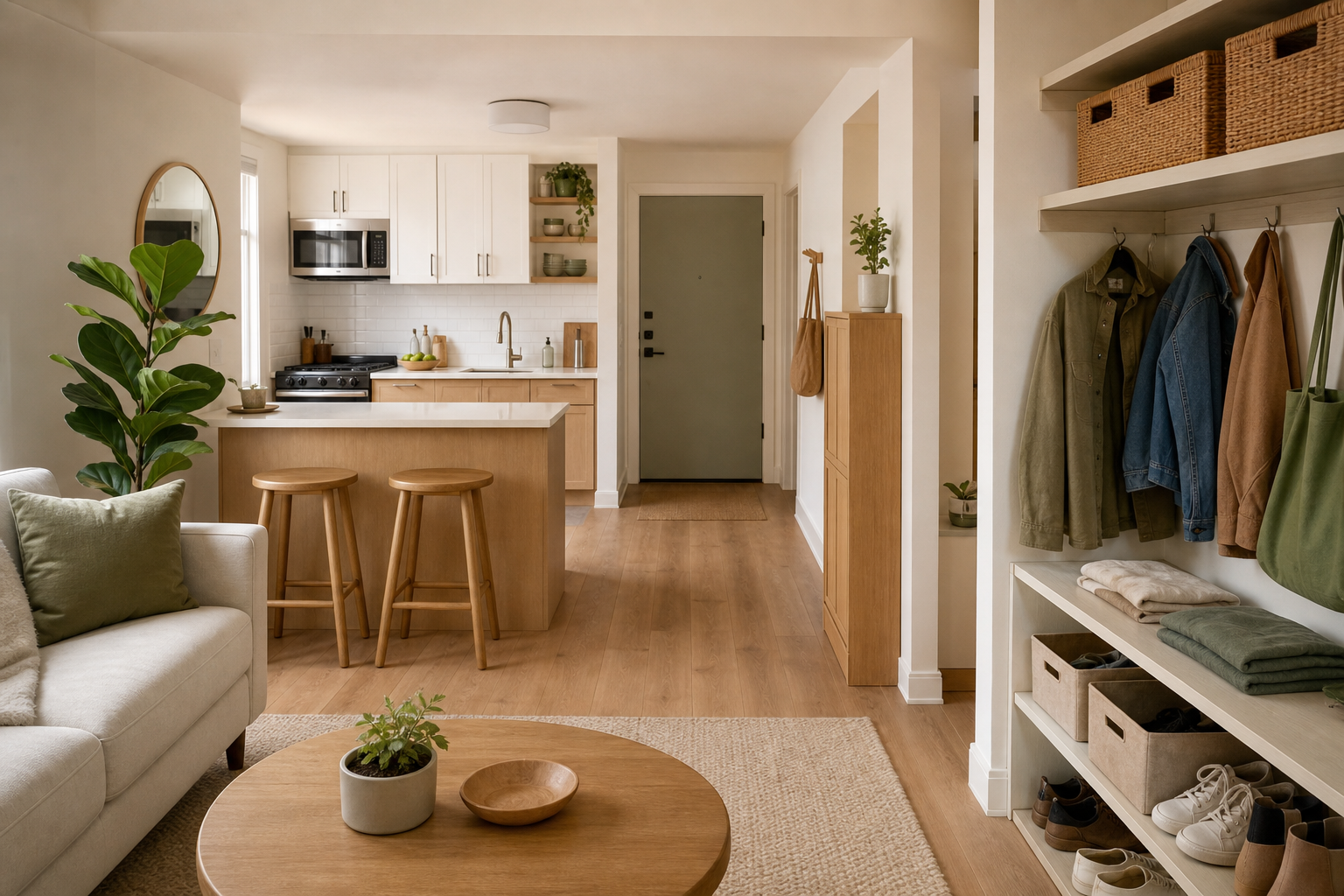
Outcome. Build a One-In One-Out Habit reduces decision friction and keeps a compact room visually calmer.
Materials and placement. Use dimensions, removable fittings, and containers sized to the actual contents rather than to an idealized photo.
How to do it. Give build a one-in one-out habit one defined zone, test it through a normal week, and adjust the location before purchasing permanent organizers.
Pro tip or warning. Protect door swings and walking paths first; storage that obstructs movement is not an improvement.
Why it works. The idea works because it shortens the distance between using an item and putting it away while limiting visual noise.
12. Use Matching Containers Selectively
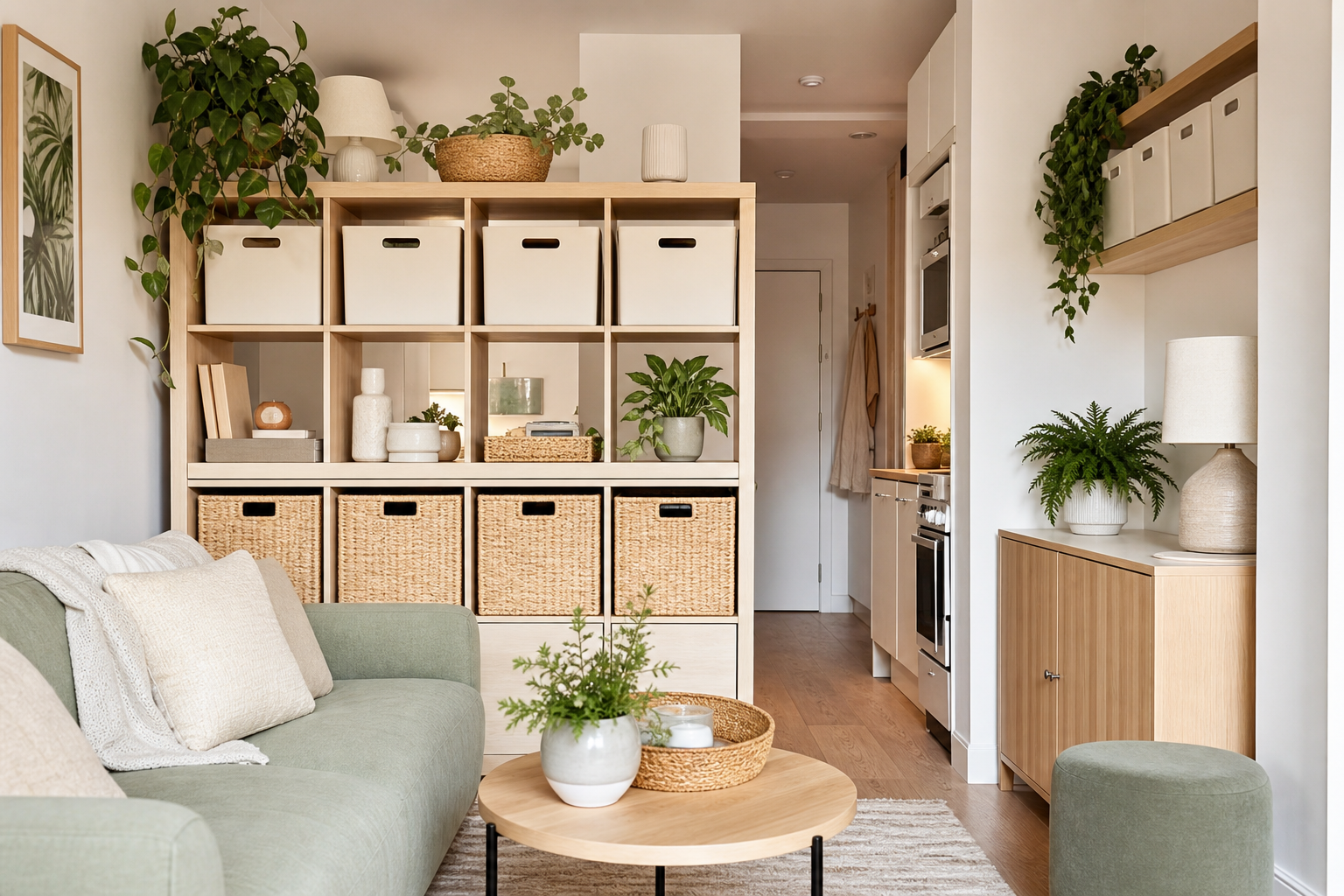
Outcome. Use Matching Containers Selectively reduces decision friction and keeps a compact room visually calmer.
Materials and placement. Use dimensions, removable fittings, and containers sized to the actual contents rather than to an idealized photo.
How to do it. Give use matching containers selectively one defined zone, test it through a normal week, and adjust the location before purchasing permanent organizers.
Pro tip or warning. Protect door swings and walking paths first; storage that obstructs movement is not an improvement.
Why it works. The idea works because it shortens the distance between using an item and putting it away while limiting visual noise.
13. Float Furniture Off the Floor
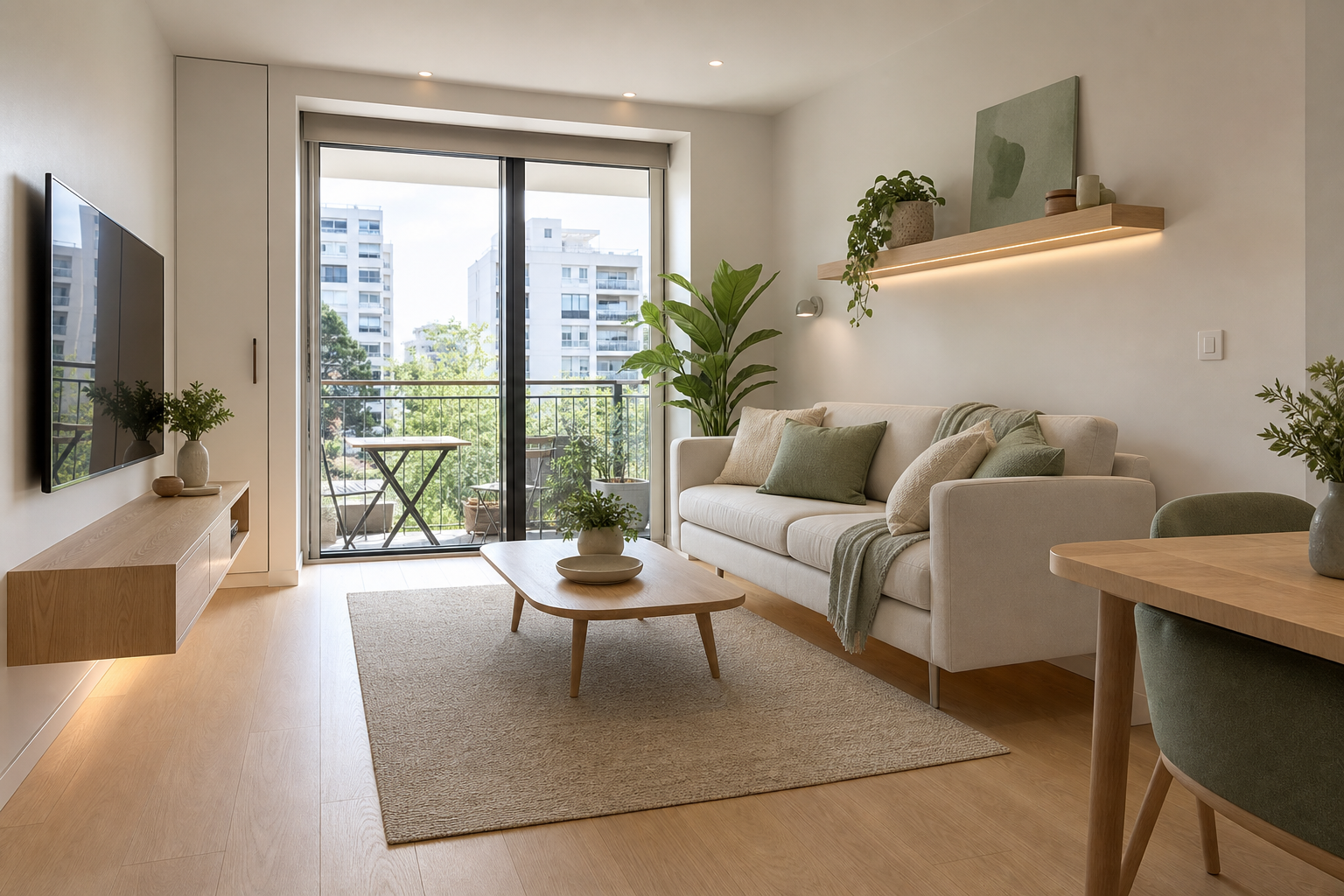
Outcome. Float Furniture Off the Floor reduces decision friction and keeps a compact room visually calmer.
Materials and placement. Use dimensions, removable fittings, and containers sized to the actual contents rather than to an idealized photo.
How to do it. Give float furniture off the floor one defined zone, test it through a normal week, and adjust the location before purchasing permanent organizers.
Pro tip or warning. Protect door swings and walking paths first; storage that obstructs movement is not an improvement.
Why it works. The idea works because it shortens the distance between using an item and putting it away while limiting visual noise.
14. Hide Cables and Charging Clutter
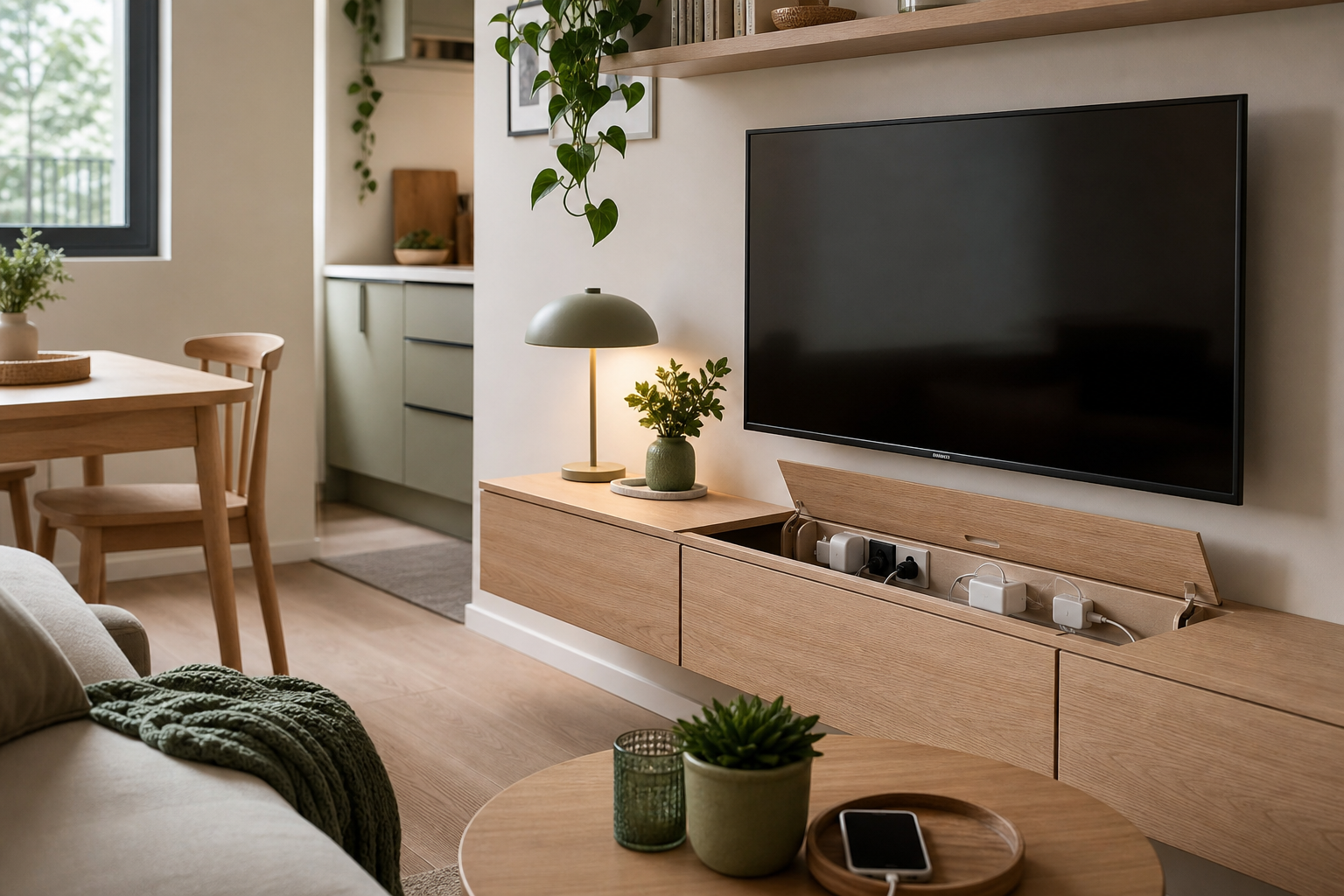
Outcome. Hide Cables and Charging Clutter reduces decision friction and keeps a compact room visually calmer.
Materials and placement. Use dimensions, removable fittings, and containers sized to the actual contents rather than to an idealized photo.
How to do it. Mount a power strip only as its instructions allow, route leads with removable clips, and keep heat-producing adapters ventilated.
Pro tip or warning. Protect door swings and walking paths first; storage that obstructs movement is not an improvement.
Why it works. The idea works because it shortens the distance between using an item and putting it away while limiting visual noise.
15. Create a Mobile Utility Cart
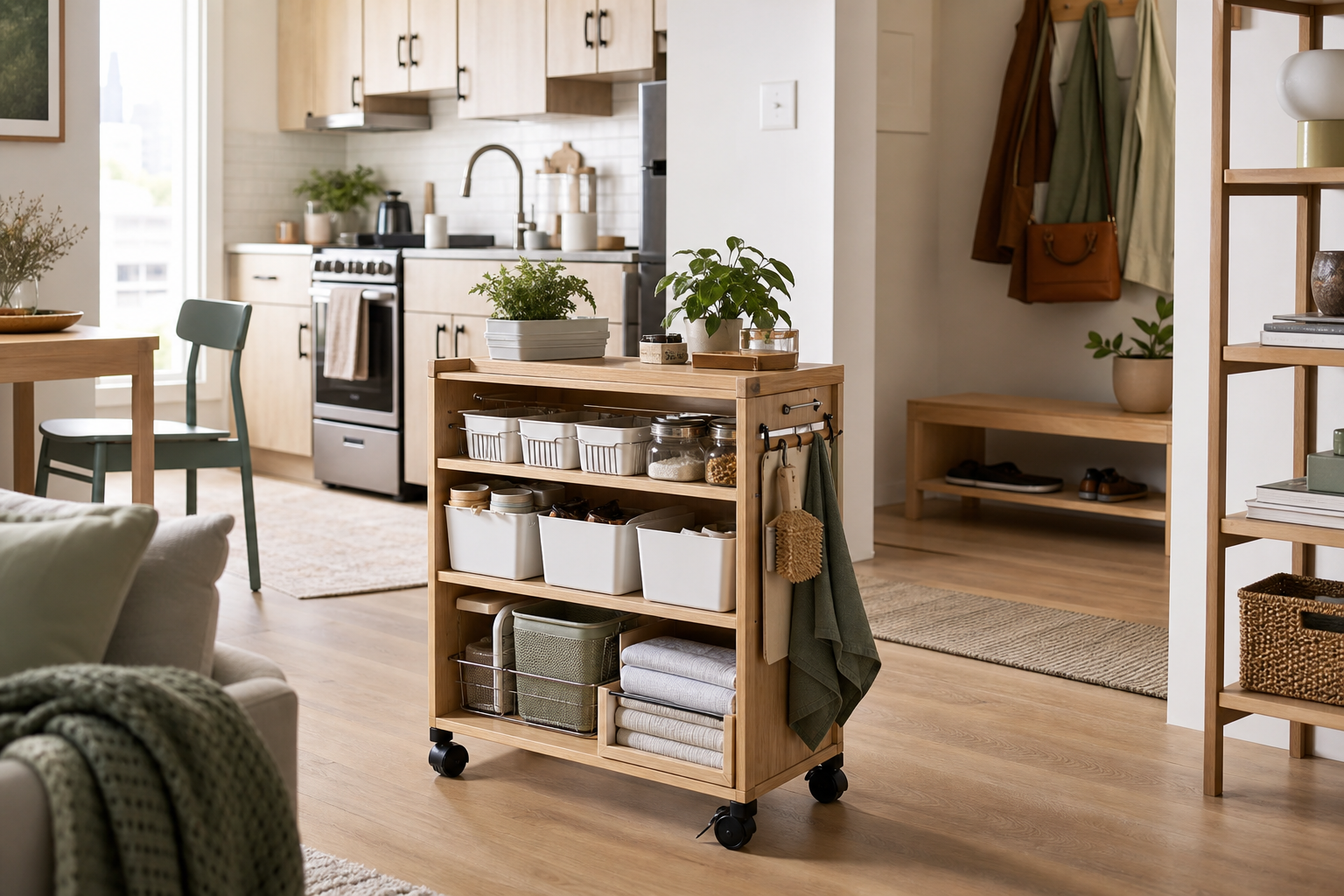
Outcome. Create a Mobile Utility Cart reduces decision friction and keeps a compact room visually calmer.
Materials and placement. Use dimensions, removable fittings, and containers sized to the actual contents rather than to an idealized photo.
How to do it. Give create a mobile utility cart one defined zone, test it through a normal week, and adjust the location before purchasing permanent organizers.
Pro tip or warning. Protect door swings and walking paths first; storage that obstructs movement is not an improvement.
Why it works. The idea works because it shortens the distance between using an item and putting it away while limiting visual noise.
16. Use Mirrors to Reduce Visual Weight
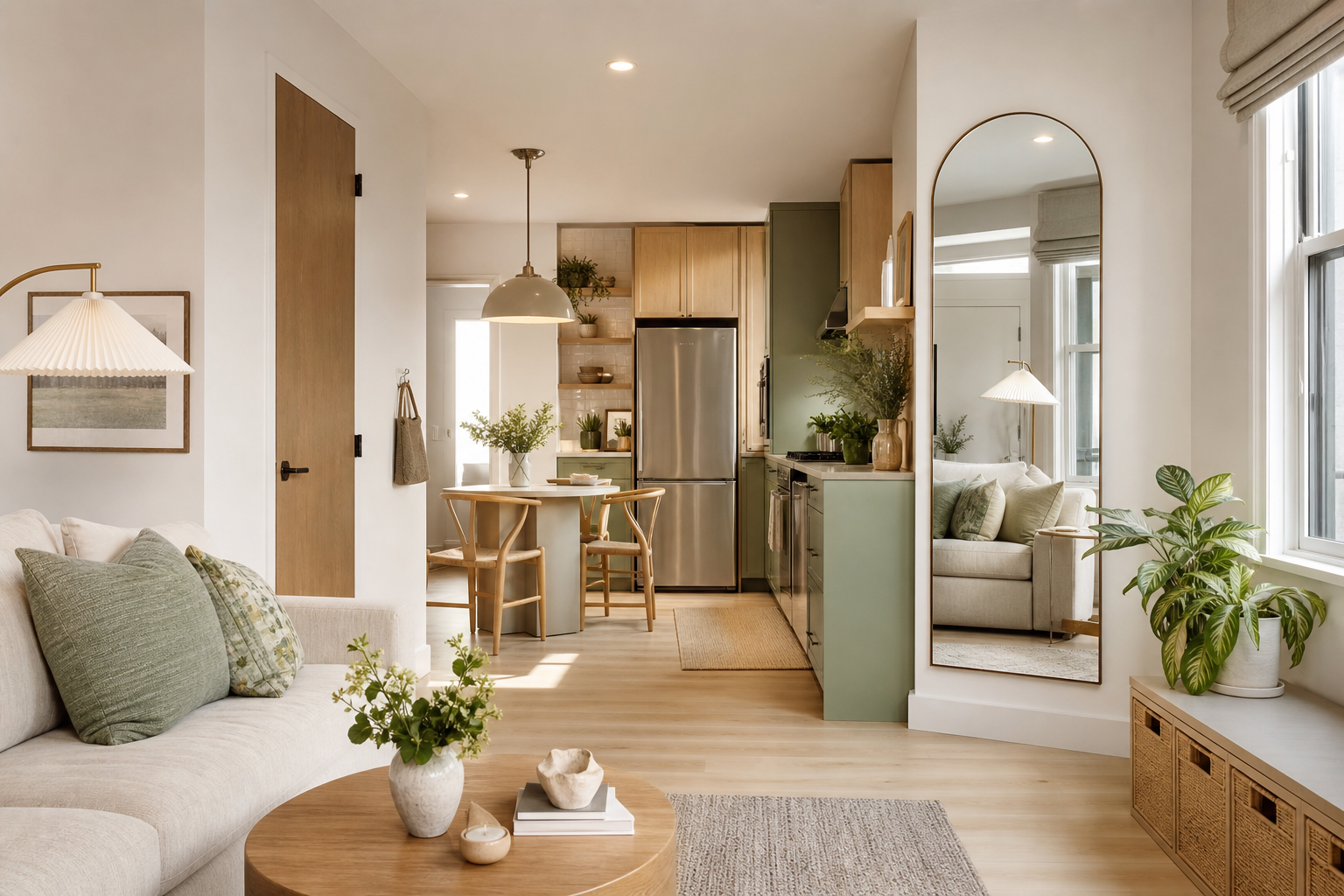
Outcome. Use Mirrors to Reduce Visual Weight reduces decision friction and keeps a compact room visually calmer.
Materials and placement. Use dimensions, removable fittings, and containers sized to the actual contents rather than to an idealized photo.
How to do it. Place a mirror where it reflects daylight or an open view, not a cluttered counter or private area.
Pro tip or warning. Protect door swings and walking paths first; storage that obstructs movement is not an improvement.
Why it works. The idea works because it shortens the distance between using an item and putting it away while limiting visual noise.
17. Leave Intentional Empty Space
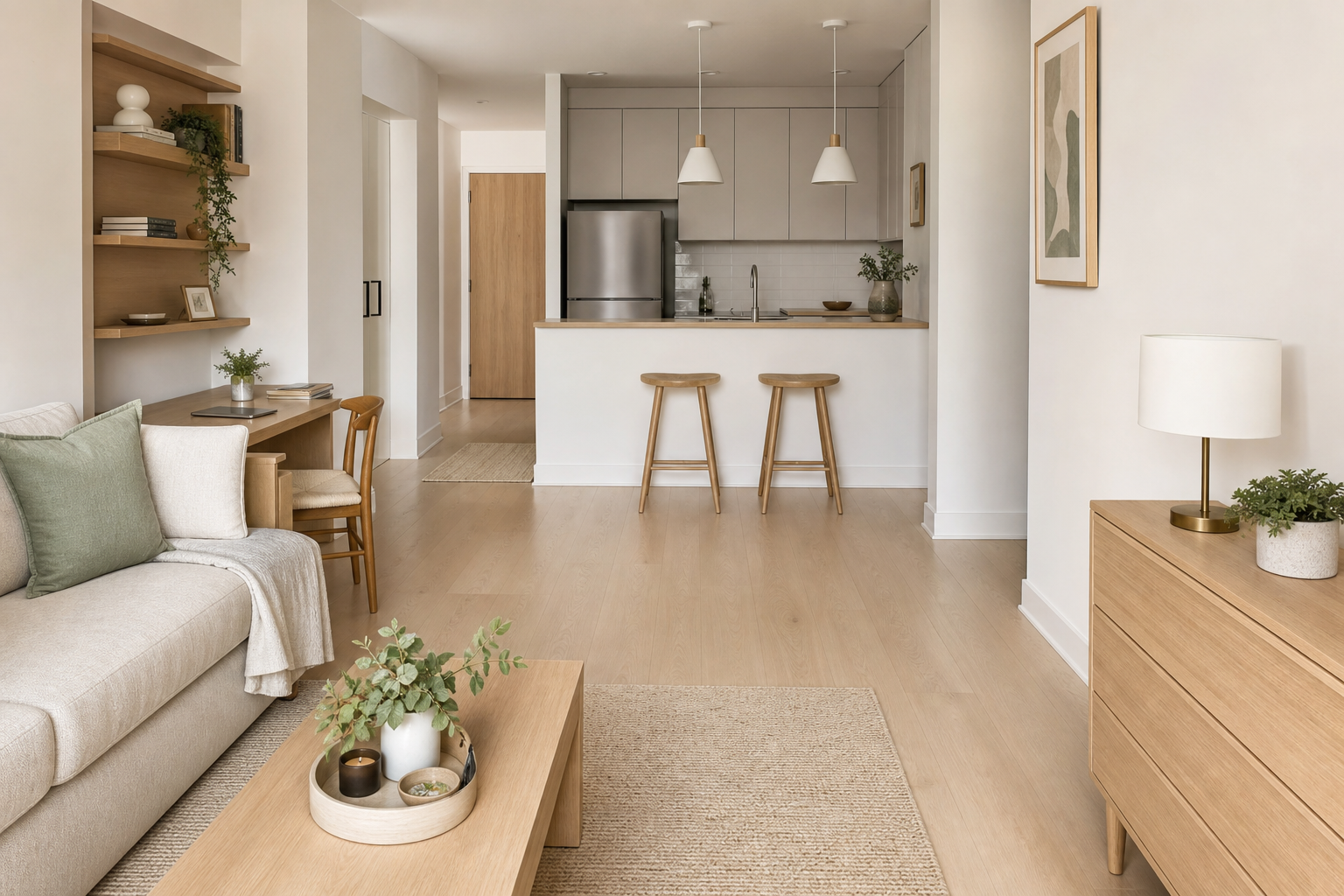
Outcome. Leave Intentional Empty Space reduces decision friction and keeps a compact room visually calmer.
Materials and placement. Use dimensions, removable fittings, and containers sized to the actual contents rather than to an idealized photo.
How to do it. Give leave intentional empty space one defined zone, test it through a normal week, and adjust the location before purchasing permanent organizers.
Pro tip or warning. Protect door swings and walking paths first; storage that obstructs movement is not an improvement.
Why it works. The idea works because it shortens the distance between using an item and putting it away while limiting visual noise.
18. Label the Invisible Categories
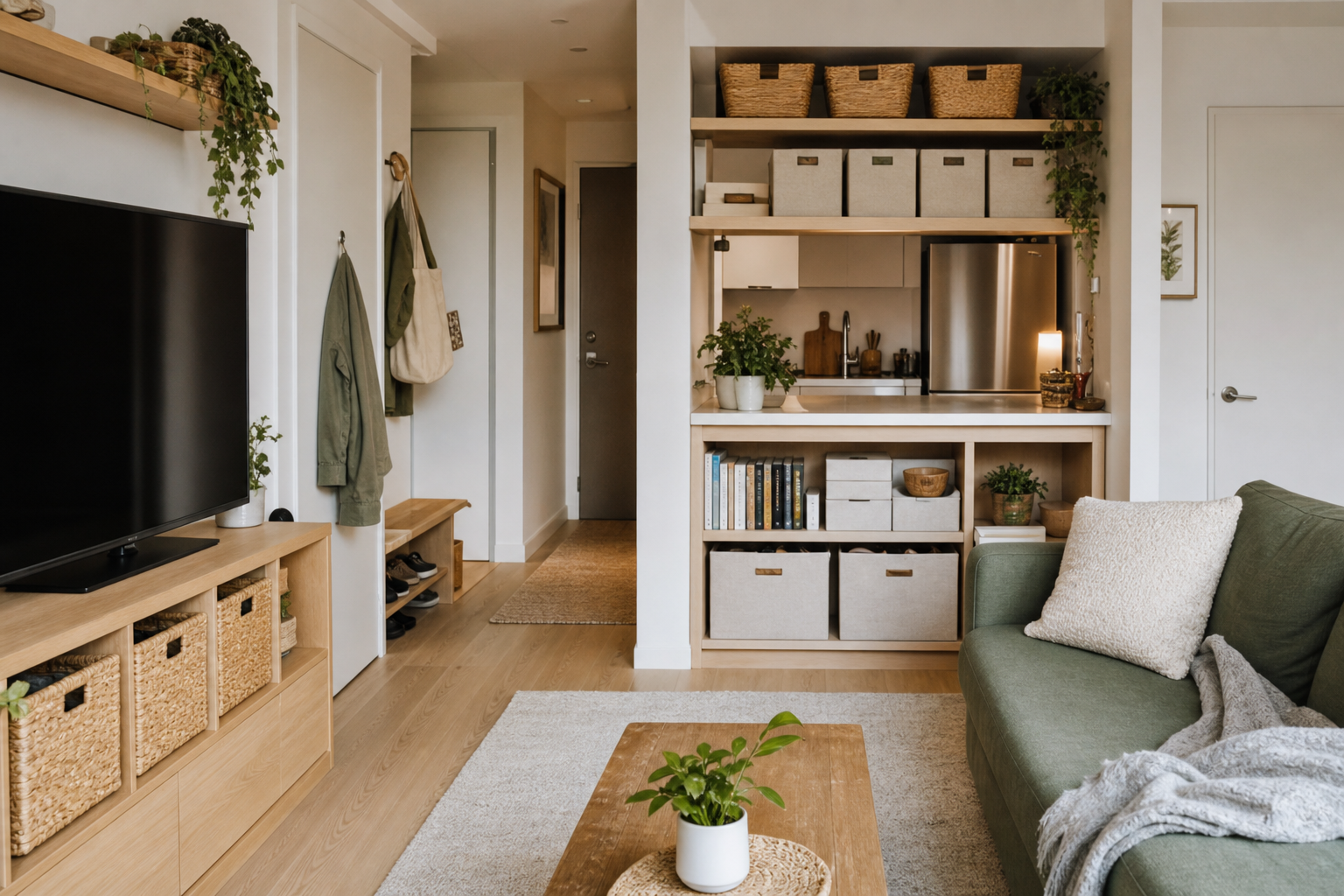
Outcome. Label the Invisible Categories reduces decision friction and keeps a compact room visually calmer.
Materials and placement. Use dimensions, removable fittings, and containers sized to the actual contents rather than to an idealized photo.
How to do it. Label the bin edge or shelf position rather than every visible object; hidden categories need guidance more than display shelves do.
Pro tip or warning. Protect door swings and walking paths first; storage that obstructs movement is not an improvement.
Why it works. The idea works because it shortens the distance between using an item and putting it away while limiting visual noise.
19. Schedule a Ten-Minute Weekly Reset

Outcome. Schedule a Ten-Minute Weekly Reset reduces decision friction and keeps a compact room visually calmer.
Materials and placement. Use dimensions, removable fittings, and containers sized to the actual contents rather than to an idealized photo.
How to do it. Set a short timer, return items to their zones, clear one horizontal surface, and stop when the timer ends.
Pro tip or warning. Protect door swings and walking paths first; storage that obstructs movement is not an improvement.
Why it works. The idea works because it shortens the distance between using an item and putting it away while limiting visual noise.
A Quick Decision Guide
| Your priority | Start here | Keep in mind |
|---|---|---|
| Lowest-cost change | Use what you already own in a new arrangement | Measure and test before buying extras |
| Renter-friendly update | Choose removable, freestanding, or textile-based ideas | Follow lease rules and avoid surface damage |
| Biggest visual impact | Change one focal plane, fixture, or color story | Sample it under real lighting first |
| Easier daily routine | Improve reach, comfort, or cleanup | Design around actual habits, not an ideal routine |
| Long-term result | Invest effort in durable materials and correct installation | Prioritize safety and repairability |
Conclusion
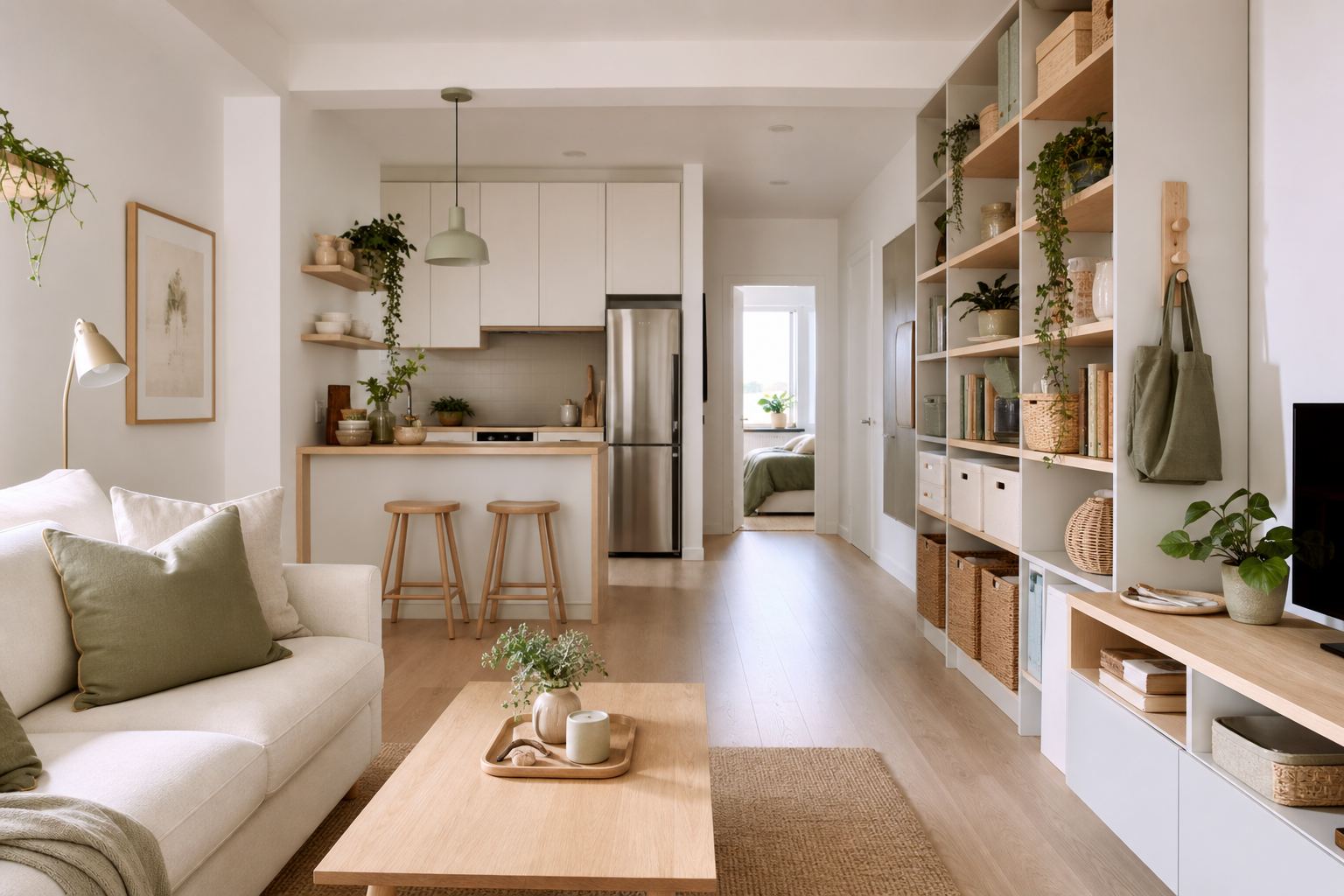
The strongest result is not the room with the most ideas; it is the one where every choice supports how the space is actually used. Begin with a single friction point, make the smallest effective change, and live with it before layering on the next. Photographing the before and after can reveal whether the update improved movement, comfort, maintenance, and visual calm—not just whether it looked exciting for a day.
Frequently Asked Questions
Where should I start in a very cluttered small room?
Clear one walking path and one working surface, then sort a single category. Do not buy organizers until you know what remains.
Does everything need a container?
No. Containers help loose categories; frequently used or attractive objects may be easier to access without one.
How can renters add storage?
Use freestanding shelves, over-door options that fit safely, tension systems, carts, and removable hooks rated for the surface and load.
Should small rooms use only light colors?
No. Light colors can feel airy, but a controlled dark accent can add depth. Consistency and visual boundaries matter more than a rigid rule.
How often should I reset the system?
A short weekly reset plus a seasonal edit is usually easier than waiting for a major reorganization.