5 Street Fashion Looks That'll Make You the Trendsetter of Your Crew (Warning: #5 Is Bold!)
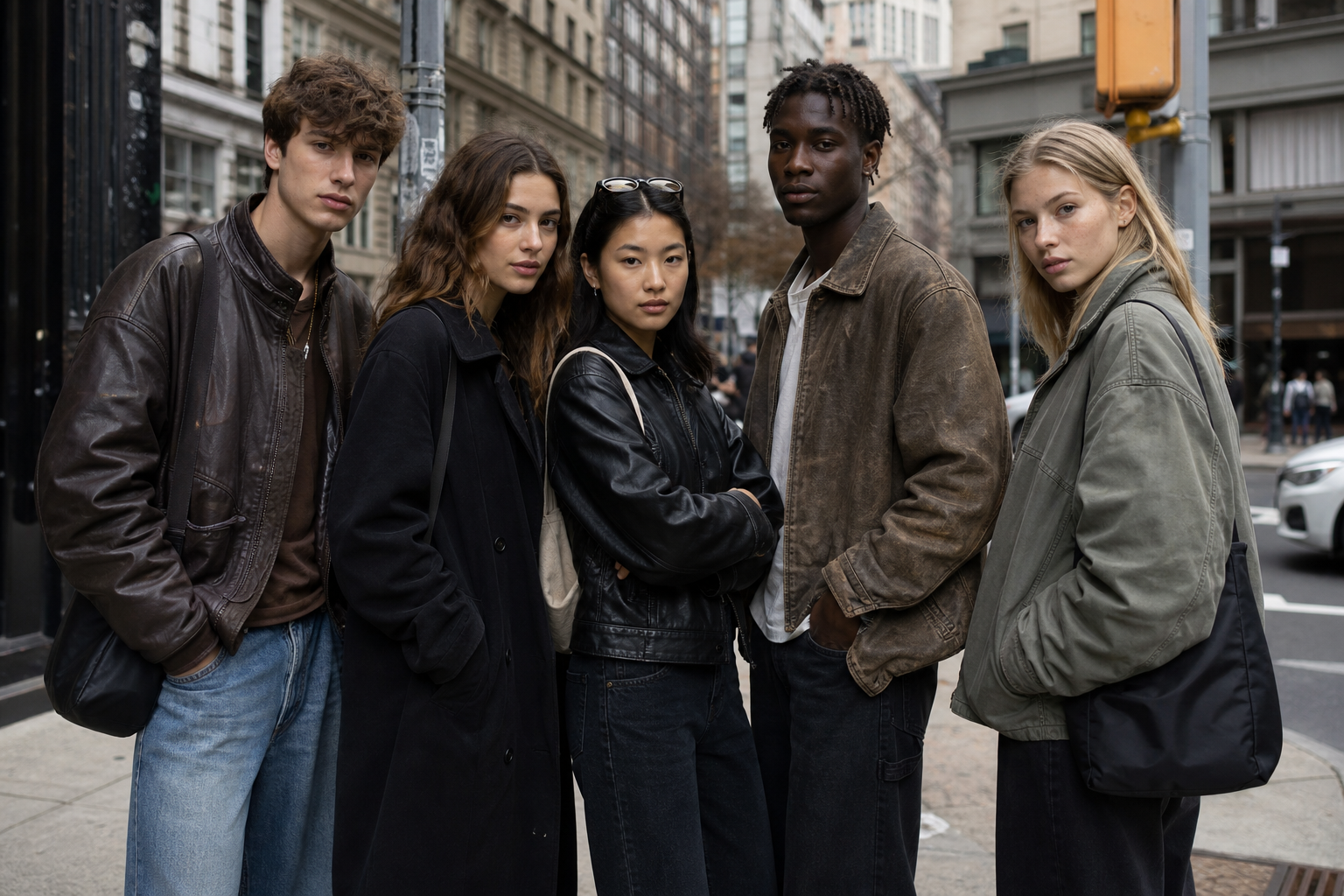
Great street style is less about owning rare pieces than creating tension: tailored with sporty, polished with distressed, oversized with streamlined, or quiet color with one audacious print. These five formulas are starting points, not uniforms. Each one can be adapted to your climate, dress code, mobility needs, and preferred level of attention. The practical trick is to choose one hero decision and let every other item support it.
Key Takeaways
- Start with clothes you already own and one clear styling goal.
- Test movement, comfort, and care needs before committing.
- Use proportion, color, and texture as options rather than body rules.
- Prefer reversible experiments before permanent alterations.
- Buy only when a piece fills a real wardrobe role.
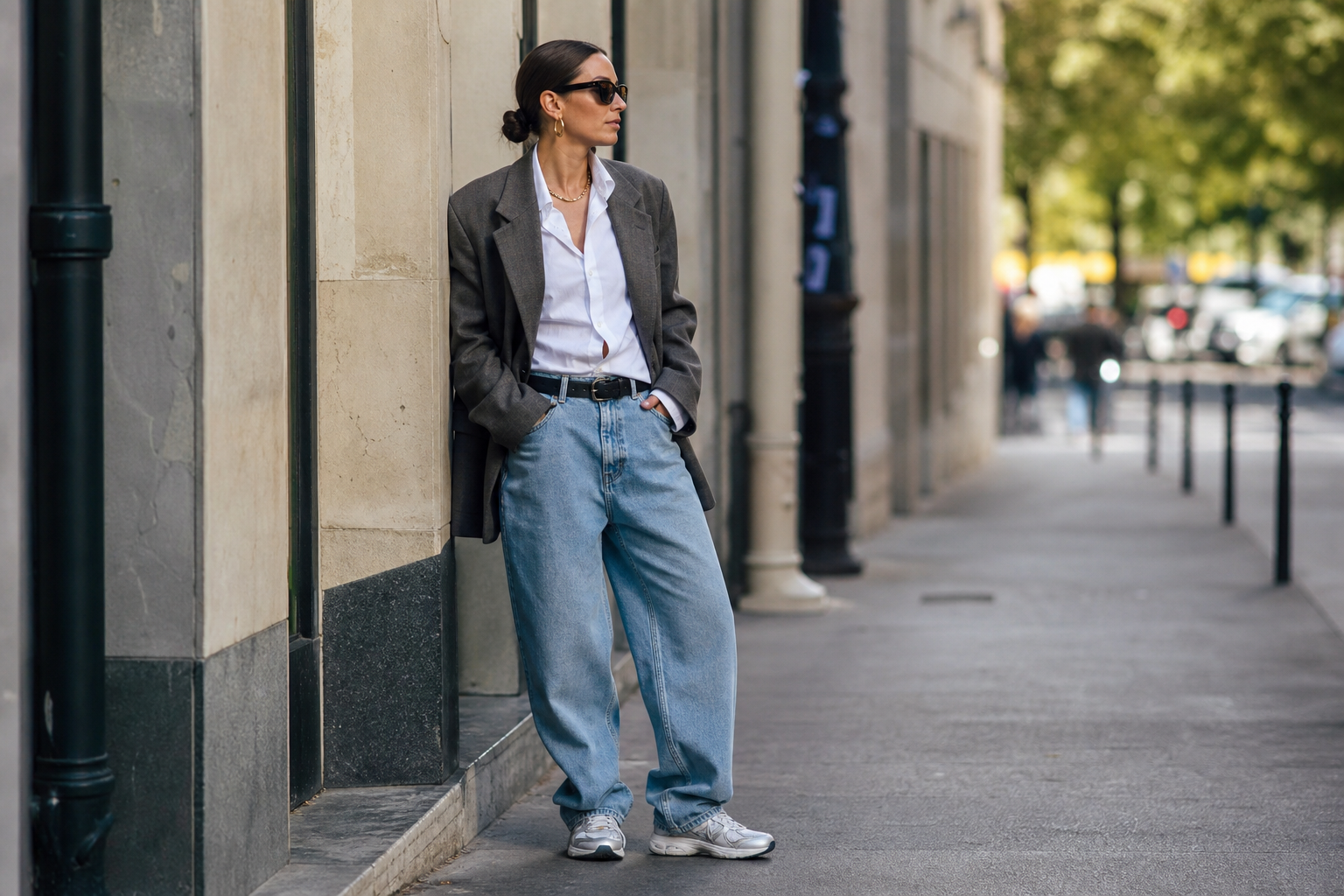
1. Oversized Blazer, Relaxed Denim, and Sleek Sneakers
The Style Idea
Start with straight or relaxed denim and a blazer whose shoulder line looks intentional. A close-fitting tank or fine knit keeps the center clean, while low-profile sneakers stop the outfit becoming officewear. Roll the jean once only if the fabric holds the shape.
Make It Work in Real Life
If a dramatically oversized jacket overwhelms you, size for the shoulders and create looseness through a longer cut. A small crossbody worn high adds structure without competing with the lapels.
Try This Before You Buy
Build the look with the closest pieces you already own, then take front, side, and seated photos in natural light. Notice comfort, fabric behavior, pocket placement, and whether the combination survives your normal shoes and outerwear. If a gap remains after two real wears, write the exact requirement—color, measurement, material, and care limit—before shopping.
Styling Note
Personal style is not a correction exercise. Adjust the idea for sensory comfort, mobility, climate, workplace expectations, and the amount of attention you enjoy. A successful version should feel recognizable as yours, not like an obligation to reproduce a photograph.
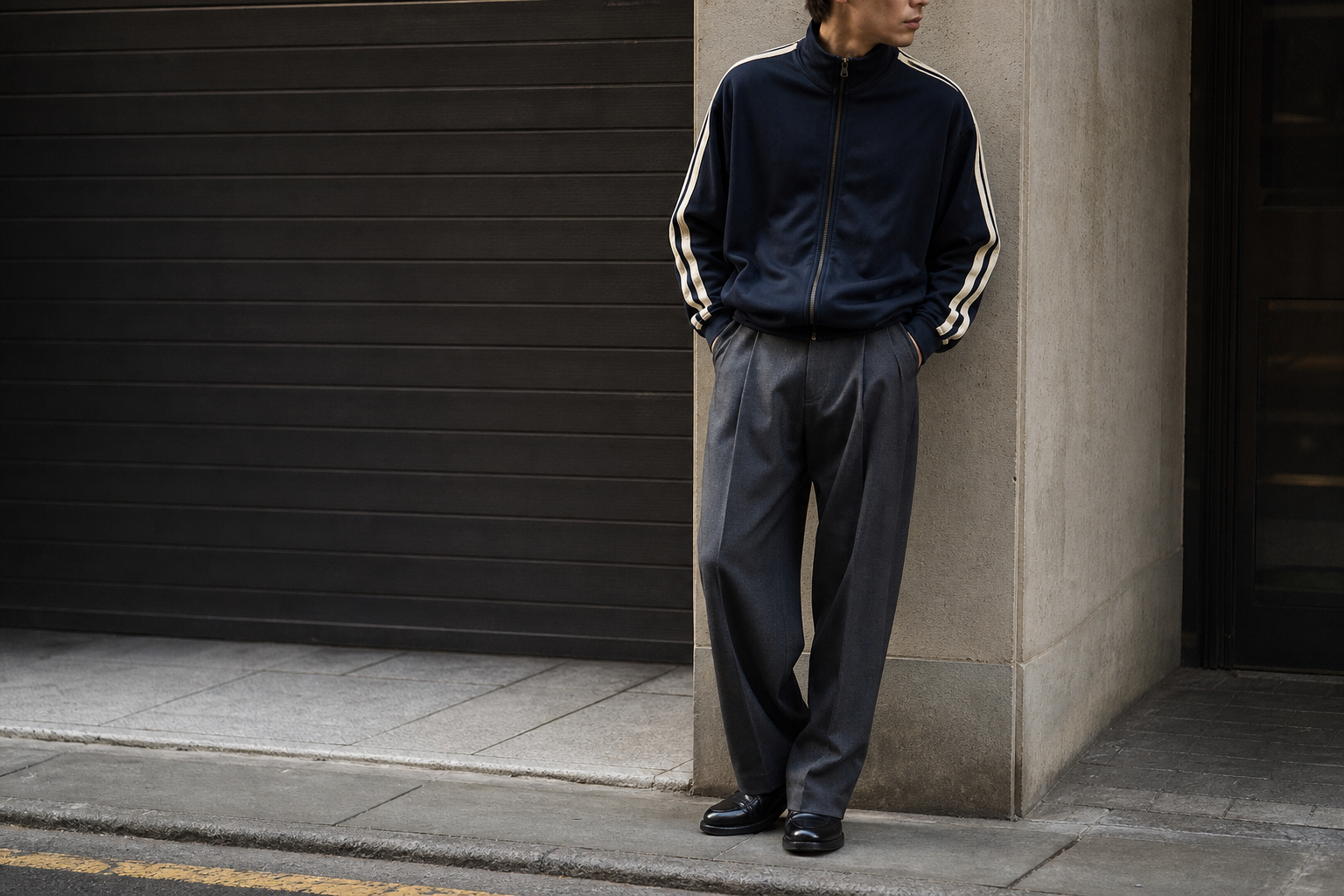
2. Track Jacket With Tailored Trousers
The Style Idea
A track jacket gains surprise beside pleated trousers. Repeat one color from the jacket in the shoes, bag, or knit underneath, then keep jewelry spare. The trousers should skim rather than puddle if you want the contrast to feel sharp.
Make It Work in Real Life
Choose a jacket with a clean zip and controlled volume. For a quieter version, use navy, chocolate, and cream; for more energy, make the sporty layer red or cobalt.
Try This Before You Buy
Build the look with the closest pieces you already own, then take front, side, and seated photos in natural light. Notice comfort, fabric behavior, pocket placement, and whether the combination survives your normal shoes and outerwear. If a gap remains after two real wears, write the exact requirement—color, measurement, material, and care limit—before shopping.
Styling Note
Personal style is not a correction exercise. Adjust the idea for sensory comfort, mobility, climate, workplace expectations, and the amount of attention you enjoy. A successful version should feel recognizable as yours, not like an obligation to reproduce a photograph.
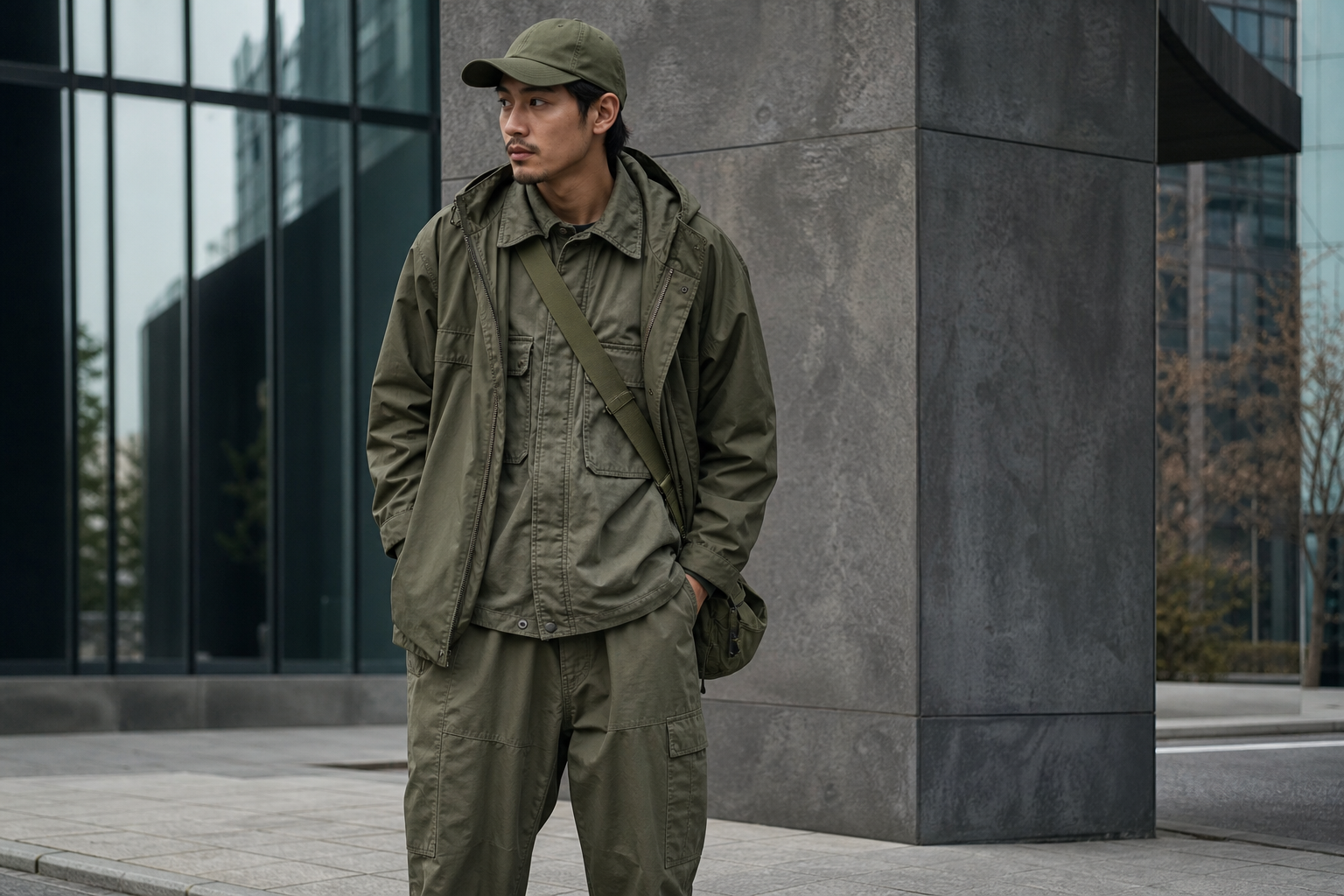
3. Monochrome Utility Layers With Texture
The Style Idea
Dress in one color family—olive, charcoal, sand, or indigo—then separate the layers through surface: crisp cotton, faded denim, nylon, ribbed knit, or suede-like texture. Utility pockets and a compact belt bag add function without requiring camouflage print.
Make It Work in Real Life
Vary the value slightly so the outfit does not read as a single block. A lighter top near the face and darker outer layer is an easy sequence; metallic hardware supplies a controlled highlight.
Try This Before You Buy
Build the look with the closest pieces you already own, then take front, side, and seated photos in natural light. Notice comfort, fabric behavior, pocket placement, and whether the combination survives your normal shoes and outerwear. If a gap remains after two real wears, write the exact requirement—color, measurement, material, and care limit—before shopping.
Styling Note
Personal style is not a correction exercise. Adjust the idea for sensory comfort, mobility, climate, workplace expectations, and the amount of attention you enjoy. A successful version should feel recognizable as yours, not like an obligation to reproduce a photograph.
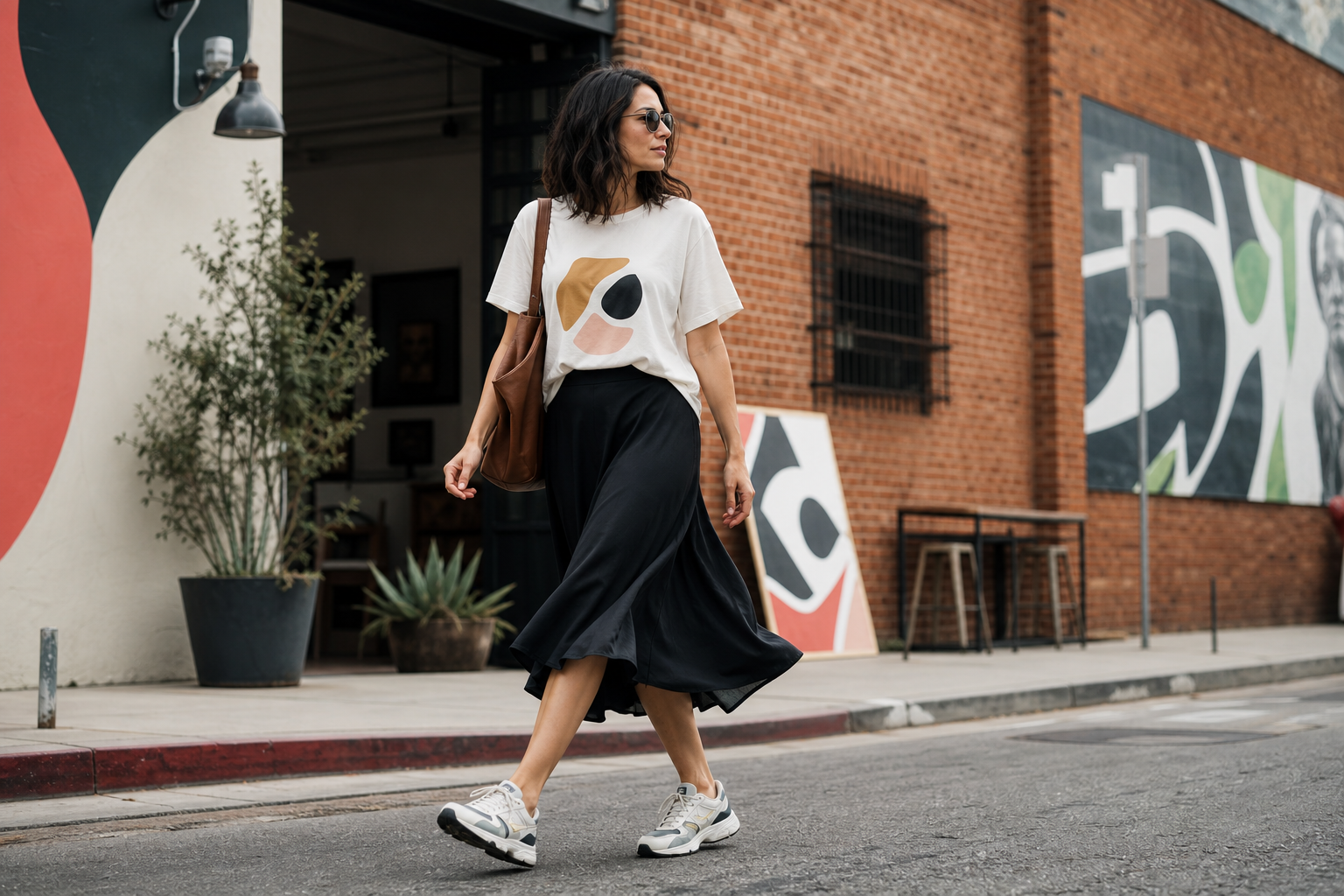
4. Graphic Tee, Fluid Midi Skirt, and Sporty Shoes
The Style Idea
A worn-in graphic tee makes a fluid skirt less precious, while sporty shoes make the combination useful for a full day. Tuck only enough of the shirt to reveal the waistband, or knot it with a removable elastic underneath rather than stretching the fabric.
Make It Work in Real Life
Keep the bag compact and echo either the tee graphic or skirt color once. Socks can become part of the styling: tonal looks streamlined; contrast looks intentionally playful.
Try This Before You Buy
Build the look with the closest pieces you already own, then take front, side, and seated photos in natural light. Notice comfort, fabric behavior, pocket placement, and whether the combination survives your normal shoes and outerwear. If a gap remains after two real wears, write the exact requirement—color, measurement, material, and care limit—before shopping.
Styling Note
Personal style is not a correction exercise. Adjust the idea for sensory comfort, mobility, climate, workplace expectations, and the amount of attention you enjoy. A successful version should feel recognizable as yours, not like an obligation to reproduce a photograph.
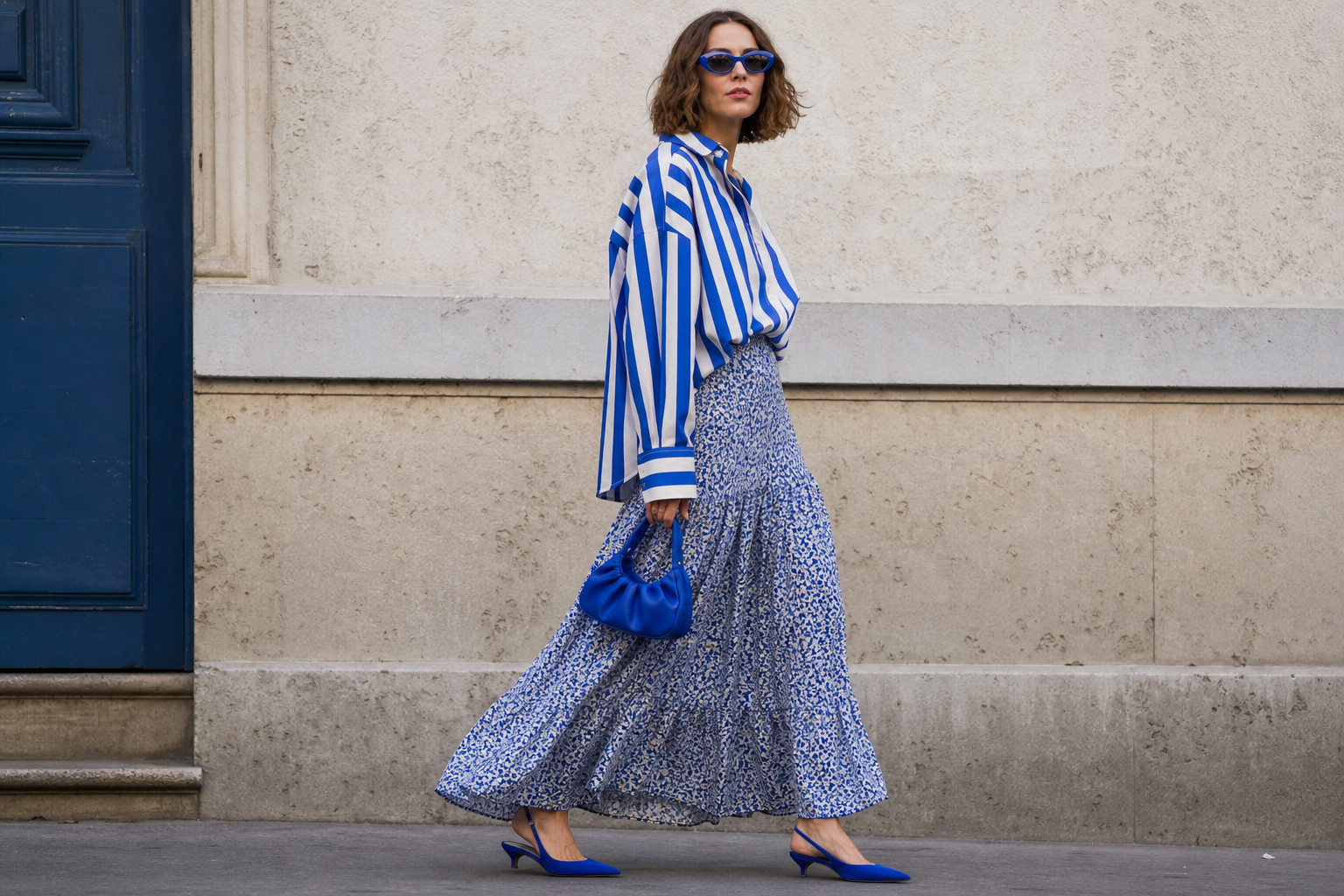
5. Confident Pattern Clash With One Connecting Color
The Style Idea
Choose two prints that share one visible color, then change their scale—for example, a wide stripe with a small floral or a large check with a narrow stripe. Keep the silhouette simple and accessories solid so the print relationship stays legible.
Make It Work in Real Life
Test the outfit in a full-length photo. If the clash feels noisy rather than exciting, add a solid jacket between the prints or move the second pattern to a smaller accessory. Bold works best when it still looks edited.
Try This Before You Buy
Build the look with the closest pieces you already own, then take front, side, and seated photos in natural light. Notice comfort, fabric behavior, pocket placement, and whether the combination survives your normal shoes and outerwear. If a gap remains after two real wears, write the exact requirement—color, measurement, material, and care limit—before shopping.
Styling Note
Personal style is not a correction exercise. Adjust the idea for sensory comfort, mobility, climate, workplace expectations, and the amount of attention you enjoy. A successful version should feel recognizable as yours, not like an obligation to reproduce a photograph.
Wardrobe Decision Guide
| Question | If yes | If no |
|---|---|---|
| Can I make three outfits with it? | Photograph the combinations and test one full day. | Identify whether it is a true gap or a single-look temptation. |
| Is it comfortable sitting, walking, and reaching? | Check care and construction next. | Change the size, cut, fabric, or styling plan. |
| Can I care for it realistically? | Record the care method before purchase. | Choose a more compatible material or use rental for one occasion. |
| Is the change reversible? | Experiment before altering permanently. | Measure twice and use a skilled tailor when risk is meaningful. |
| Will I still like it without the trend label? | It may belong in your long-term style. | Borrow, rent, or skip the purchase. |
Conclusion

The strongest wardrobe is not the one with the most trends, the smallest number of items, or the most universally “flattering” silhouette. It is the one that reliably supports your days and gives you room to play. Choose one idea from this list, build it from what you own, and wear it somewhere ordinary. Real movement, real weather, and a real schedule will teach you more than a fitting-room mirror. Keep the version that works, revise the one that almost works, and let the rest remain inspiration.
Frequently Asked Questions
Can street style work with a strict dress code?
Yes. Keep the required base and introduce street-style tension through one permitted layer, proportion, color, or accessory.
Do I need designer sneakers?
No. Clean condition, shape, comfort, and how the shoe balances the trouser or skirt matter more than a logo.
How many oversized pieces should I wear at once?
There is no rule, but one dominant oversized piece is an easy starting point. Repeat volume only when movement and proportions still feel intentional to you.
How do I mix prints without feeling overwhelmed?
Connect them with one color, vary the print scale, and use solid pieces to create visual rest.
What makes an outfit look intentional?
Repeated color, a clear focal point, appropriate fit, and cared-for garments make even a simple formula feel considered.