6 Homemade Pet Food Recipes That Your Fur Babies Will Love (Warning: #4 Is Addictive!)
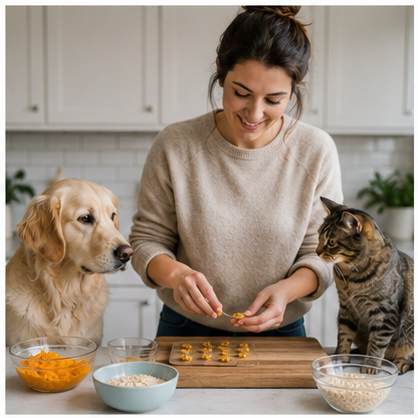
Practical pet care works best when it is kind, observable, and easy to repeat. This guide turns homemade pet food recipes into clear actions while separating everyday care from problems that require a veterinarian or qualified behavior professional. Results vary with species, age, history, health, environment, and temperament; “in no time” means building useful momentum, not promising an instant transformation.
Key Takeaways
- Use humane, low-stress methods and reward the behavior you want.
- Change one variable at a time so you can see what helps.
- Keep written notes on appetite, weight, elimination, skin, behavior, and progress.
- Stop when the animal shows fear, pain, overheating, or escalating distress.
- Contact a veterinarian for sudden changes, persistent symptoms, ingestion hazards, or medical questions.
1. Plain Pumpkin-and-Oat Mini Bites for Dogs
Why It Matters
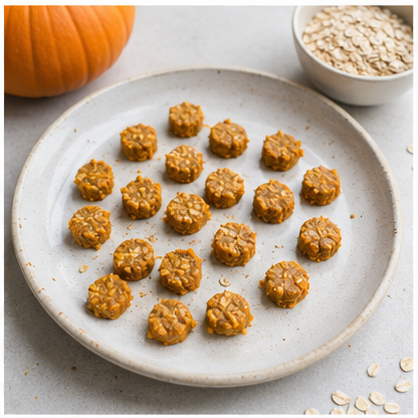
These simple baked dog bites combine plain pumpkin purée with finely ground oats as an occasional treat, not a balanced meal. Confirm ingredients with a veterinarian for dogs with allergies, diabetes, gastrointestinal disease, or prescription diets.
Put It Into Practice
Mix 120 g plain pumpkin purée, 80 g oat flour, and one egg. Form tiny pieces and bake on parchment at 175°C/350°F until firm, roughly 15–20 minutes depending on size. Cool completely and offer sparingly.
Observe and Adjust
Write down the starting point, the situation, what you changed, and the animal’s response. Look for relaxed body language, voluntary participation, normal breathing, and the ability to eat or disengage. If comfort falls, reduce intensity, shorten the session, increase distance, or stop. Repeated fear, pain, aggression, appetite change, vomiting, diarrhea, urinary difficulty, breathing trouble, collapse, or suspected toxin exposure requires professional guidance rather than another household hack.
Make It Sustainable
Choose a version that fits the household every day. Prepare supplies in advance, keep sessions brief, and assign one consistent cue or routine. Family members should use the same plan so the pet is not asked to solve conflicting rules. Progress is rarely linear; return to an easier version after illness, travel, adolescence, environmental change, or a difficult experience.
2. Chicken-and-Rice Training Crumbles for Dogs
Why It Matters
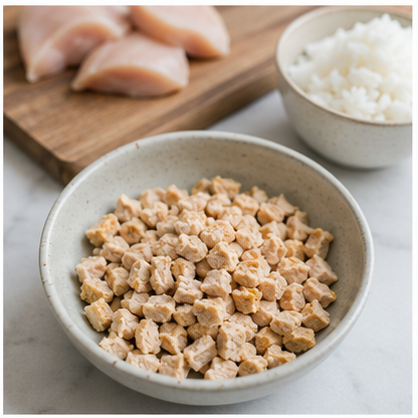
Plain cooked chicken and rice can be turned into tiny training rewards, but it is not nutritionally complete for routine feeding. Avoid seasoning, skin, bones, onion, garlic, sauces, and fatty drippings.
Put It Into Practice
Combine 120 g finely chopped cooked skinless chicken with 80 g cooked plain rice and one beaten egg. Spread thinly, bake at 175°C/350°F until set, cool, crumble, and refrigerate promptly.
Observe and Adjust
Write down the starting point, the situation, what you changed, and the animal’s response. Look for relaxed body language, voluntary participation, normal breathing, and the ability to eat or disengage. If comfort falls, reduce intensity, shorten the session, increase distance, or stop. Repeated fear, pain, aggression, appetite change, vomiting, diarrhea, urinary difficulty, breathing trouble, collapse, or suspected toxin exposure requires professional guidance rather than another household hack.
Make It Sustainable
Choose a version that fits the household every day. Prepare supplies in advance, keep sessions brief, and assign one consistent cue or routine. Family members should use the same plan so the pet is not asked to solve conflicting rules. Progress is rarely linear; return to an easier version after illness, travel, adolescence, environmental change, or a difficult experience.
3. Frozen Cat Treat Dots From Complete Wet Food
Why It Matters
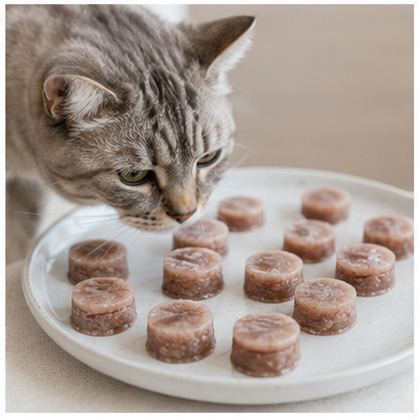
Using the cat’s own complete-and-balanced wet food preserves familiarity and avoids inventing a nutritionally incomplete “cat recipe.” The dots are a treat format, not additional unlimited calories.
Put It Into Practice
Spoon a small amount of the cat’s regular wet food into a silicone mat in tiny dots, freeze, and serve one after confirming the texture is safe for that cat. Discard thawed leftovers promptly.
Observe and Adjust
Write down the starting point, the situation, what you changed, and the animal’s response. Look for relaxed body language, voluntary participation, normal breathing, and the ability to eat or disengage. If comfort falls, reduce intensity, shorten the session, increase distance, or stop. Repeated fear, pain, aggression, appetite change, vomiting, diarrhea, urinary difficulty, breathing trouble, collapse, or suspected toxin exposure requires professional guidance rather than another household hack.
Make It Sustainable
Choose a version that fits the household every day. Prepare supplies in advance, keep sessions brief, and assign one consistent cue or routine. Family members should use the same plan so the pet is not asked to solve conflicting rules. Progress is rarely linear; return to an easier version after illness, travel, adolescence, environmental change, or a difficult experience.
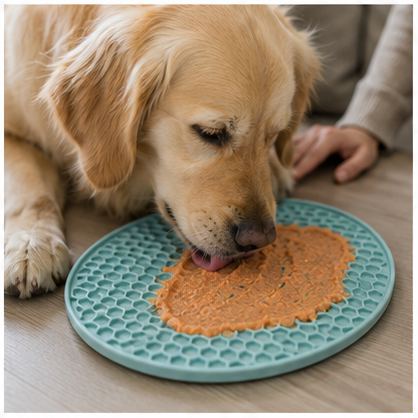
4. Turkey-and-Sweet-Potato Lick-Mat Topper for Dogs
Why It Matters
This lick-mat topper is appealing because of texture and aroma, but the title’s “addictive” phrase is playful—not a medical claim. Keep the portion small and count it within the day’s intake.
Put It Into Practice
Mix 60 g cooked lean unseasoned turkey with 30 g plain cooked sweet potato and enough warm water for a spreadable texture. Cool, spread a thin layer on a clean lick mat, and supervise.
Observe and Adjust
Write down the starting point, the situation, what you changed, and the animal’s response. Look for relaxed body language, voluntary participation, normal breathing, and the ability to eat or disengage. If comfort falls, reduce intensity, shorten the session, increase distance, or stop. Repeated fear, pain, aggression, appetite change, vomiting, diarrhea, urinary difficulty, breathing trouble, collapse, or suspected toxin exposure requires professional guidance rather than another household hack.
Make It Sustainable
Choose a version that fits the household every day. Prepare supplies in advance, keep sessions brief, and assign one consistent cue or routine. Family members should use the same plan so the pet is not asked to solve conflicting rules. Progress is rarely linear; return to an easier version after illness, travel, adolescence, environmental change, or a difficult experience.
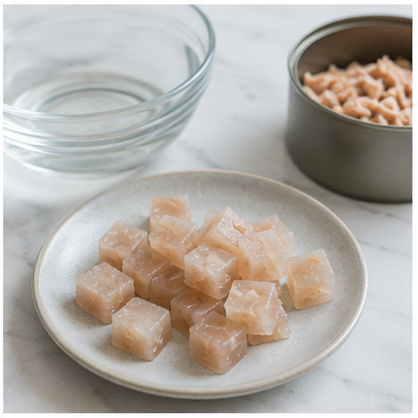
5. Tuna-Water Cat Treat Cubes
Why It Matters
Aromatic tuna water can flavor a tiny frozen cat treat without turning tuna into a staple. Use water from plain tuna packed in water with no added salt when appropriate, and ask the veterinarian about sodium or medical restrictions.
Put It Into Practice
Dilute one tablespoon of suitable tuna water with two tablespoons of fresh water, freeze in very small portions, and offer occasionally. This is hydration-flavored enrichment, not a replacement for food or water.
Observe and Adjust
Write down the starting point, the situation, what you changed, and the animal’s response. Look for relaxed body language, voluntary participation, normal breathing, and the ability to eat or disengage. If comfort falls, reduce intensity, shorten the session, increase distance, or stop. Repeated fear, pain, aggression, appetite change, vomiting, diarrhea, urinary difficulty, breathing trouble, collapse, or suspected toxin exposure requires professional guidance rather than another household hack.
Make It Sustainable
Choose a version that fits the household every day. Prepare supplies in advance, keep sessions brief, and assign one consistent cue or routine. Family members should use the same plan so the pet is not asked to solve conflicting rules. Progress is rarely linear; return to an easier version after illness, travel, adolescence, environmental change, or a difficult experience.
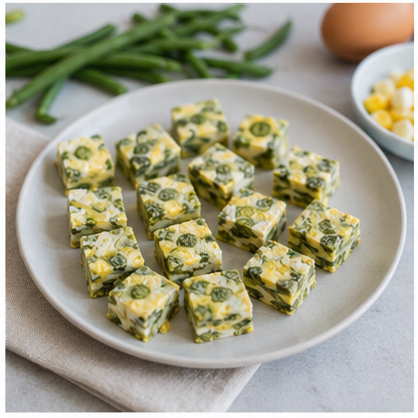
6. Green-Bean and Egg Dog Snack Squares
Why It Matters
Green beans add texture while egg binds these dog snack squares. They remain treats and may not suit every gastrointestinal, allergy, or medical plan.
Put It Into Practice
Combine 80 g finely chopped cooked plain green beans with two cooked beaten eggs. Bake in a lined small pan at 175°C/350°F until fully set, cool, cut into tiny squares, and refrigerate.
Observe and Adjust
Write down the starting point, the situation, what you changed, and the animal’s response. Look for relaxed body language, voluntary participation, normal breathing, and the ability to eat or disengage. If comfort falls, reduce intensity, shorten the session, increase distance, or stop. Repeated fear, pain, aggression, appetite change, vomiting, diarrhea, urinary difficulty, breathing trouble, collapse, or suspected toxin exposure requires professional guidance rather than another household hack.
Make It Sustainable
Choose a version that fits the household every day. Prepare supplies in advance, keep sessions brief, and assign one consistent cue or routine. Family members should use the same plan so the pet is not asked to solve conflicting rules. Progress is rarely linear; return to an easier version after illness, travel, adolescence, environmental change, or a difficult experience.
A Quick Decision Guide
Build a Reliable Home Routine
Keep the plan simple enough to survive busy days. Store supplies where the activity happens, put reminders beside established routines, and decide who records observations. Use the same reward marker, grooming sequence, feeding measurement, or health log across caregivers. Consistency does not mean rigidity: the pet’s comfort and medical needs decide when the plan changes.
Review progress weekly instead of judging one difficult session. Ask whether the animal is recovering faster, volunteering more, maintaining normal appetite and elimination, and showing fewer stress signals. One good metric is more useful than a vague impression. If progress stalls, check pain, environment, reward value, session length, and task difficulty before assuming stubbornness.
Safety Boundaries That Matter
Internet advice cannot diagnose an individual animal. Never give human medication, use essential oils or parasite products without species-specific veterinary direction, force water or food into an unwilling pet, or continue handling through pain or panic. Cats are not small dogs, puppies are not adult dogs, and medical diets should not be modified casually.
Prepare emergency information before it is needed: the regular veterinary clinic, nearest emergency hospital, poison-control resource for your country, current medications, allergies, weight, and a secure carrier or transport plan. For recipes, confirm every ingredient, portion, and storage period; treats and toppers should remain a small part of an otherwise appropriate diet unless a board-certified veterinary nutritionist has formulated the complete diet.
Conclusion
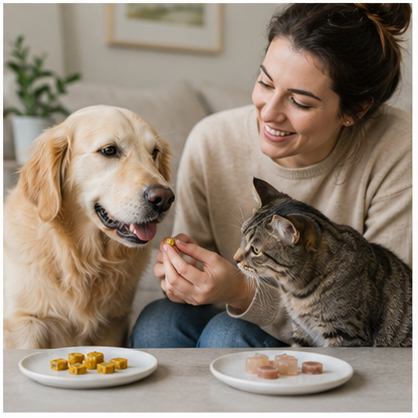
The best pet-care improvement is usually the one that increases clarity without sacrificing welfare. Start with one idea from this list, make the first version easy, and watch the animal’s response. Reward comfort and success, keep notes, and adjust gradually. A calm routine may look less dramatic than a viral shortcut, but it creates information you can trust and habits the pet can live with.
Frequently Asked Questions
How quickly should I expect results?
Some pets show a useful first response in one session, while reliable habits require repetition across time and environments. Health changes follow their own course and need veterinary assessment.
What if my pet refuses treats?
The animal may be full, worried, nauseated, painful, or uninterested in that reward. Lower the difficulty and check context; persistent appetite change should be discussed with a veterinarian.
Can I use punishment to stop a behavior immediately?
Aversive methods can add fear and do not teach the desired alternative. Manage the environment, reward an incompatible response, and seek qualified help for dangerous behavior.
When is professional help appropriate?
Seek veterinary help for health signs or sudden behavior change, and a credentialed reward-based trainer or veterinary behavior professional for fear, aggression, separation distress, or complex training problems.
How do I know whether online pet advice is trustworthy?
Look for named qualified authors, current veterinary or scientific sources, clear limits, species-specific guidance, and instructions to involve your veterinarian when individual health matters.
Related Topics
- Pet wellness and preventive care
- Reward-based animal training
- Low-stress grooming routines
- Veterinary nutrition and safe treats
Your Seven-Day Check-In
After one week, compare notes rather than relying on memory. Look for changes in comfort, participation, appetite, elimination, sleep, recovery time, and the frequency of the behavior you are addressing. Keep what is helping, simplify what is difficult to repeat, and stop anything associated with fear, pain, gastrointestinal signs, skin irritation, or escalating conflict. Share the record with the veterinarian or qualified professional when individual guidance is needed.
Sources
1. Global Nutrition Guidelines, World Small Animal Veterinary Association. Accessed 2026-07-30.
2. Feeding Your Cat, Cornell University College of Veterinary Medicine. Accessed 2026-07-30.