8 DIY Clothing Hacks That'll Make You Rethink Your Wardrobe (And Save You $$!)
The smartest clothing hack is the one that improves wearability without quietly damaging the garment. This beginner-friendly list prioritizes reversible changes, simple maintenance, and small repairs over viral tricks that strain seams or misuse household products. Read the care label, test hidden areas, use tools designed for fabric, and ask a tailor when a piece is valuable or the alteration affects structure. Saving money is useful; keeping a wearable garment wearable is the real win.
Key Takeaways
- Start with clothes you already own and one clear styling goal.
- Test movement, comfort, and care needs before committing.
- Use proportion, color, and texture as options rather than body rules.
- Prefer reversible experiments before permanent alterations.
- Buy only when a piece fills a real wardrobe role.
1. Upgrade Basic Buttons for an Instant Refresh
The Style Idea
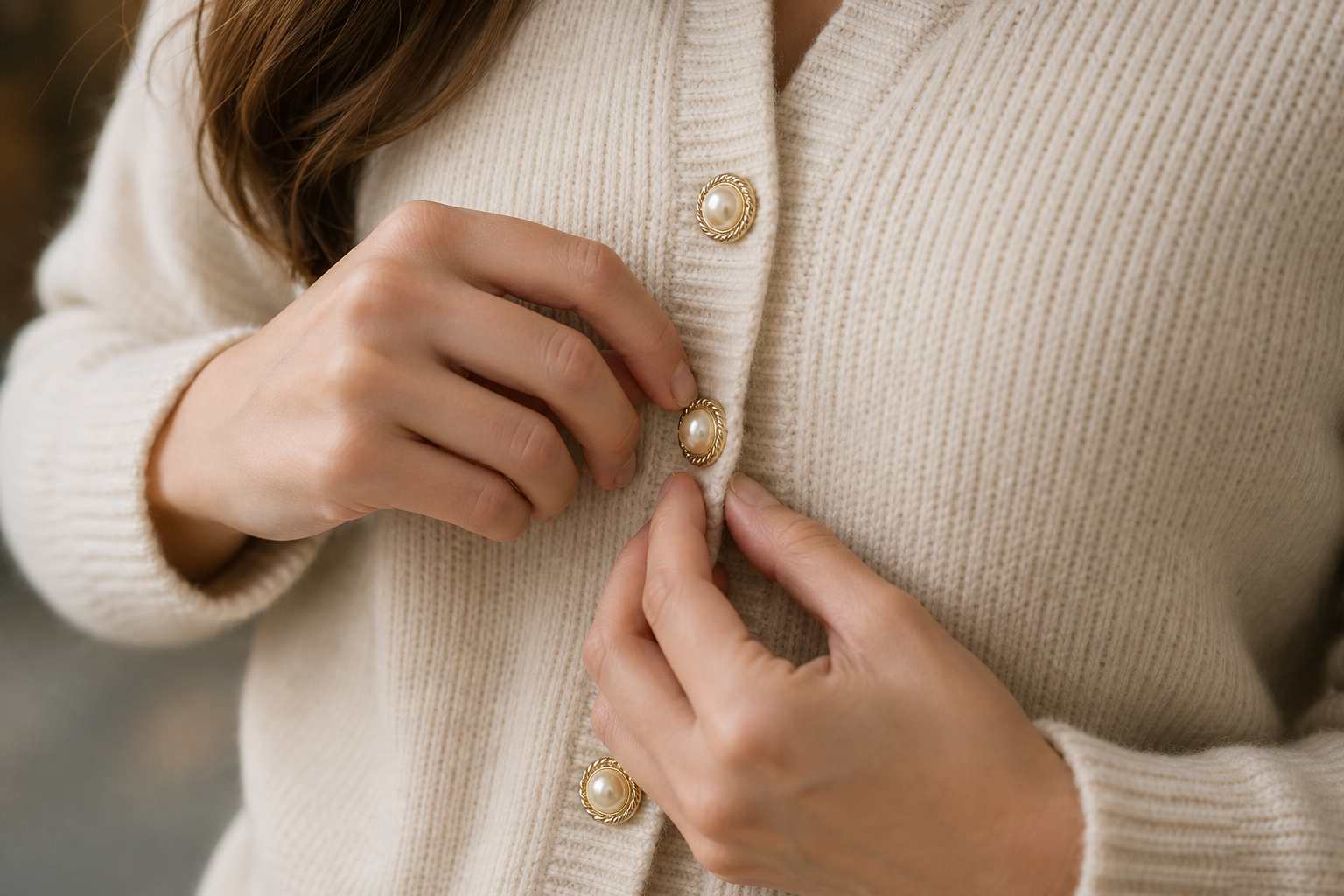
Replacing buttons can shift a cardigan, coat, or shirt from generic to personal. Measure the original diameter and shank style, then select replacements that pass through the existing buttonholes without force. Lay the garment flat, mark every position, and use doubled thread with a secure finish on the reverse.
Make It Work in Real Life
Keep the original buttons in a labeled envelope. Avoid very heavy replacements on fine fabric, and do not stitch through both layers of a lined coat; a tailor can preserve the lining cleanly.
Try This Before You Buy
Build the look with the closest pieces you already own, then take front, side, and seated photos in natural light. Notice comfort, fabric behavior, pocket placement, and whether the combination survives your normal shoes and outerwear. If a gap remains after two real wears, write the exact requirement—color, measurement, material, and care limit—before shopping.
Styling Note
Personal style is not a correction exercise. Adjust the idea for sensory comfort, mobility, climate, workplace expectations, and the amount of attention you enjoy. A successful version should feel recognizable as yours, not like an obligation to reproduce a photograph.
2. Create a Temporary Crop Without Cutting

The Style Idea
For a reversible crop, fold the hem inward and secure it around your torso with a soft elastic placed over the fabric, then pull a small amount of fabric over the elastic to hide it. Another option is a controlled front tuck into high-rise bottoms.
Make It Work in Real Life
The elastic should never restrict breathing or circulation. Do not use tight rubber bands, pins against skin, or this method on slippery fabric where it cannot stay secure.
Try This Before You Buy
Build the look with the closest pieces you already own, then take front, side, and seated photos in natural light. Notice comfort, fabric behavior, pocket placement, and whether the combination survives your normal shoes and outerwear. If a gap remains after two real wears, write the exact requirement—color, measurement, material, and care limit—before shopping.
Styling Note
Personal style is not a correction exercise. Adjust the idea for sensory comfort, mobility, climate, workplace expectations, and the amount of attention you enjoy. A successful version should feel recognizable as yours, not like an obligation to reproduce a photograph.
3. Use Iron-On Hem Tape for a Clean Short-Term Hem
The Style Idea
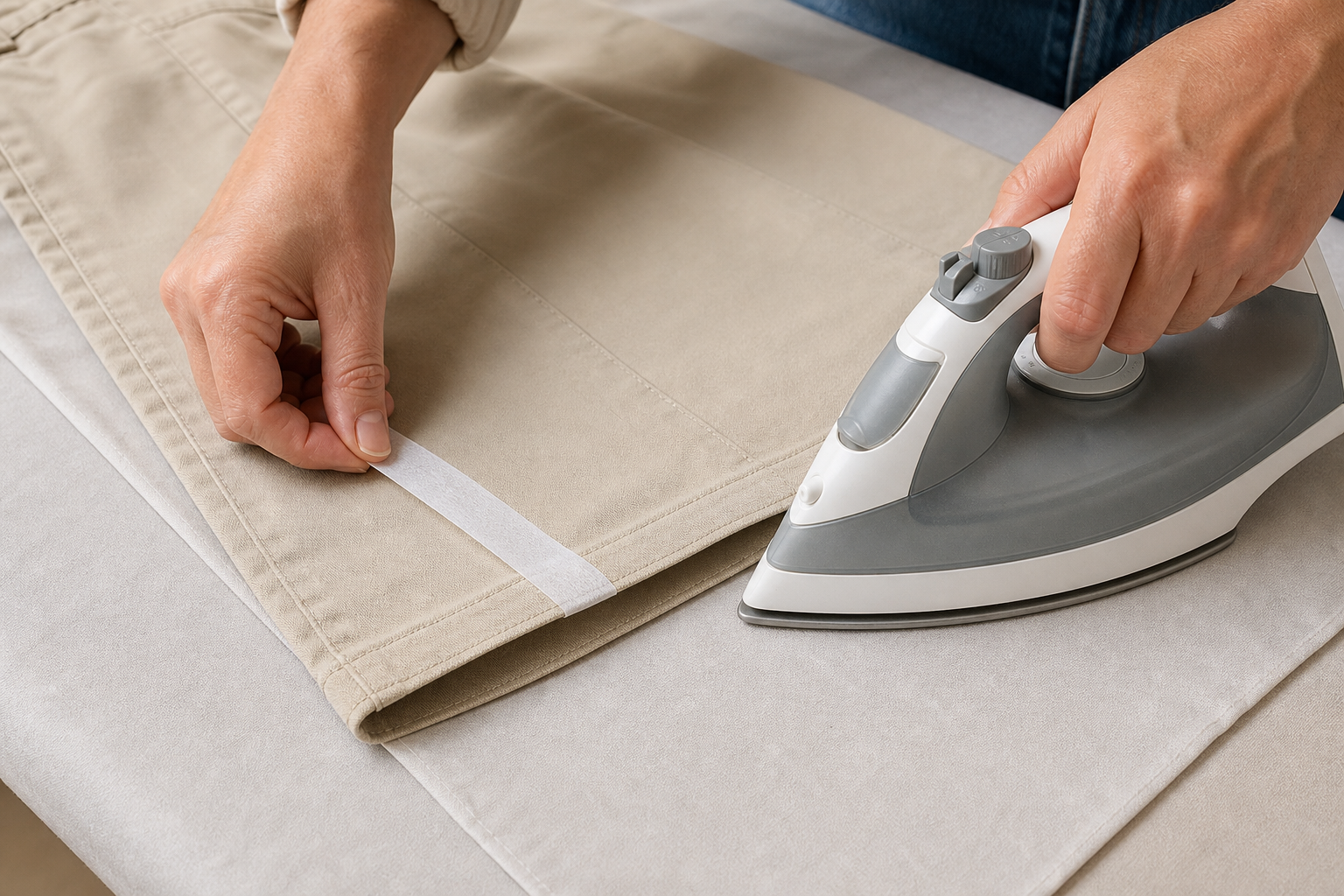
Fusible hem tape can create a neat, low-bulk hem on compatible washable fabrics. Test a scrap or hidden area, measure from the floor while wearing the intended shoes, press the fold, insert tape evenly, and follow the manufacturer's heat and dwell-time instructions exactly.
Make It Work in Real Life
This is not universal: heat-sensitive, coated, textured, sheer, or valuable fabrics may discolor or fail to bond. A sewn hem is more serviceable and often more durable.
Try This Before You Buy
Build the look with the closest pieces you already own, then take front, side, and seated photos in natural light. Notice comfort, fabric behavior, pocket placement, and whether the combination survives your normal shoes and outerwear. If a gap remains after two real wears, write the exact requirement—color, measurement, material, and care limit—before shopping.
Styling Note
Personal style is not a correction exercise. Adjust the idea for sensory comfort, mobility, climate, workplace expectations, and the amount of attention you enjoy. A successful version should feel recognizable as yours, not like an obligation to reproduce a photograph.
4. Add Removable Patches or Pins for Personality

The Style Idea
Use removable patches, brooches, badges, or collar clips to change the mood of a jacket or bag. Build a small cluster on a scrap first, mix one large focal element with smaller companions, and keep it away from high-friction zones.
Make It Work in Real Life
Check the reverse for sharp points and use locking backs. Pins can leave holes in silk, leather, waterproof fabric, and fine knits, so attach them to a removable fabric panel instead.
Try This Before You Buy
Build the look with the closest pieces you already own, then take front, side, and seated photos in natural light. Notice comfort, fabric behavior, pocket placement, and whether the combination survives your normal shoes and outerwear. If a gap remains after two real wears, write the exact requirement—color, measurement, material, and care limit—before shopping.
Styling Note
Personal style is not a correction exercise. Adjust the idea for sensory comfort, mobility, climate, workplace expectations, and the amount of attention you enjoy. A successful version should feel recognizable as yours, not like an obligation to reproduce a photograph.
5. Turn a Scarf Into a Secure Layering Accent
The Style Idea
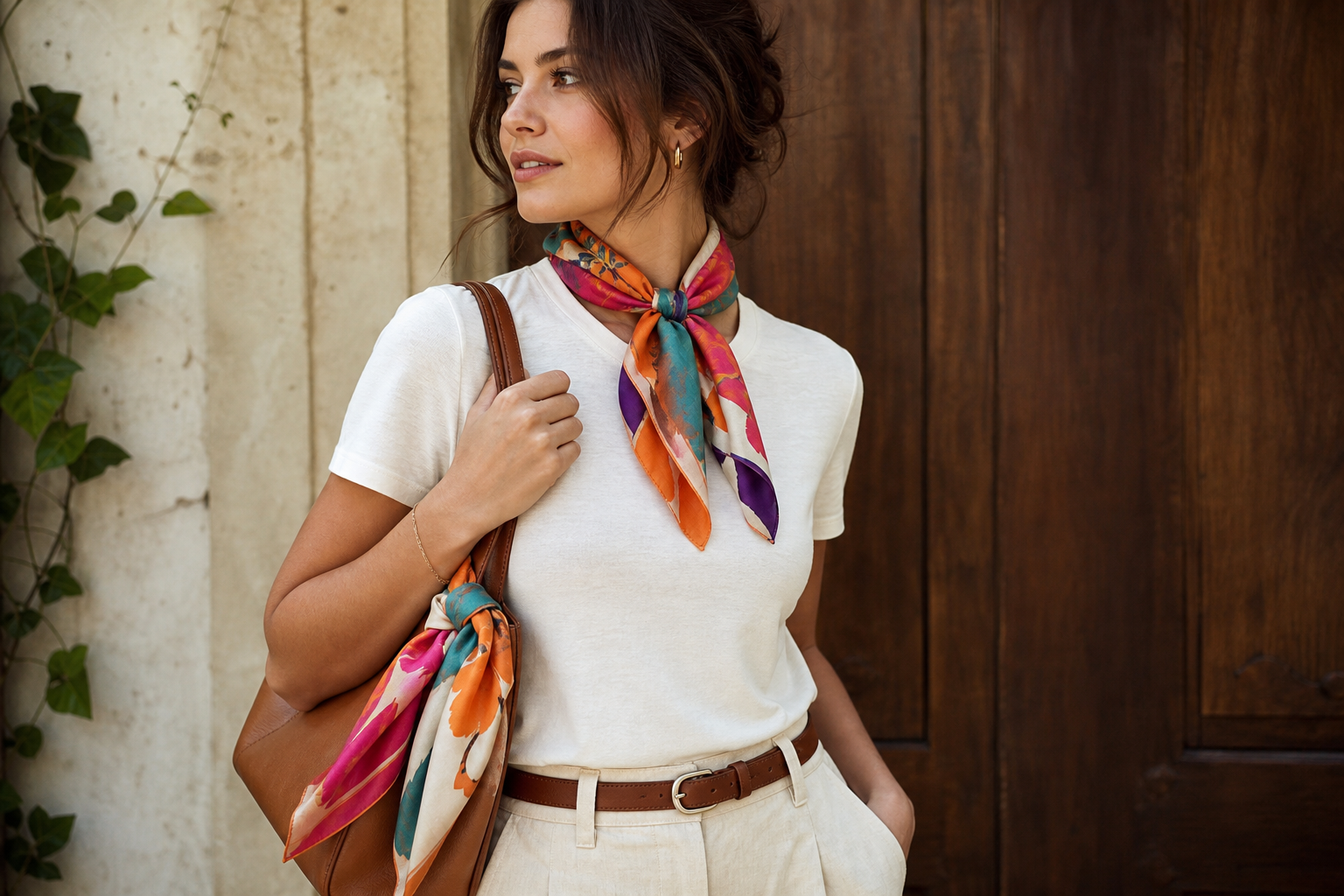
A scarf can add color as a neck tie, bag-handle wrap, belt accent, or layered panel over a secure base garment. Use a small scarf ring or discreet fashion tape designed for skin and fabric where slippage matters.
Make It Work in Real Life
Do not rely on a loose scarf as the only coverage for an active day. Keep long ends away from bicycle wheels, machinery, open flames, and crowded transit doors.
Try This Before You Buy
Build the look with the closest pieces you already own, then take front, side, and seated photos in natural light. Notice comfort, fabric behavior, pocket placement, and whether the combination survives your normal shoes and outerwear. If a gap remains after two real wears, write the exact requirement—color, measurement, material, and care limit—before shopping.
Styling Note
Personal style is not a correction exercise. Adjust the idea for sensory comfort, mobility, climate, workplace expectations, and the amount of attention you enjoy. A successful version should feel recognizable as yours, not like an obligation to reproduce a photograph.
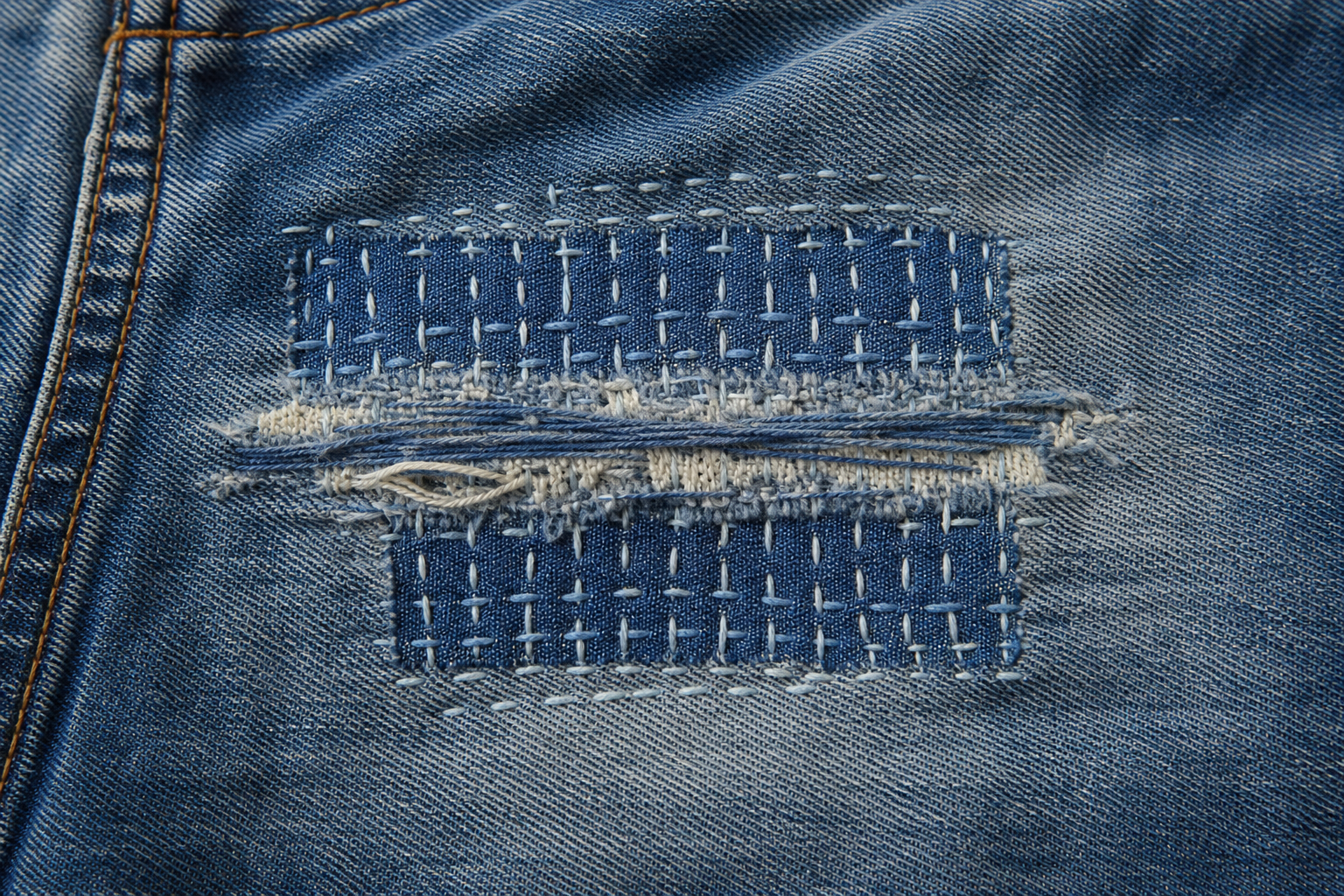
6. Use Visible Mending to Reinforce Worn Denim
The Style Idea
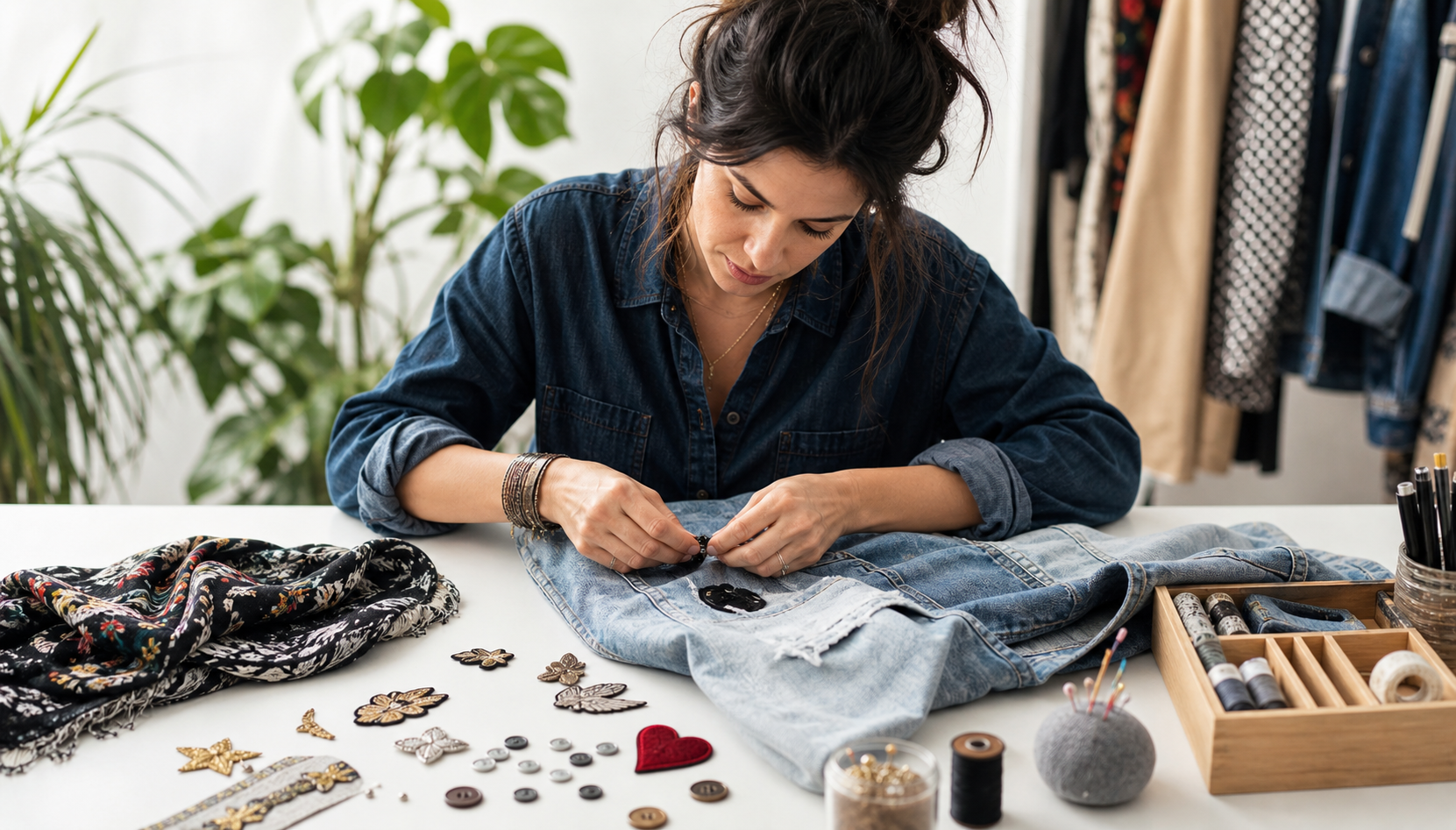
Visible mending reinforces a thinning area while making the repair part of the design. Trim loose threads, place a stable patch behind the damage, baste it flat, then work parallel rows of sturdy stitches beyond the weak area. A thimble and embroidery hoop can improve control.
Make It Work in Real Life
Repair before the hole expands. Very stretchy denim, seam intersections, and high-stress crotch repairs often benefit from a professional machine darn.
Try This Before You Buy
Build the look with the closest pieces you already own, then take front, side, and seated photos in natural light. Notice comfort, fabric behavior, pocket placement, and whether the combination survives your normal shoes and outerwear. If a gap remains after two real wears, write the exact requirement—color, measurement, material, and care limit—before shopping.
Styling Note
Personal style is not a correction exercise. Adjust the idea for sensory comfort, mobility, climate, workplace expectations, and the amount of attention you enjoy. A successful version should feel recognizable as yours, not like an obligation to reproduce a photograph.
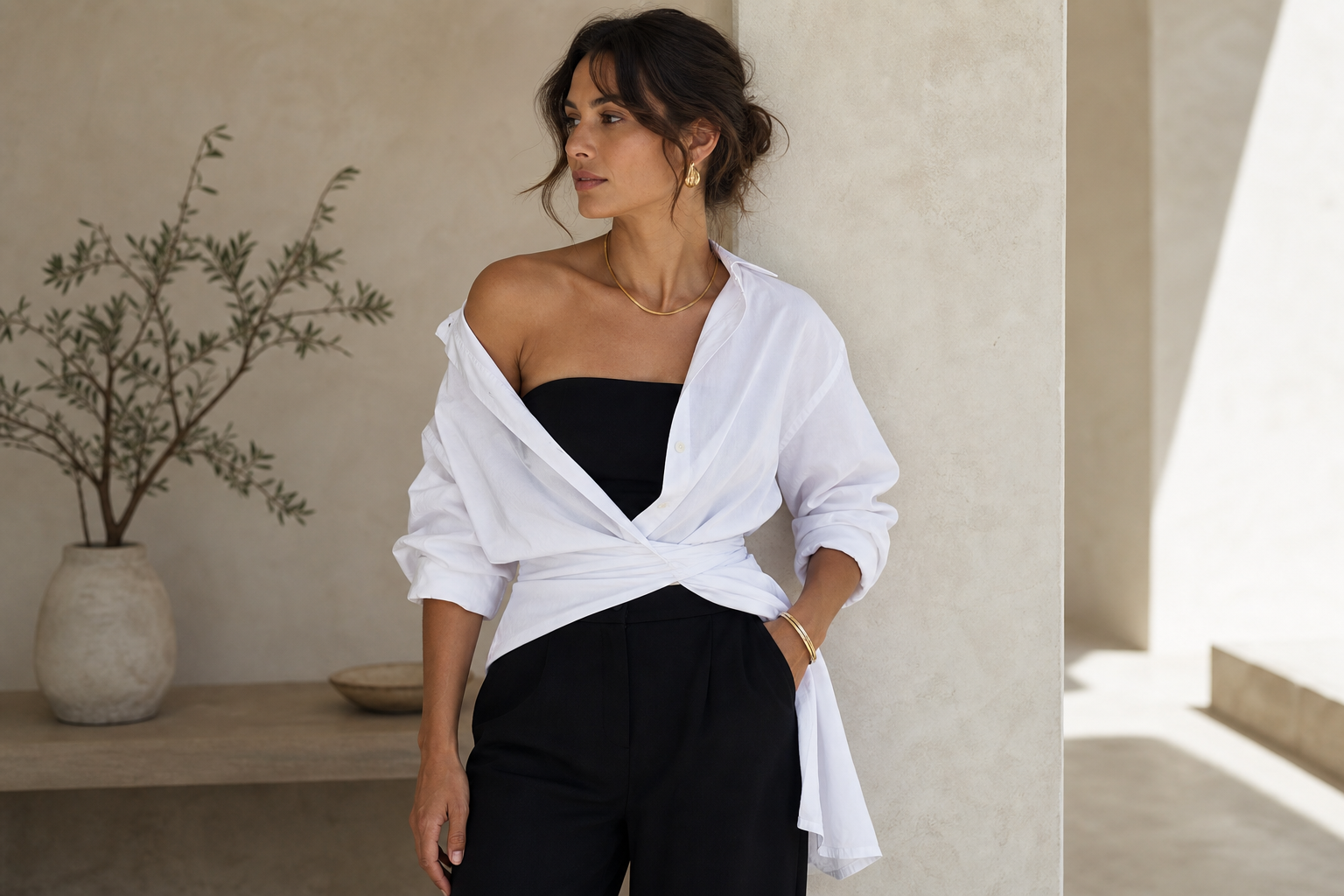
7. Transform a Button-Down Into a Wrap Layer
The Style Idea
Wear an open button-down as a light jacket, cross the fronts and tie only if the tails are long enough, or use a belt over the closed shirt to suggest a wrap shape. Keep enough buttons fastened that the fabric is not pulling at a single point.
Make It Work in Real Life
Do not force an asymmetric twist that distorts the placket. A true alteration should be pinned on the body, removed, and sewn safely—not stitched while worn.
Try This Before You Buy
Build the look with the closest pieces you already own, then take front, side, and seated photos in natural light. Notice comfort, fabric behavior, pocket placement, and whether the combination survives your normal shoes and outerwear. If a gap remains after two real wears, write the exact requirement—color, measurement, material, and care limit—before shopping.
Styling Note
Personal style is not a correction exercise. Adjust the idea for sensory comfort, mobility, climate, workplace expectations, and the amount of attention you enjoy. A successful version should feel recognizable as yours, not like an obligation to reproduce a photograph.
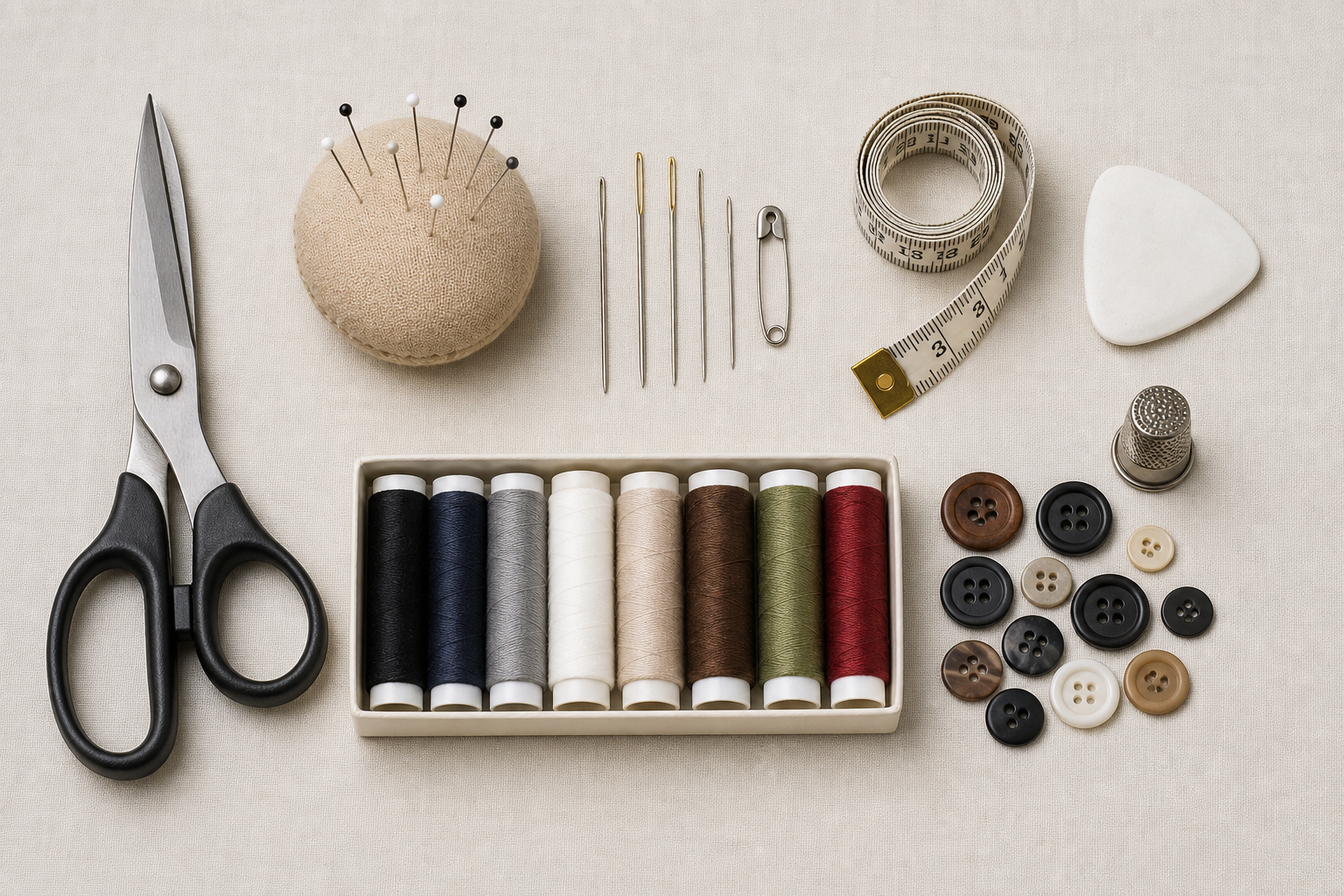
8. Make a Simple Closet Tailoring Kit
The Style Idea
Your kit needs fabric scissors, small snips, needles, neutral and matching thread, a seam ripper, tailor's chalk, tape measure, safety pins, spare buttons, a thimble, and a lint tool. Store adhesives and iron-on products with their instructions.
Make It Work in Real Life
Label specialty needles and keep blades covered. This compact kit prevents last-minute replacements and makes a five-minute repair easier to start.
Try This Before You Buy
Build the look with the closest pieces you already own, then take front, side, and seated photos in natural light. Notice comfort, fabric behavior, pocket placement, and whether the combination survives your normal shoes and outerwear. If a gap remains after two real wears, write the exact requirement—color, measurement, material, and care limit—before shopping.
Styling Note
Personal style is not a correction exercise. Adjust the idea for sensory comfort, mobility, climate, workplace expectations, and the amount of attention you enjoy. A successful version should feel recognizable as yours, not like an obligation to reproduce a photograph.
Wardrobe Decision Guide
| Question | If yes | If no |
|---|---|---|
| Can I make three outfits with it? | Photograph the combinations and test one full day. | Identify whether it is a true gap or a single-look temptation. |
| Is it comfortable sitting, walking, and reaching? | Check care and construction next. | Change the size, cut, fabric, or styling plan. |
| Can I care for it realistically? | Record the care method before purchase. | Choose a more compatible material or use rental for one occasion. |
| Is the change reversible? | Experiment before altering permanently. | Measure twice and use a skilled tailor when risk is meaningful. |
| Will I still like it without the trend label? | It may belong in your long-term style. | Borrow, rent, or skip the purchase. |
Conclusion

The strongest wardrobe is not the one with the most trends, the smallest number of items, or the most universally “flattering” silhouette. It is the one that reliably supports your days and gives you room to play. Choose one idea from this list, build it from what you own, and wear it somewhere ordinary. Real movement, real weather, and a real schedule will teach you more than a fitting-room mirror. Keep the version that works, revise the one that almost works, and let the rest remain inspiration.
Frequently Asked Questions
Can I use hot glue to hem clothes?
It is usually stiff, difficult to remove, and unsuitable for many washable garments. Use a fabric-appropriate fusible product or sew the hem.
Are no-sew alterations permanent?
Some fusible products are durable, but results depend on fabric, heat, laundering, and application. Treat reversible styling hacks separately from real alterations.
What should a beginner repair first?
Start with a button, loose non-structural seam, or small patch on a low-value garment.
Can I cut a garment while wearing it?
No. Mark it while worn if safe, then remove it, measure evenly, and cut on a protected flat surface.
When should I use a tailor?
Use a professional for valuable pieces, lined garments, zippers, leather, complex fit changes, and structural or high-stress seams.