6 Eco-Friendly Fashion Tips That'll Transform Your Wardrobe (You Won't Believe #6!)
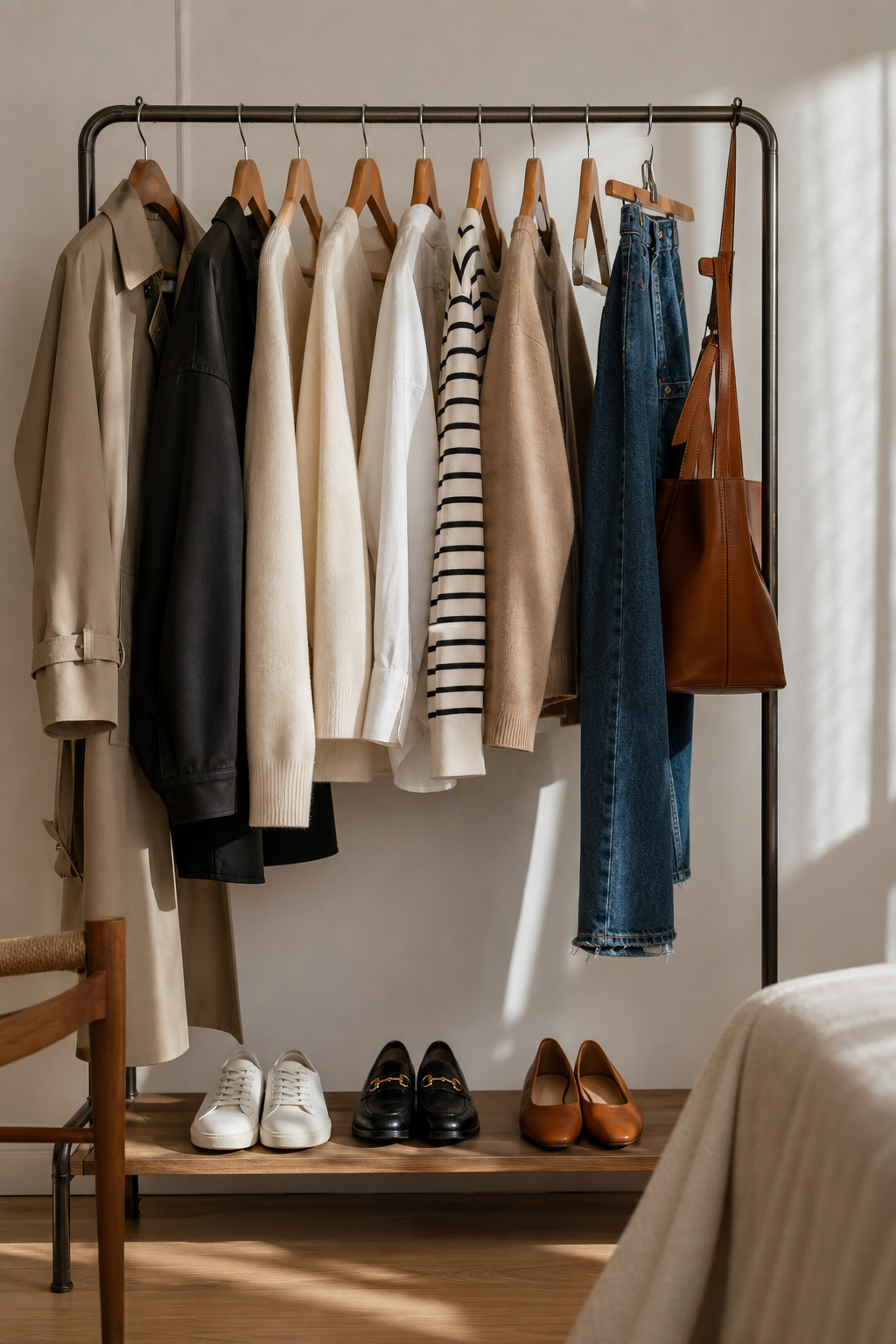
A more sustainable wardrobe is not a race to replace every garment with a product carrying a green label. It is a shift in how you choose, use, care for, and eventually pass on clothing. The most effective changes usually begin with what is already hanging in your closet. UNEP's circular-textiles work emphasizes longer use, repair, reuse, and reduced overproduction—principles that are practical at household scale even though brands and policymakers carry much of the systemic responsibility. These six tips turn that big idea into realistic weekly habits, without demanding a minimalist uniform or an expensive “ethical” shopping spree.
Key Takeaways
- Start with clothes you already own and one clear styling goal.
- Test movement, comfort, and care needs before committing.
- Use proportion, color, and texture as options rather than body rules.
- Prefer reversible experiments before permanent alterations.
- Buy only when a piece fills a real wardrobe role.
1. Shop Your Closet Before You Shop the Stores
The Style Idea
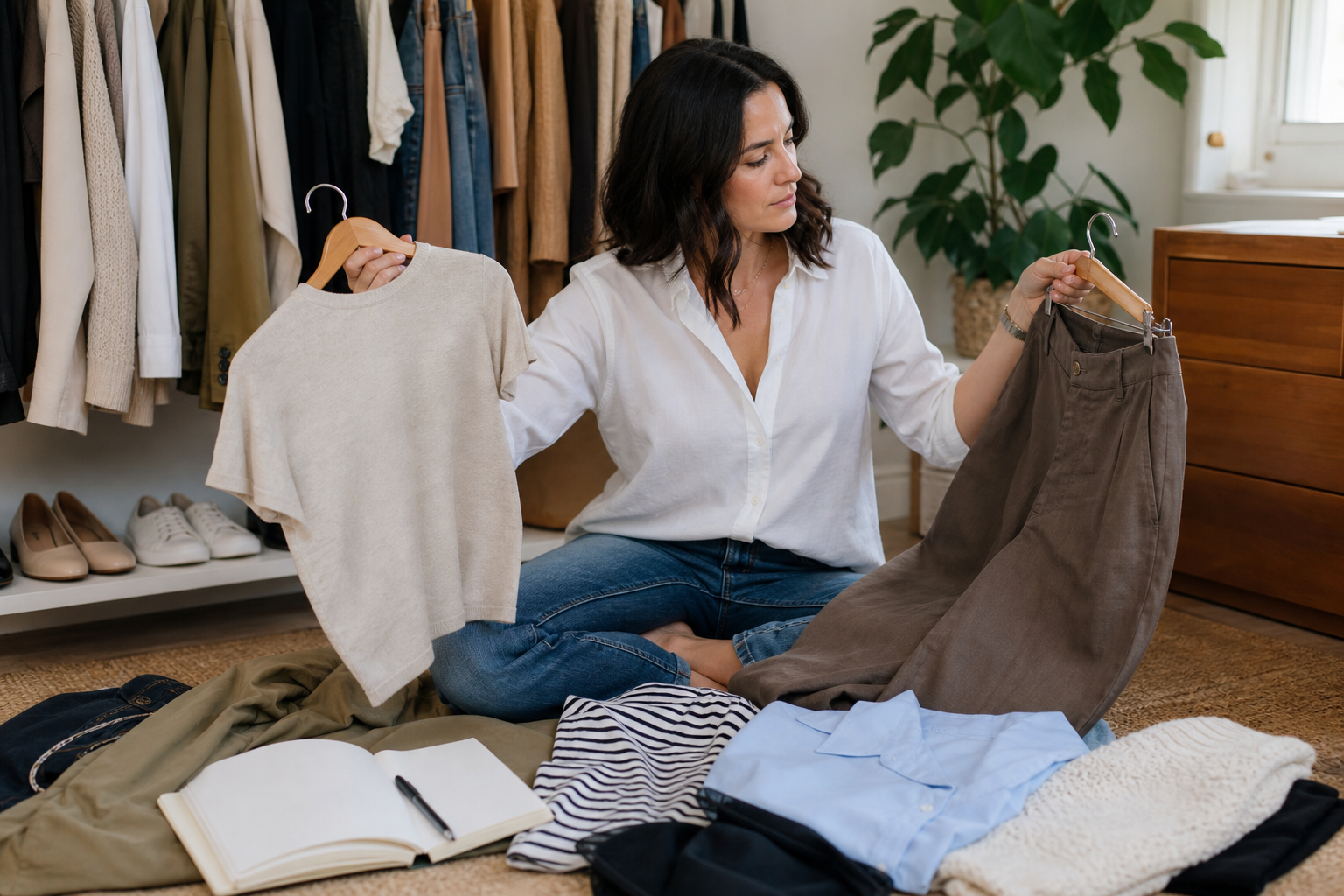
The most sustainable-looking shopping cart is not always the most useful one. Begin by taking every piece from one category—shirts, trousers, or occasionwear—and building outfits before browsing. Photograph combinations that work, note genuine gaps, and keep that note on your phone. A seven-day pause between wanting and buying is often enough to separate a versatile addition from a mood-driven duplicate.
Make It Work in Real Life
Try a “three outfits” test: a potential purchase should work with at least three pieces you own, suit your real climate, and fit your current routine. This is not about guilt. It is a design constraint that makes personal style clearer while reducing accidental overbuying.
Try This Before You Buy
Build the look with the closest pieces you already own, then take front, side, and seated photos in natural light. Notice comfort, fabric behavior, pocket placement, and whether the combination survives your normal shoes and outerwear. If a gap remains after two real wears, write the exact requirement—color, measurement, material, and care limit—before shopping.
Styling Note
Personal style is not a correction exercise. Adjust the idea for sensory comfort, mobility, climate, workplace expectations, and the amount of attention you enjoy. A successful version should feel recognizable as yours, not like an obligation to reproduce a photograph.
2. Build a Small Outfit-Ready Capsule
The Style Idea
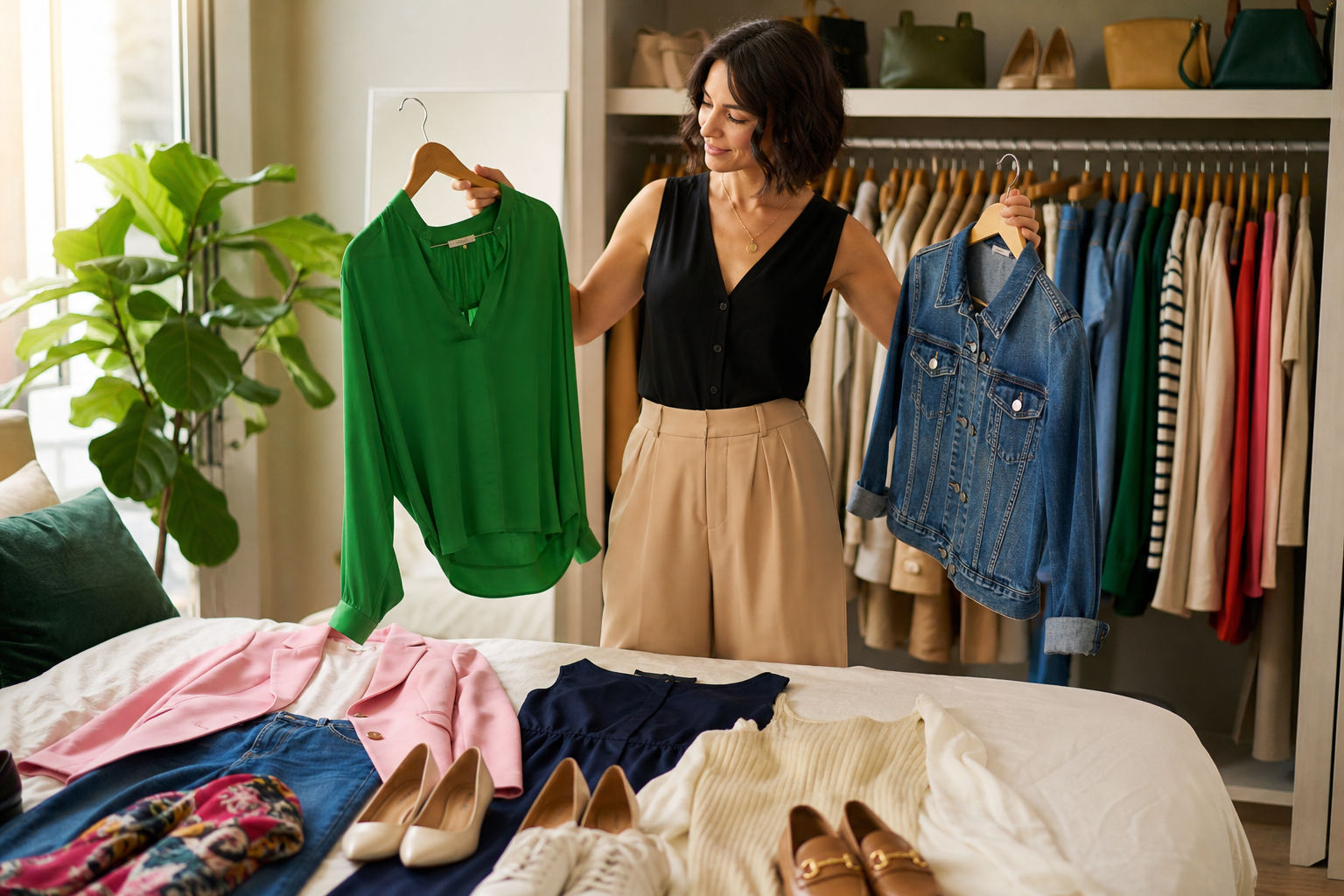
A capsule is a functioning group, not a beige aesthetic. Select a small seasonal set with compatible proportions and colors: perhaps two bottoms, four tops, a dress or jumpsuit, two layers, and shoes appropriate for your week. Bright color and print can absolutely belong if they connect to several combinations.
Make It Work in Real Life
Hang the capsule together for two weeks and record what you reach for. The experiment exposes missing layers, uncomfortable fabrics, and fantasy-lifestyle pieces. Return the rest of your wardrobe afterward; the goal is insight, not an arbitrary item limit.
Try This Before You Buy
Build the look with the closest pieces you already own, then take front, side, and seated photos in natural light. Notice comfort, fabric behavior, pocket placement, and whether the combination survives your normal shoes and outerwear. If a gap remains after two real wears, write the exact requirement—color, measurement, material, and care limit—before shopping.
Styling Note
Personal style is not a correction exercise. Adjust the idea for sensory comfort, mobility, climate, workplace expectations, and the amount of attention you enjoy. A successful version should feel recognizable as yours, not like an obligation to reproduce a photograph.
3. Choose Durability Over Eco Buzzwords
The Style Idea
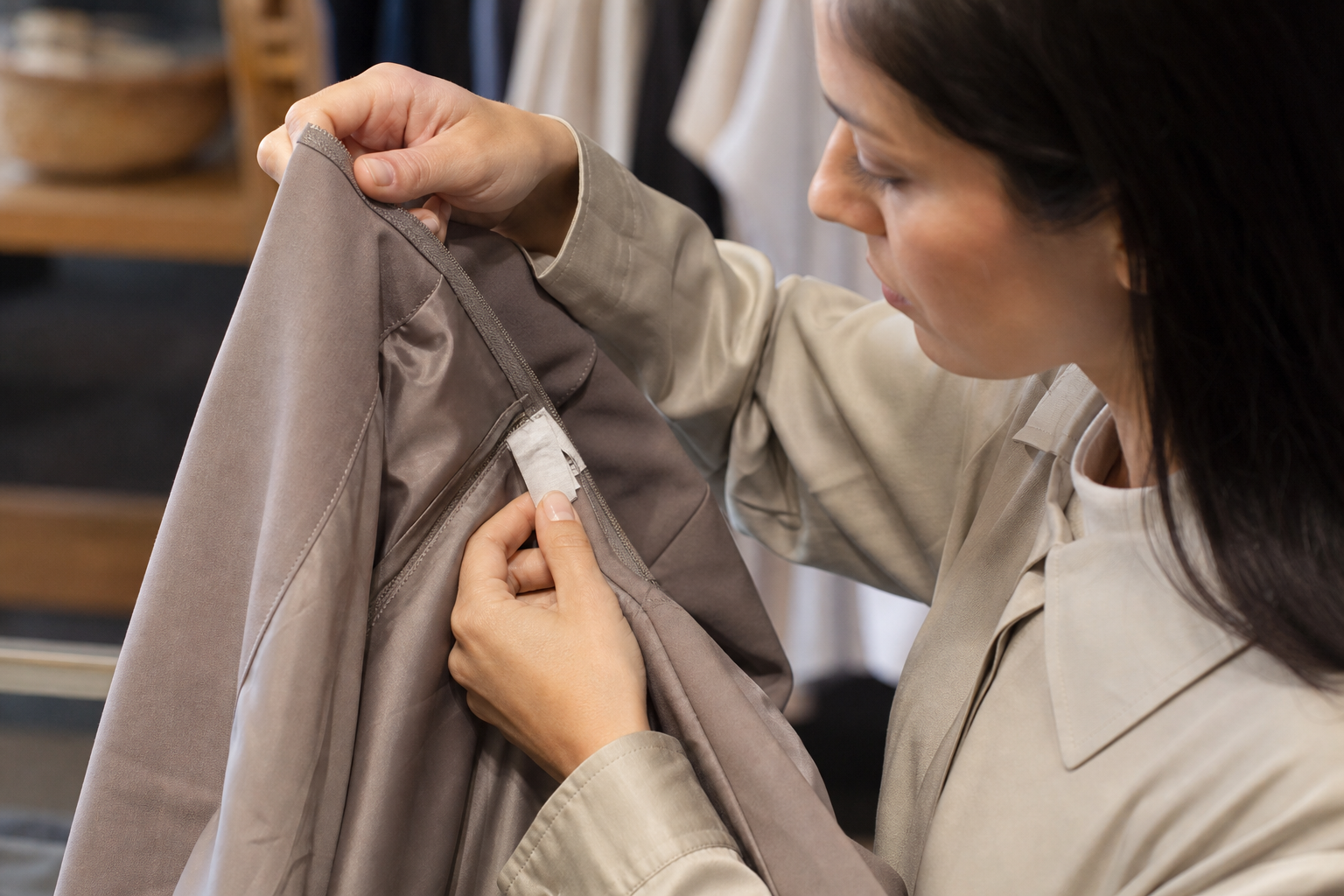
Words such as “natural,” “conscious,” or “green” do not reveal how long a garment will last. Examine seam density, fabric recovery, lining, zipper movement, pattern matching, spare buttons, and whether the care instructions fit your life. A durable garment you will wear repeatedly can be a better decision than a delicate item marketed through vague environmental language.
Make It Work in Real Life
Check whether the brand gives specific, verifiable information about fibers, factories, certifications, and repair or take-back options. Treat sweeping claims without boundaries or evidence cautiously. Comfort matters too: an impressive material is not useful if the cut means it stays unworn.
Try This Before You Buy
Build the look with the closest pieces you already own, then take front, side, and seated photos in natural light. Notice comfort, fabric behavior, pocket placement, and whether the combination survives your normal shoes and outerwear. If a gap remains after two real wears, write the exact requirement—color, measurement, material, and care limit—before shopping.
Styling Note
Personal style is not a correction exercise. Adjust the idea for sensory comfort, mobility, climate, workplace expectations, and the amount of attention you enjoy. A successful version should feel recognizable as yours, not like an obligation to reproduce a photograph.
4. Wash Less, Wash Cooler, and Air-Dry When Practical
The Style Idea
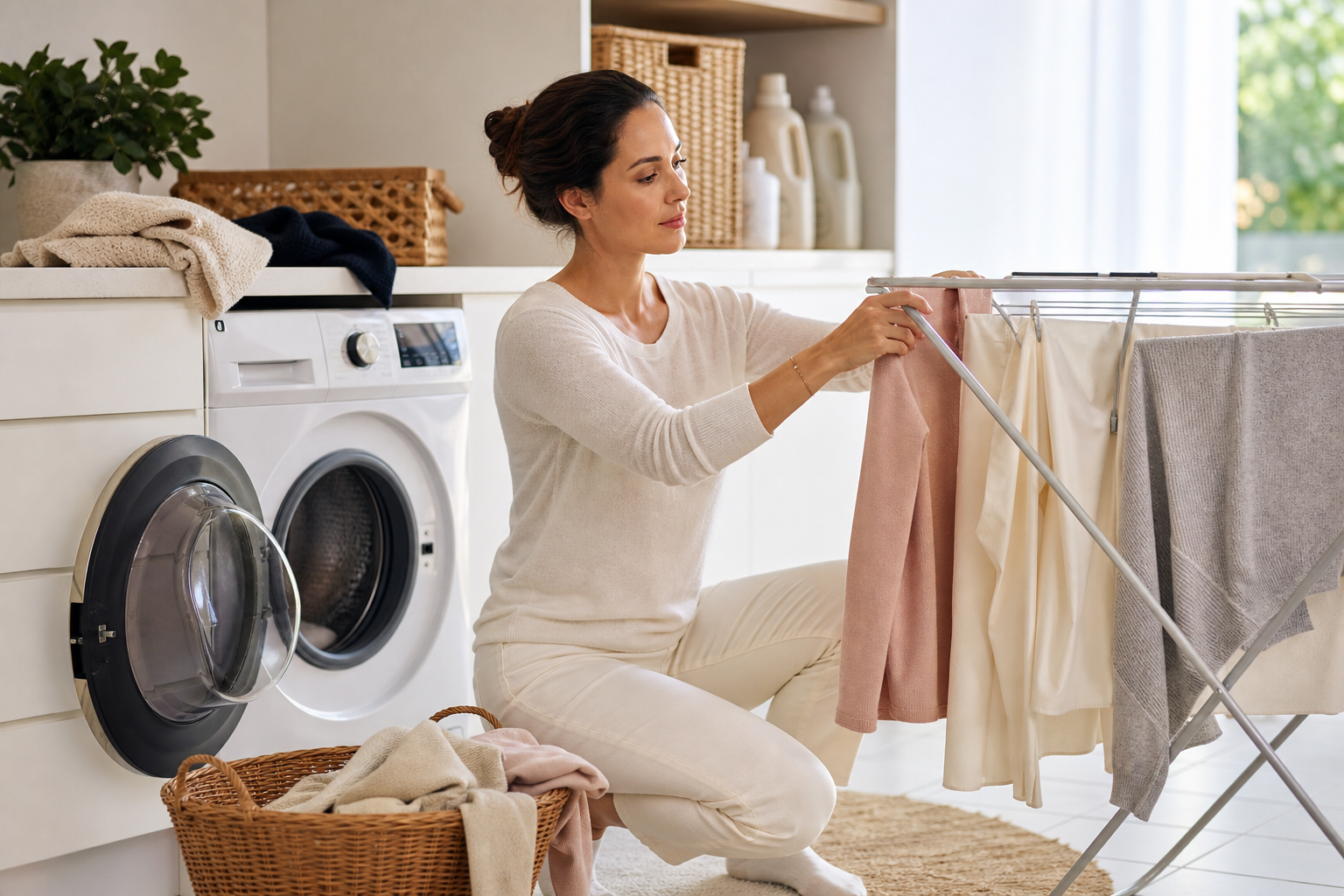
Laundry changes the life of clothing. Wash only when needed, follow the care label, close zippers, turn dark or printed pieces inside out, and use a cooler appropriate cycle when the label and hygiene needs allow. A full—but not overloaded—machine uses capacity efficiently. Air-drying can reduce heat stress on elastic and prints when practical.
Make It Work in Real Life
Spot-clean small marks and air garments between wears. Separate rough hardware from delicate knits, use mesh bags where appropriate, and avoid inventing universal washing rules for specialty fabrics. The correct care label takes priority over any internet hack.
Try This Before You Buy
Build the look with the closest pieces you already own, then take front, side, and seated photos in natural light. Notice comfort, fabric behavior, pocket placement, and whether the combination survives your normal shoes and outerwear. If a gap remains after two real wears, write the exact requirement—color, measurement, material, and care limit—before shopping.
Styling Note
Personal style is not a correction exercise. Adjust the idea for sensory comfort, mobility, climate, workplace expectations, and the amount of attention you enjoy. A successful version should feel recognizable as yours, not like an obligation to reproduce a photograph.
5. Repair, Tailor, and Restyle What You Own
The Style Idea
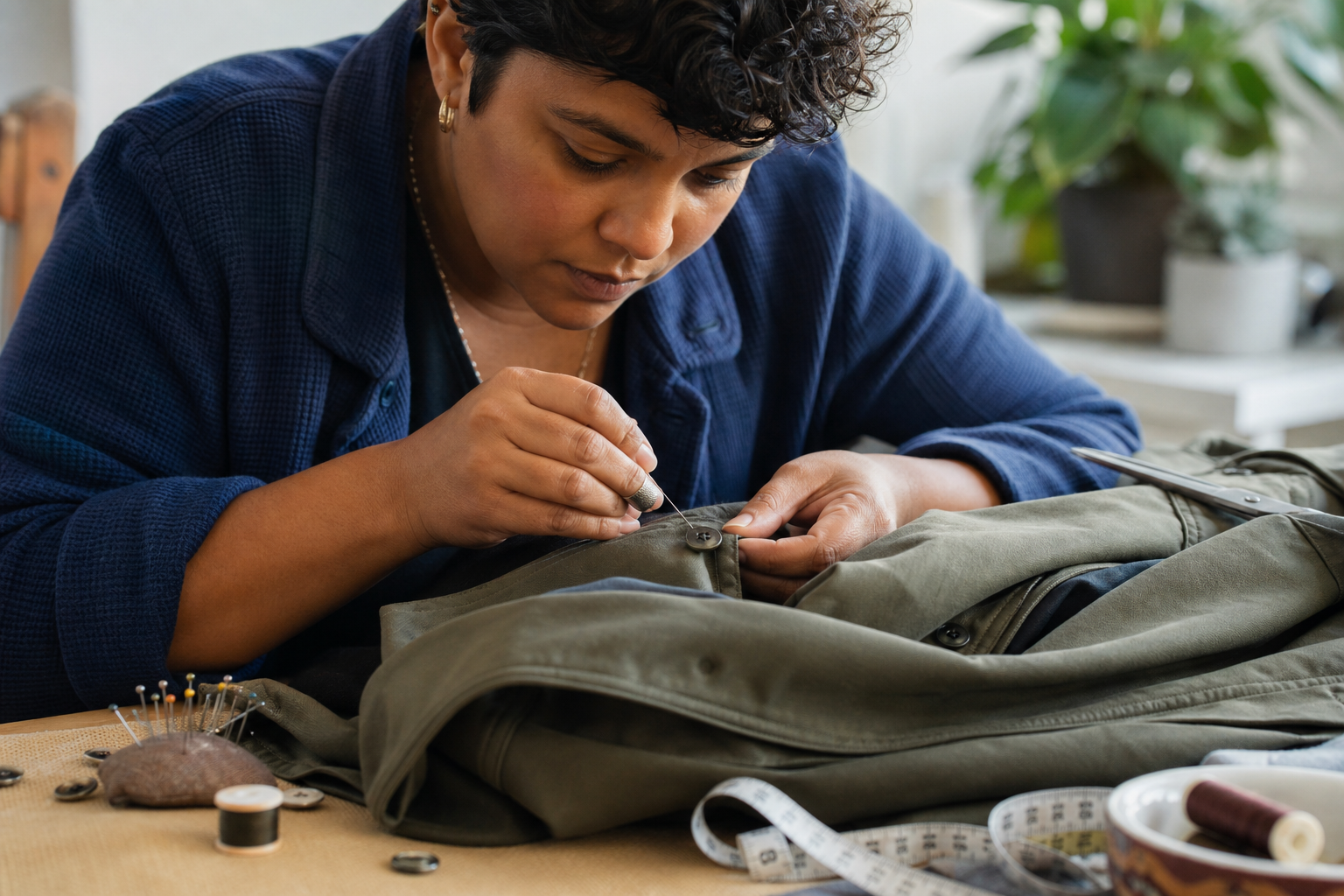
A loose hem, missing button, or imperfect fit can make a good garment feel finished long before its fabric is worn out. Keep thread, needles, safety pins, spare buttons, a seam ripper, and fabric scissors together. Start with button replacement and small seam repairs; take zippers, structural tailoring, leather, or valuable pieces to a professional.
Make It Work in Real Life
Restyling is part of repair. Try a different cuff, belt placement, layer, shoe, or tuck before altering permanently. A tailor can often adjust length or shape more reliably than replacing an otherwise excellent piece.
Try This Before You Buy
Build the look with the closest pieces you already own, then take front, side, and seated photos in natural light. Notice comfort, fabric behavior, pocket placement, and whether the combination survives your normal shoes and outerwear. If a gap remains after two real wears, write the exact requirement—color, measurement, material, and care limit—before shopping.
Styling Note
Personal style is not a correction exercise. Adjust the idea for sensory comfort, mobility, climate, workplace expectations, and the amount of attention you enjoy. A successful version should feel recognizable as yours, not like an obligation to reproduce a photograph.
6. Resell, Swap, Donate, or Recycle With Intention

The Style Idea
When a garment no longer serves you, choose the next route according to condition. Resell valuable pieces, swap clean wearable clothing, donate only what an organization accepts, and use a verified textile-collection program for items that are truly unsuitable to wear. Donation is not permission to pass on stains, broken fasteners, or unusable waste.
Make It Work in Real Life
Remove personal information from pockets, launder items, and group matching sets. Check local rules because textile recycling capacity varies widely. The best exit plan still comes after longer use: maintaining and wearing a garment remains more direct than assuming it will be recycled into an equivalent new one.
Try This Before You Buy
Build the look with the closest pieces you already own, then take front, side, and seated photos in natural light. Notice comfort, fabric behavior, pocket placement, and whether the combination survives your normal shoes and outerwear. If a gap remains after two real wears, write the exact requirement—color, measurement, material, and care limit—before shopping.
Styling Note
Personal style is not a correction exercise. Adjust the idea for sensory comfort, mobility, climate, workplace expectations, and the amount of attention you enjoy. A successful version should feel recognizable as yours, not like an obligation to reproduce a photograph.
Wardrobe Decision Guide
| Question | If yes | If no |
|---|---|---|
| Can I make three outfits with it? | Photograph the combinations and test one full day. | Identify whether it is a true gap or a single-look temptation. |
| Is it comfortable sitting, walking, and reaching? | Check care and construction next. | Change the size, cut, fabric, or styling plan. |
| Can I care for it realistically? | Record the care method before purchase. | Choose a more compatible material or use rental for one occasion. |
| Is the change reversible? | Experiment before altering permanently. | Measure twice and use a skilled tailor when risk is meaningful. |
| Will I still like it without the trend label? | It may belong in your long-term style. | Borrow, rent, or skip the purchase. |
Conclusion

The strongest wardrobe is not the one with the most trends, the smallest number of items, or the most universally “flattering” silhouette. It is the one that reliably supports your days and gives you room to play. Choose one idea from this list, build it from what you own, and wear it somewhere ordinary. Real movement, real weather, and a real schedule will teach you more than a fitting-room mirror. Keep the version that works, revise the one that almost works, and let the rest remain inspiration.
Frequently Asked Questions
Is buying organic cotton always the most sustainable choice?
No single fiber guarantees the best outcome. Consider durability, verified production information, care needs, and whether you will wear the garment often.
How many clothes should a capsule wardrobe contain?
There is no universal number. Use a small test group that covers your actual week, then adjust based on weather, laundry access, and activities.
Is donating clothes enough?
Donation can extend use when items are clean and wanted, but organizations may receive more than they can place. Repair, resale, swapping, and reduced purchasing also matter.
Should I wash every garment after one wear?
Follow hygiene needs and care labels. Many outer layers can be aired or spot-cleaned, while underwear, activewear, and soiled pieces need appropriate washing.
How can I spot greenwashing?
Look for precise claims with scope, evidence, certifications, and traceable details; be cautious with vague nature imagery or undefined words.
Related Topics
Sources
- Sustainable and circular textiles, United Nations Environment Programme. Accessed 2026-07-22.
- Five ways to reduce waste in the fashion industry, United Nations Environment Programme. Accessed 2026-07-22.